 Save
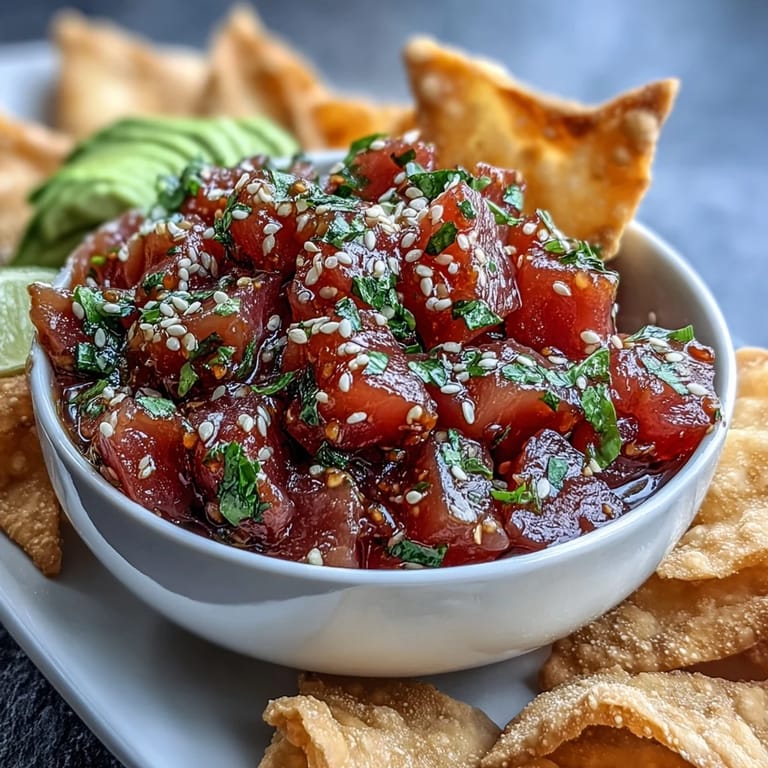
Save My friend Marcus showed up to a dinner party with this spicy tuna tartare, and I watched it disappear in minutes while people hovered around his platter asking for the recipe. He wouldn't give it up that night, so I had to reverse-engineer it from memory the next day—turns out the secret was just quality tuna and a perfectly balanced dressing that hit all the right notes at once. Now when I make it, that same magic happens every time, and I've learned it's one of those dishes that proves you don't need complicated technique, just good ingredients and confidence.
I made this for my mom's birthday dinner last spring, and she kept saying it tasted like the high-end sushi bar we'd visited years ago but couldn't afford to go back to. Watching her face light up while realizing I'd made it at home—that's when I understood this recipe wasn't just about feeding people, it was about creating a moment where everyone feels a little celebrated.
Ingredients
- Sushi-grade tuna (300 g): This is non-negotiable—ask your fishmonger for the freshest piece they have, and don't settle for regular tuna from the grocery store because the quality difference is everything.
- Soy sauce (2 tbsp): Use a good quality one if you can; it's the backbone of your dressing and carries so much flavor.
- Sriracha sauce (1 tbsp): Start with less than you think you need and taste as you go, since heat levels vary wildly between brands and personal tolerance is real.
- Toasted sesame oil (2 tsp): A little goes a long way here—the toasted version has depth that regular sesame oil doesn't bring to the party.
- Fresh lime juice (1 tbsp): Squeeze it yourself if possible; bottled juice never quite captures that bright, fresh snap.
- Rice vinegar (1 tsp): This adds a subtle sweetness and acidity that rounds out the dressing without overpowering anything.
- Honey or agave (1 tsp): Just enough to balance the heat and acid, making the whole thing harmonious instead of sharp.
- Scallions (2 tbsp finely chopped): Slice them thin so they distribute evenly and don't overpower the delicate tuna with big chunks.
- Fresh cilantro (1 tbsp, optional): I skip this sometimes depending on my mood, but when I include it, I chop it fine and fold it in at the very last second.
- Toasted sesame seeds (1 tsp): Toast them yourself if you have time; the aroma alone will make you hungry.
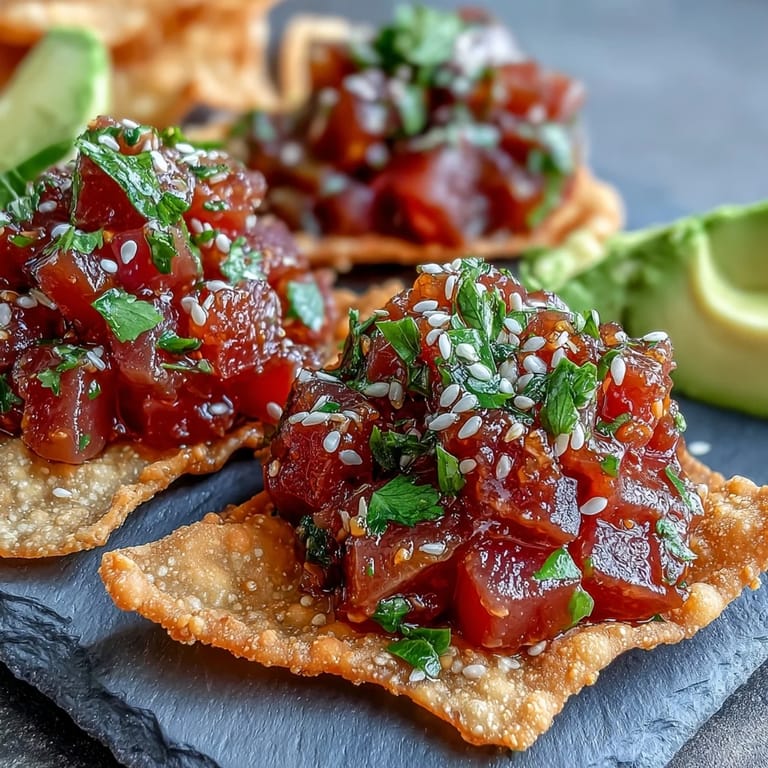
- Wonton wrappers (12, cut diagonally): These fry up into the perfect vehicles for the tartare, and they stay crispy for a surprising amount of time.
- Vegetable oil (for frying): Keep it neutral-flavored so it doesn't compete with the Asian flavors you're building.
- Sea salt: Use this for finishing the wonton chips, not the tartare itself—let the soy sauce handle the salt in the tuna.
- Ripe avocado (1): Add this right before serving so it doesn't oxidize and turn brown on you.
- Lime wedges (for serving): These are your emergency flavor boost if someone at the table wants extra zing.
Tired of Takeout? 🥡
Get 10 meals you can make faster than delivery arrives. Seriously.
One email. No spam. Unsubscribe anytime.
Instructions
- Get your wonton chips golden and crispy:
- Heat the oil to the right temperature—you'll know it's ready when a tiny piece of wrapper sizzles immediately on contact. Fry the triangles in small batches so they have room to move around and crisp up evenly, which takes about 30 to 45 seconds per side until they're deep golden and you can hear them crackle.
- Build your dressing with intention:
- Whisk everything together in a small bowl and taste it before adding it to the tuna—this is where you catch if you need more lime, more heat, or more sweetness. The dressing should taste vibrant and balanced, not dominated by any single flavor.
- Treat the tuna with gentleness:
- When you toss the diced tuna with the dressing, use a folding motion rather than aggressive stirring, because you want to coat each piece without breaking down the delicate cubes. Add the scallions, cilantro, and sesame seeds now, folding them in with the same careful touch.
- Bring in the avocado at the last possible moment:
- Right before you're about to serve, fold in the diced avocado so it stays bright green and doesn't have time to turn brown. This is important—I learned this the hard way by prepping it too early.
- Plate it like you mean it:
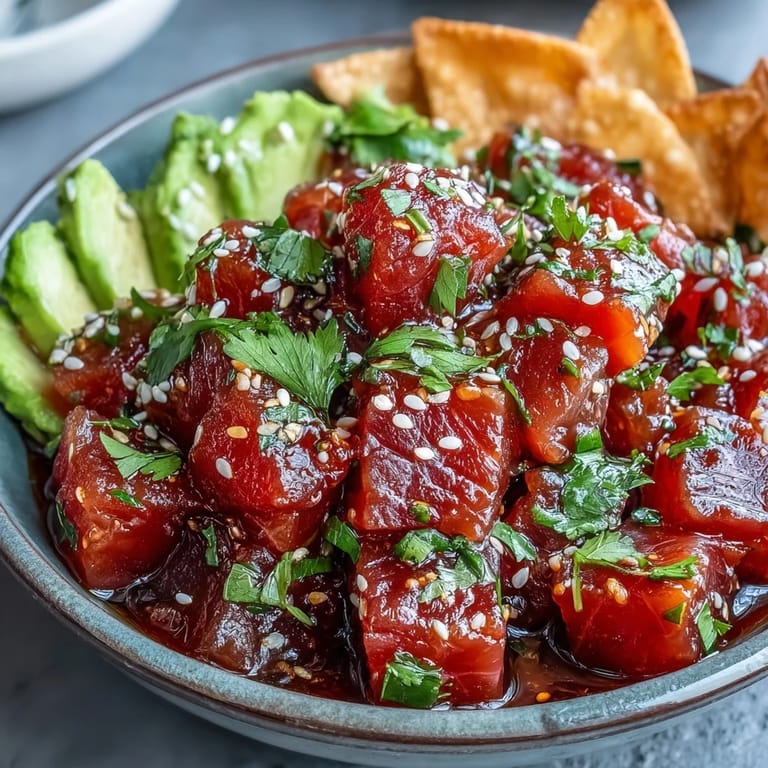
- Arrange the tartare on your serving vessel (a platter looks elegant, but individual portions feel more special), and serve immediately with the wonton chips on the side and lime wedges ready to go.
 Save
Save There's something magical about serving a dish that looks restaurant-quality but you made in your own kitchen while still having time to set a proper table and pour drinks. That's what this recipe does for me every single time—it makes people feel special without making me feel stressed.
The Secret Behind the Sriracha Balance
I used to dump in sriracha without thinking about it, and the tartare would end up more about heat than flavor, which was a mistake I only had to make once. Now I add it slowly, tasting between additions, because different brands vary wildly in intensity and I'm not trying to blow anyone's palate off—I want them to taste the beautiful tuna first, with the spice arriving as a pleasant surprise that makes them want another bite. The honey is the unsung hero here; it's what keeps the heat from feeling aggressive and lets all the other flavors come through.
Wonton Chips and Their Infinite Possibilities
Once I mastered the wonton chips, I realized they're one of those components that elevates everything around them because they provide texture and a crispy canvas for the creamy tartare. I've experimented with frying them at different temperatures—too cool and they're greasy, too hot and they burn—and now I use a tiny piece of wrapper as a temperature test before committing the whole batch. The moment they hit the hot oil, there's this wonderful sizzle and within seconds they're golden and ready to drain.
Variations and When to Use Them
This recipe is flexible enough to work with what you have on hand, and I've learned that the core dressing is strong enough to carry different additions depending on what sounds good that day. I sometimes add diced cucumber for extra crunch, or serve the tartare on crispy lettuce cups instead of wonton chips if I'm feeling lighter, or even spoon it onto thin cucumber rounds for something more elegant and less fried. Consider your audience and your energy level—there's no version of this that isn't delicious.
- Make it low-carb by skipping the wonton chips entirely and serving it in endive leaves or on cucumber slices instead.
- Add diced mango or pineapple if you want a fruity note that plays beautifully with the sriracha heat.
- Keep extra lime wedges at the table so people can adjust the tartness to their preference.
 Save
Save This dish taught me that sometimes the most impressive meals are the simple ones built on quality ingredients and proper technique. Make it soon, make it often, and watch the people you love light up when they taste it.
Common Recipe Questions
- → What type of tuna is best for this dish?
Sushi-grade tuna is recommended for its freshness and firm texture, ensuring safe consumption and optimal flavor.
- → How do I make the wonton chips crispy?
Fry wonton wrappers in hot vegetable oil for 30–45 seconds per side until golden. Drain on paper towels and sprinkle with sea salt.
- → Can the dressing be adjusted for spice level?
Yes, the amount of sriracha can be modified to suit your preferred heat intensity.
- → What are good garnishes to enhance the dish?
Diced ripe avocado adds creaminess, while fresh lime wedges provide zesty brightness.
- → Are there substitutions for wonton wrappers?
For gluten-free options, consider rice paper crisps or baked vegetable chips as alternatives.
- → How should leftovers be stored?
Store the tuna mixture separately in an airtight container and consume within 24 hours to maintain freshness.