 Save
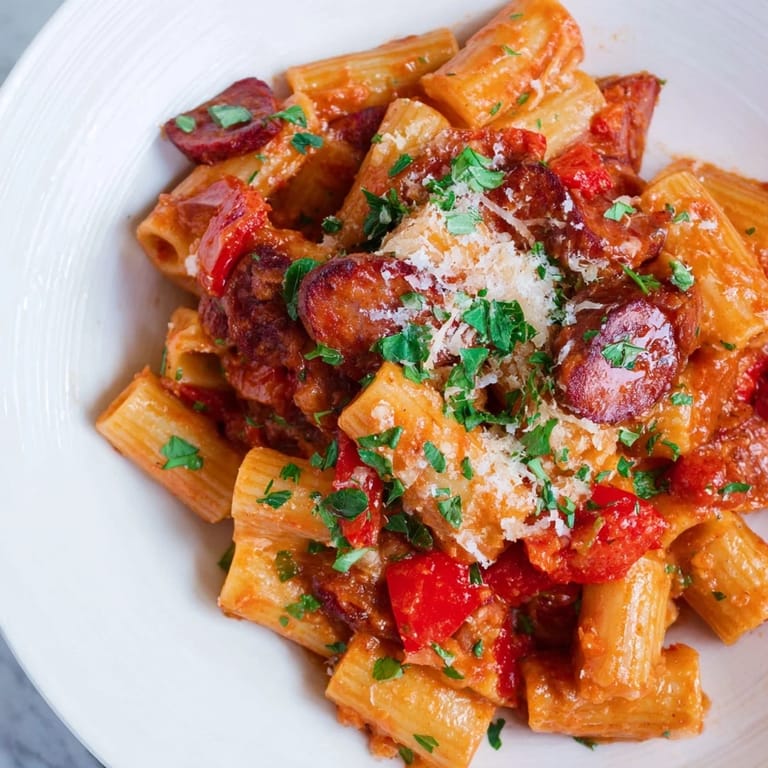
Save There's something about the way Spanish chorizo sizzles in a hot pan that immediately takes you somewhere else—I discovered this dish on a rainy Tuesday when I had nothing but pasta, a half-smoked chorizo from the back of my fridge, and a can of tomatoes. Within twenty minutes, my kitchen smelled like a small Madrid tapas bar, and I realized I'd stumbled onto something special. That first bowl, eaten standing at the counter with a fork, became a regular weeknight refuge.
I made this for my neighbor one evening after she mentioned being tired of her usual rotation, and watching her face light up on the first bite reminded me why I love cooking. She asked for the recipe before she'd even finished eating, which felt like the highest compliment possible.
Ingredients
- Penne or rigatoni (350 g): The ridges catch the smoky sauce better than smooth pasta—it's not just texture, it's strategy.
- Spanish chorizo (200 g): Buy it sliced or slice it yourself into thin rounds so it crisps up and releases its beautiful oil into the pan.
- Onion and garlic: The quiet foundation that lets the chorizo shine without competing.
- Red bell pepper: It adds sweetness that balances the smoke and heat, softening just enough to disappear into the sauce.
- Canned chopped tomatoes (400 g): Don't reach for fresh—the acidity and consistency of canned tomatoes here is exactly what you need.
- Smoked paprika (1 tsp): This is your flavor anchor, the thing that makes people ask what you did differently.
- Chili flakes (½ tsp): Optional but worth it if you like your food to have a little personality.
- Extra virgin olive oil (2 tbsp): Good oil matters here because it's not being cooked into oblivion—it stays visible and tasting like itself.
- Fresh parsley and Manchego or Parmesan cheese: The final note that says you cared enough to finish it properly.
Tired of Takeout? 🥡
Get 10 meals you can make faster than delivery arrives. Seriously.
One email. No spam. Unsubscribe anytime.
Instructions
- Get your water boiling:
- Fill a large pot with water, salt it generously until it tastes like the sea, and bring it to a rolling boil. This is happening simultaneously with everything else, so start here first.
- Sear the chorizo:
- Slice your chorizo into thin rounds and place them in a large skillet over medium heat with a touch of oil. Listen for the sizzle—when it starts, you're witnessing the magic. The chorizo releases its oils and begins to caramelize after 2–3 minutes, which is your cue to move forward.
- Build the flavor base:
- Toss in your finely chopped onion and diced bell pepper, stirring occasionally. You want them soft but not mushy, which takes about 4–5 minutes. The kitchen should smell incredible by now.
- Wake it up:
- Add your minced garlic, smoked paprika, and chili flakes if you're using them. Stir constantly for just one minute so the spices bloom and release their aromas without burning.
- Simmer the sauce:
- Pour in the chopped tomatoes and let everything bubble gently for 8–10 minutes. The sauce will thicken slightly and develop depth as the flavors meld together.
- Bring it all together:
- By now your pasta should be al dente. Drain it, add it to the skillet, and toss everything with energy. If the sauce feels thick, splash in reserved pasta water a little at a time until you reach that perfect consistency.
- Season and serve:
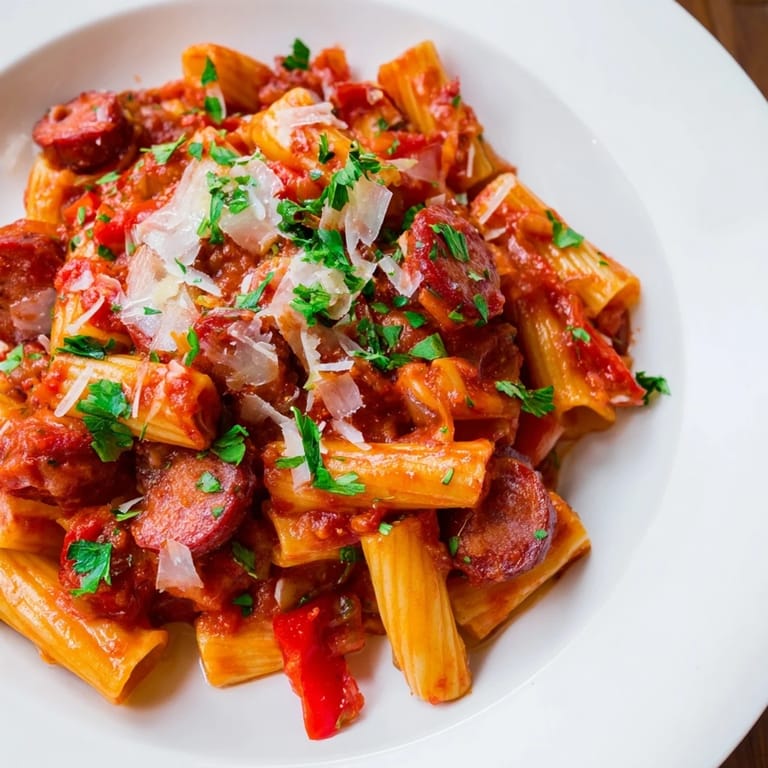
- Taste for black pepper, adjust if needed, then finish with a generous handful of fresh parsley and grated cheese. Serve immediately while everything is still hot.
 Save
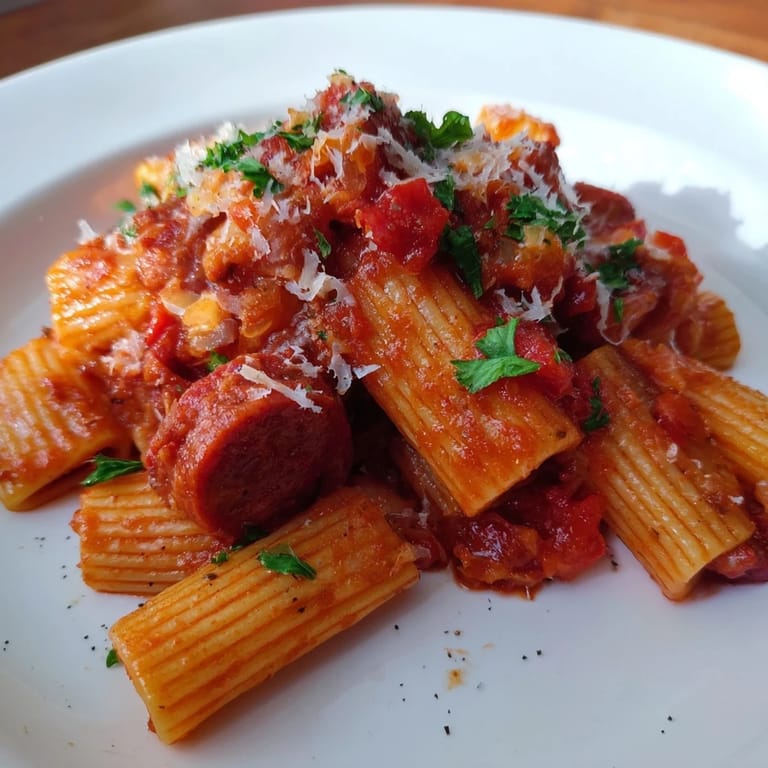
Save This dish became my comfort food precisely because it asked so little of me while delivering something that felt luxurious and thoughtful. It's the kind of meal that made ordinary evenings feel intentional.
The Spanish Chorizo Advantage
Spanish chorizo is a gift to home cooks because it contains so much flavor that you don't need to build a complicated sauce. Unlike Italian sausage, which sometimes needs cream or wine to feel complete, Spanish chorizo carries notes of smoked paprika and garlic that make the simple tomato base feel sophisticated. The fat that renders out as it cooks becomes the foundation of your sauce, which means you're not adding richness through butter or cream—you're extracting it from the main ingredient.
Timing and Flexibility
The beauty of this recipe is that almost nothing needs to be precise. Pasta is forgiving, the vegetables soften on their own timeline, and the sauce improves with a little extra time on low heat. I've made this when I was rushing and had it on the table in 25 minutes, and I've also let it simmer longer when I wasn't hungry yet, which only deepened the flavors. The pasta water adjustment at the end is your safety net—you control the consistency, not some distant recipe writer.
Make It Your Own
This is where intuition comes in, and you should trust yours. I've thrown in handfuls of baby spinach and watched it wilt into the sauce, added a splash of white wine because the bottle was open, and once experimented with a squeeze of fresh lemon juice at the end. Every version worked because the foundation is solid.
- A dry white wine added after the vegetables soften brings acidity and depth that makes people wonder what your secret is.
- Fresh spinach or peppery arugula tossed in at the very end adds color and a bright counterpoint to the warmth of the spices.
- If you can't find Spanish chorizo, a good quality spicy Italian sausage will work, though the flavor profile shifts slightly toward Italian rather than Spanish.
 Save
Save This is the kind of dish that reminds you why cooking matters—it's quick, it's genuine, and it tastes like someone who knows you made it for you.
Common Recipe Questions
- → What type of pasta works best?
Penne or rigatoni are ideal as they hold the sauce well and complement the chorizo's texture.
- → Can I adjust the spice level?
Yes, add or omit chili flakes according to taste for mild or extra heat.
- → Is smoked paprika essential?
Smoked paprika adds a distinctive depth and smoky flavor that enhances the chorizo and tomatoes.
- → Can other meats replace Spanish chorizo?
Spicy Italian sausage makes a good alternative if Spanish chorizo is unavailable.
- → How to keep the sauce from drying out?
Reserve some pasta water and add it gradually when tossing to keep the sauce silky and well-coated.