 Save
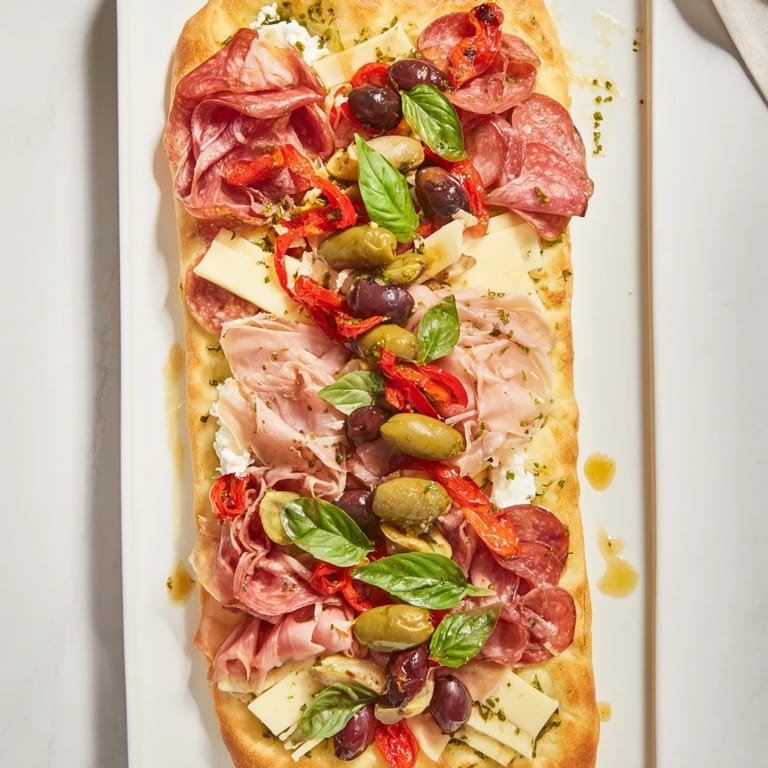
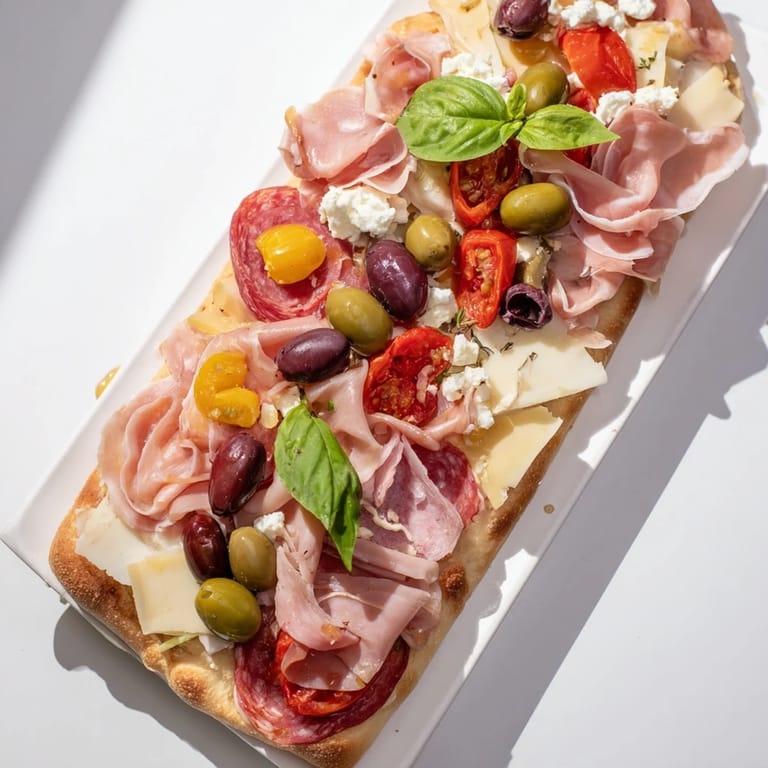
Save I discovered the magic of a proper charcuterie board one autumn evening when my friend arrived with a wooden plank and started arranging cured meats like they were creating edible art. That night, watching people gather around and build their own flavor combinations, I realized the real beauty wasn't in perfection—it was in the invitation to play. The Rustic Raft channels that same spirit: long, golden flatbreads become vessels for whatever your guests desire, turning a simple appetizer into a shared moment of discovery.
I made this for a dinner party once, and what struck me most was the silence—that good kind where people are too busy building perfect bites to make small talk. Someone asked if they could serve it at their wedding, which felt like the ultimate compliment. That's when I knew this wasn't just food; it was an experience dressed up as an appetizer.
Ingredients
- Flatbreads: Lavash, naan, or ciabatta—choose what you can char slightly without burning; I prefer flatbreads sturdy enough to hold weight without collapsing under their own riches.
- Olive oil: Good enough to taste, because it coats every corner of that bread and becomes part of the story.
- Garlic clove: One small one, minced fine—just enough to whisper rather than shout.
- Prosciutto: Paper-thin, salty, and delicate; it melts slightly when it touches warm bread.
- Salami: Choose one with good marbling so each slice tastes different from the last.
- Smoked turkey breast: The lighter touch that balances the heavier cured meats without apologizing for itself.
- Soppressata or chorizo: Pick whichever makes you smile; this is where personality enters the board.
- Brie: Soft, creamy, and it catches the flavors around it like a sponge in the best way.
- Aged cheddar: Sharp enough to stand up to bold meats, with a bite that lingers pleasantly.
- Manchego: Buttery and slightly nutty—the bridge between savory and sweet.
- Blue cheese: Crumbled, unapologetic, for those who know what they want.
- Seedless grapes: Halved so they nestle into corners; their sweetness stops the salt from overwhelming.
- Cherry tomatoes: Halved, so you see their juicy centers; they're your brightness.
- Marinated olives: Buy them already marinated to save time and because they taste better that way.
- Roasted red peppers: Silky and sweet, they soften the whole board's attitude.
- Fresh basil: Torn gently just before serving so it stays vibrant and fragrant.
- Honey or fig jam: Keep both on the side; some guests will drizzle, others will dip, and both choices are correct.
Tired of Takeout? 🥡
Get 10 meals you can make faster than delivery arrives. Seriously.
One email. No spam. Unsubscribe anytime.
Instructions
- Heat the oven and prepare your stage:
- Preheat to 200°C (400°F) and get your baking sheet ready. This matters because you want the bread warm and slightly flexible, not cold and stubbornly flat.
- Oil and season the flatbreads:
- Brush each flatbread generously with olive oil and scatter that minced garlic across like you're seasoning a secret. The oil helps everything adhere and adds richness that plain bread simply can't deliver.
- Toast until golden:
- Warm them for 5–7 minutes until the edges just start to crisp and you smell toasted bread filling your kitchen. Watch them—they go from perfect to overdone in about a minute.
- Arrange your rafts:
- Place the warm flatbreads on a large wooden board or platter, spacing them so they look intentional, like vessels waiting to be filled. This is your moment to step back and admire the blank canvas.
- Layer with meats and cheeses:
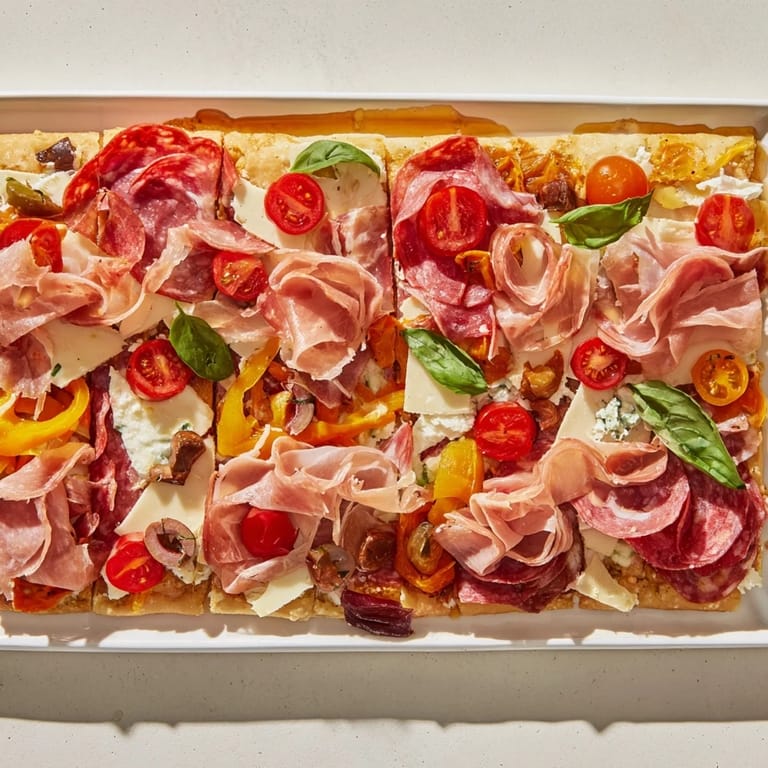
- Start placing meats and cheeses in an alternating pattern, overlapping slightly like roof shingles. Let colors and textures guide you—the visual appeal is half the magic.
- Fill the spaces:
- Nestle grapes, tomatoes, olives, and red peppers into the gaps between meats and cheeses. They look like they belong there instantly, adding pops of color that make the whole thing feel alive.
- Finish with grace:
- Tear basil leaves over the top—not too much, just enough to signal freshness. Set small bowls of honey or fig jam nearby so guests can customize their drizzle.
- Invite and observe:
- Encourage everyone to break off pieces of flatbread with their chosen toppings and build their own bite. This is where the magic shifts from your hands to theirs.
 Save
Save There's a moment that always happens when someone takes their first bite—that pause where they're experiencing all the flavors at once, and their face lights up with the realization that the simplest things, when assembled with care, become memorable. That's what this recipe does: it takes familiar ingredients and transforms them into conversation.
Building the Perfect Bite
The secret to enjoying this dish is understanding that every guest's perfect bite is different. One person might want every layer: a whisper of prosciutto, a slice of brie still warm enough to soften, a halved grape for sweetness, and a drizzle of honey. Another might load up with blue cheese and salami, forgoing the fruit entirely. The beauty is that there's no wrong answer—only preferences expressed through food. I've learned that the best hosts don't dictate how people should eat; they simply provide good ingredients and step back. Your job is to arrange thoughtfully and then trust your guests to know themselves.
Why This Works as an Appetizer
This recipe sits in that golden zone where it's substantial enough to feel like real food but doesn't steal the stage from whatever comes next. It's naturally low-commitment—people eat standing, chatting, building as they go, which means conversation never stops for a formal course. I've found that serving this encourages mingling because there's no plate to hold you to one spot. The variety means there's something for almost every preference, and because everything is already sliced and ready, no one feels rushed or uncertain about how to approach it.
Timing and Flexibility
The 30 minutes from start to table is real time, not wishful thinking—I've made this dozens of times and that timeline holds. The beauty is that you can prep most of it in advance: slice your meats and cheeses earlier in the day, store them in the fridge, and toast the flatbreads just before guests arrive. If you're running late, room-temperature flatbread works fine; it just won't have that warm, slightly flexible texture that makes everything adhere so beautifully. You can also swap ingredients based on what's in your market that day—manchego feeling expensive? Swap it for gruyère. Can't find soppressata? Your favorite cured meat will work just as well.
- Toast the bread while your guests are arriving to maximize that warm-bread moment.
- Use a wooden board or dark platter so colors pop and the whole spread looks intentional.
- If making ahead, assemble everything except the basil, then scatter it fresh just before serving.
 Save
Save This dish taught me that the most satisfying meals aren't always the most complicated ones—sometimes they're the ones where people feel trusted to make their own choices. Serve it with intention, and watch what happens.
Common Recipe Questions
- → What types of flatbreads work best?
Rectangular flatbreads like lavash, naan, or ciabatta provide a sturdy base that crisps nicely and holds toppings well.
- → Can I customize the meats and cheeses?
Absolutely. Feel free to swap in preferred cured meats and a variety of sliced cheeses to match your flavor preferences.
- → How should the flatbreads be prepared before topping?
Brush with olive oil and minced garlic, then warm them briefly in the oven to achieve a lightly crisp texture.
- → What accompaniments complement this dish?
Seedless grapes, cherry tomatoes, marinated olives, roasted red peppers, fresh basil, and a drizzle of honey or fig jam add brightness and balance.
- → Is this suitable for serving at gatherings?
Yes, it's designed as a shareable, visually appealing centerpiece that encourages interactive dining and easy serving.