 Save
Save There's a moment every autumn when I realize the farmers market has shifted entirely to red peppers, and I can't resist buying a bag even though I haven't figured out what to do with them yet. That's how this soup was born—standing in my kitchen with four beautiful peppers, a jar of harissa I'd been meaning to use, and the sudden certainty that roasting them would be the answer. The smell that fills your kitchen as they char is honestly worth the recipe alone.
I made this for my neighbor one unexpectedly cold September evening, and she showed up at my door the next morning asking if I'd share the recipe. That bowl seemed to have fixed something about her day that she wouldn't quite explain. Now whenever I make it, I think about how food does that sometimes—it becomes more than nutrition when someone really needs it.
Ingredients
- Red bell peppers: The stars of the show, and roasting them concentrates their natural sweetness into something almost unrecognizable from raw peppers.
- Harissa paste: This North African chili condiment brings warmth and depth without tasting spicy in the traditional sense, though start with less if you're unsure.
- Smoked paprika: The smoke lingers in your mouth pleasantly and pairs beautifully with the roasted pepper flavor.
- Yellow onion, garlic, and carrot: The aromatic base that builds the soup's foundation as they soften in olive oil.
- Vegetable broth: Use good quality broth if you have it, or water works fine, since the roasted peppers carry most of the flavor.
- Diced tomatoes: They add acidity and balance the sweetness of the peppers with their natural brightness.
- Heavy cream or coconut cream: Optional but recommended, as it adds a luxurious texture and mellows the harissa slightly.
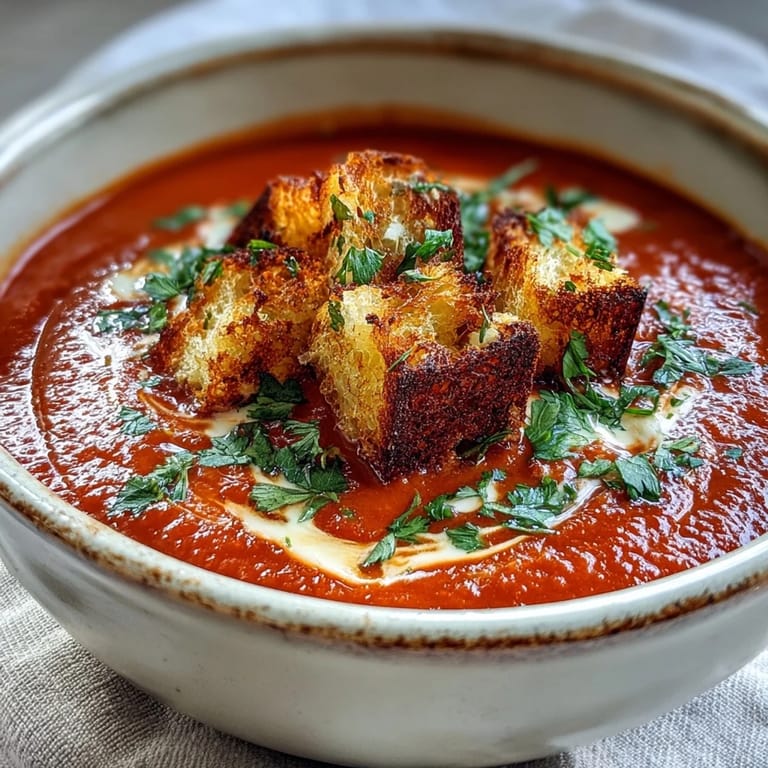
- Day-old bread: Stale bread is actually better for croutons because it crisps up beautifully rather than turning tough.
Tired of Takeout? 🥡
Get 10 meals you can make faster than delivery arrives. Seriously.
One email. No spam. Unsubscribe anytime.
Instructions
- Roast the peppers until charred:
- Preheat your oven to 425°F and arrange halved peppers skin-side up on a baking sheet with a drizzle of olive oil. After 25 to 30 minutes, the skins will blacken and blister—this is exactly what you want, as it makes peeling easier and deepens the pepper flavor. The kitchen will smell incredible.
- Make the croutons simultaneously:
- While peppers roast, toss bread cubes with olive oil, garlic powder, oregano, and salt, then spread them on a separate tray. Bake for 10 to 12 minutes, stirring once halfway through, until they're golden and crispy on all sides.
- Cool and peel the peppers:
- Once they're cool enough to handle, the charred skin comes off easily under your fingers or with a knife. Don't worry about tiny bits of skin lingering—they add character and fiber.
- Sauté the aromatics:
- In a large pot over medium heat, warm the remaining olive oil and add chopped onion, minced garlic, and diced carrot. Let them soften for 5 to 7 minutes, stirring occasionally until the onions turn translucent and the carrot begins to yield.
- Bloom the spices:
- Stir in harissa paste, smoked paprika, and cumin, cooking for just one minute until the spices release their oils and fragrance fills the pot. This step ensures the flavors are fully developed rather than dusty and flat.
- Build the soup:
- Add your roasted peppers, the canned tomatoes with their juice, vegetable broth, salt, pepper, and sugar if using. Bring everything to a gentle boil, then reduce heat and let it simmer quietly for 15 minutes so flavors meld.
- Blend until silky:
- Use an immersion blender to purée the soup until completely smooth, or carefully transfer batches to a regular blender if that's what you have. An immersion blender means less cleanup and a lower risk of hot soup splashing everywhere.
- Finish with cream:
- Stir in heavy cream or coconut cream if you're using it, which rounds out the harissa's heat and adds velvety richness. Taste and adjust seasoning, adding more salt, pepper, or even a touch more harissa if it needs it.
- Serve with ceremony:
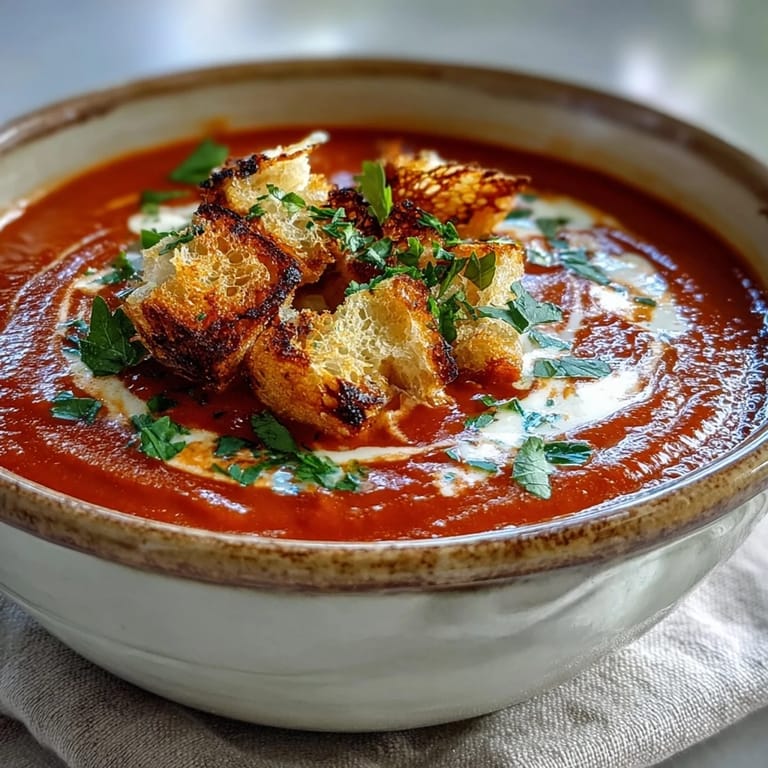
- Ladle soup into bowls and crown each one with crispy croutons, fresh herbs, and an optional swirl of extra harissa or cream. The contrast of textures—silky soup, crispy bread, the herbal pop of fresh parsley—is what makes this dish feel special.
 Save
Save The best version of this soup happened in early October when I roasted the peppers over a gas flame instead of in the oven, letting them char unevenly and catch. The smoky char made the final dish taste like something that had been cooked over a real fire, and my daughter asked for seconds without complaining about anything else on her plate.
Roasting Is Everything
I've learned through small mistakes that roasting isn't just a cooking method here—it's a transformation. The peppers go in firm and slightly vegetal, but after 30 minutes of direct heat, their sugars concentrate and their flavors deepen into something almost caramelized. If you rush this step or skip it, the soup will taste like red peppers in a pot, not like this specific dish.
The Harissa Question
Harissa confused me at first because it's spicy but not in a capsaicin burn way—it's more complex and layered, with heat that creeps rather than shouts. The amount matters too: one tablespoon is assertive but not overwhelming, while half a teaspoon would barely whisper. Start conservatively if you're unsure, because you can always taste and add more, but you can't take it back once it's in.
Why Croutons Matter
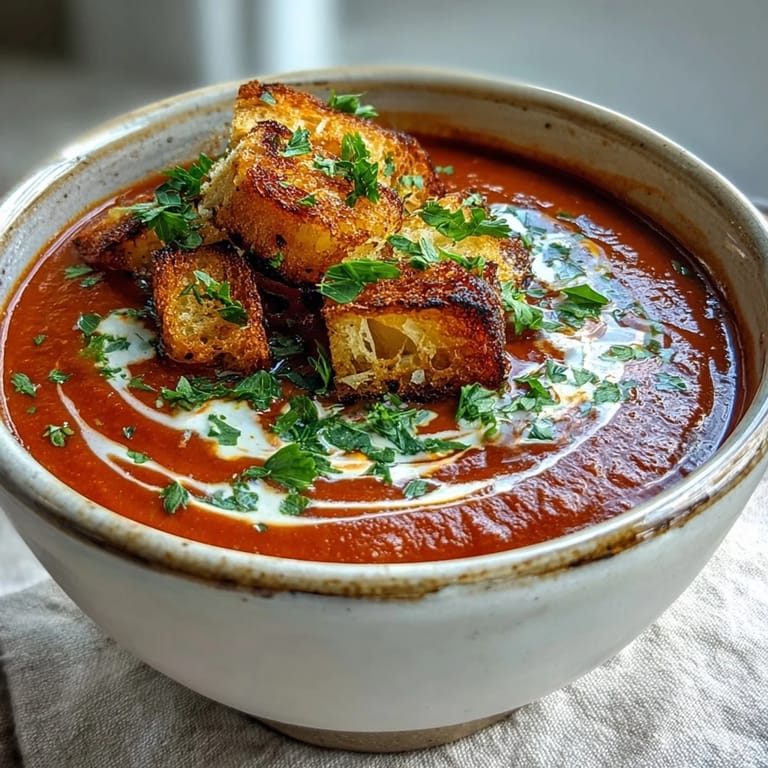
A smooth soup needs textural contrast to feel complete, and homemade croutons taste incomparably better than anything from a box. They stay crispy longer too, so you can make them an hour or two ahead and still have that satisfying crunch. There's something deeply satisfying about serving something both elegant and homemade, and croutons feel like the secret to pulling it off.
- Make croutons the same day you plan to serve the soup so they're fresh and crispy, not soft and stale.
- If your bread is very fresh, let it sit out uncovered for a few hours to dry out, or use a lower oven temperature and longer baking time.
- Leftover croutons are wonderful in salads or eaten straight from the container as a snack.
 Save
Save This soup has quietly become the thing I make when I want to feel capable and generous at the same time. It's simple enough that nothing feels like a struggle, but finished enough that it tastes like you've done something real.
Common Recipe Questions
- → Can I make this soup ahead of time?
Absolutely. This soup tastes even better the next day as flavors have time to develop. Store in an airtight container in the refrigerator for up to 4 days. Reheat gently on the stovetetop, adding a splash of broth or water if needed.
- → How do I roast peppers without an oven?
Place peppers directly over a gas burner flame, turning frequently with tongs until completely charred on all sides. Alternatively, use a kitchen torch or grill. Once blackened, place in a bowl covered with plastic for 10 minutes—the steam will loosen skins for easy peeling.
- → What can I use instead of harissa?
Sriracha works well for a different but equally delicious kick, though it's sharper and less complex. For a smoky alternative, try chipotle paste in adobo sauce. Red pepper flakes with a pinch of smoked paprika can also provide heat and depth.
- → Can I freeze this soup?
Yes, freeze for up to 3 months in freezer-safe containers. However, omit the cream when freezing—add it after reheating for best texture. The croutons don't freeze well, so make those fresh when serving.
- → How do I make the soup spicier?
Increase harissa to 2 tablespoons, add a pinch of cayenne pepper, or include a diced jalapeño when sautéing the aromatics. You can also serve with extra harissa on the side for diners to adjust their own heat level.
- → What bread works best for croutons?
Day-old sourdough, baguette, or rustic country bread creates excellent croutons with ideal crunch. Avoid soft sandwich bread as it becomes mushy rather than crispy. Stale bread actually works better than fresh—it absorbs flavors while maintaining structure.