 Save
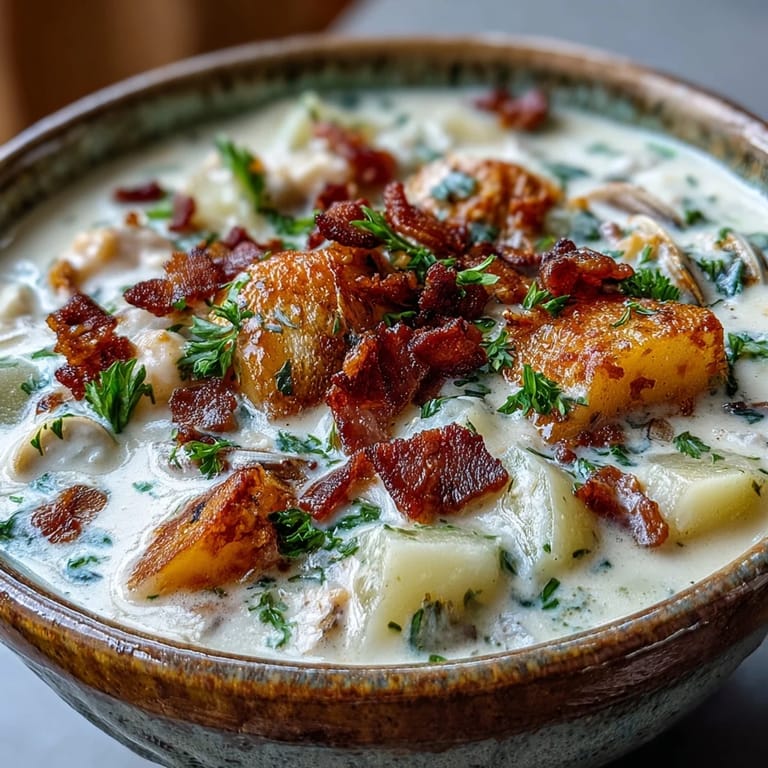
Save My first real taste of New England clam chowder came on a gray October afternoon at a small seafood shack near Boston, where the cook let me watch through the kitchen window while she built the soup layer by layer. There was something almost meditative about the way she moved—rendering the bacon first, then coaxing the vegetables soft without letting them brown, the kitchen filling with that unmistakable smell of the sea meeting butter and cream. I've made it dozens of times since, and each bowl still carries that same quiet comfort, that sense of doing something right.
I made this for my sister on a random Tuesday when she was going through a rough patch, and watching her face as she tasted it—that moment when the creamy, briney warmth just hit her—reminded me that sometimes food does more than fill your stomach. She came back three times that winter asking for it, and now whenever things feel uncertain, she texts me asking if I'm making chowder soon.
Ingredients
- Fresh clams (2 pounds) or canned chopped clams (2 cups): The heart of the whole thing—fresh clams give you that briny cooking liquid that's pure gold, but canned works beautifully if you're short on time or live far from the coast.
- Salt pork (4 ounces) or thick-cut bacon: This renders down into pure umami, and the rendered fat is what makes every vegetable taste like it belongs in a five-star kitchen.
- Yukon Gold or russet potatoes (2 medium, about 2 cups diced): The texture difference matters here—Yukon Golds stay creamy and won't break apart, while russets get a bit fluffier.
- Onion (1 medium, finely diced): Take your time here because the sweetness that develops as the onion cooks is what makes people ask for your recipe.
- Celery (2 stalks, diced): People skip this and regret it—celery adds a subtle backbone that you can't replicate any other way.
- Garlic (1 clove, minced): Just one clove keeps it subtle and coastal feeling instead of turning this into something else entirely.
- Unsalted butter (4 tablespoons): Use real butter here, not a substitute—it's only 4 tablespoons and it matters.
- Heavy cream (1 cup) and whole milk (1 cup): The combination of both creates a texture that's luxurious without being overwhelming, and you can swap half the cream for half-and-half if you want something lighter.
- Clam juice (2 cups) plus reserved cooking liquid: This is where the flavor lives—never skip the reserved liquid from steaming fresh clams because it's basically liquid gold.
- All-purpose flour (2 tablespoons): Your thickener, whisked in slowly to avoid those lumpy moments that ruin the whole vibe.
- Bay leaf (1) and dried thyme (½ teaspoon): These are quiet additions that somehow make everything taste more like itself.
- Fresh parsley (2 tablespoons, chopped): Added at the very end to bring brightness to all that richness.
- Salt and freshly ground black pepper: Taste as you go because the clam juice and bacon are already salty, and you might need less than you think.
Tired of Takeout? 🥡
Get 10 meals you can make faster than delivery arrives. Seriously.
One email. No spam. Unsubscribe anytime.
Instructions
- Steam the clams (if using fresh):
- Scrub the clams under cold running water—you'll feel the sand rub off, which is satisfying in its own way. Combine them with 1 cup water in a large pot, cover it, and steam over medium heat until they open, about 6 to 8 minutes; this is when your kitchen smells unmistakably like the ocean. Discard any that stubbornly stay closed, remove the clams, strain the cooking liquid through a fine sieve to catch any sand, and chop the meat roughly—you want some pieces to stay a bit chunky for texture.
- Render the pork or bacon:
- Dice the salt pork or bacon and add it to a large Dutch oven or heavy-bottomed pot over medium heat, letting it cook slowly until the fat melts and the meat turns crispy, about 5 to 7 minutes. Remove the meat with a slotted spoon and set it aside on a paper towel, but leave all that rendered fat in the pot—that's your flavor foundation.
- Build the vegetable base:
- Add the butter to the pot, then add your diced onion and celery, stirring occasionally until they're soft and beginning to turn translucent but haven't taken on any color, about 5 minutes. Add the minced garlic and cook for just 1 more minute until it smells fragrant but not bitter—timing matters here.
- Make the roux:
- Sprinkle the flour over the vegetables and stir constantly for 2 minutes, cooking out the raw flour taste and creating a thick paste that coats everything. This is when you're building the thickening power that will make the soup silky instead of watery.
- Add the liquids slowly:
- Pour in the clam juice (including whatever you reserved from steaming fresh clams) very slowly while whisking constantly, then do the same with the milk and cream, making sure everything dissolves together smoothly without any floury lumps hiding at the bottom. This slow, patient approach is what separates a silky chowder from one that feels grainy.
- Simmer the potatoes:
- Add the diced potatoes, bay leaf, and thyme, then let everything simmer gently uncovered for 12 to 15 minutes, stirring every few minutes to make sure nothing sticks to the bottom. The potatoes will go from firm to tender, and you'll notice the broth becoming richer as they release their starch—this is exactly what you want.
- Add the clams back in:
- Stir in the chopped clams (or canned clams with their juice) along with the crispy bacon pieces, and let everything warm through gently for 3 to 5 minutes. This is crucial: never let it boil after the clams are in because they'll turn tough and rubbery, and you'll lose that tender texture that makes people close their eyes when they eat.
- Finish with fresh herbs and seasoning:
- Fish out that bay leaf, stir in the fresh parsley, and taste carefully before adding salt and pepper—remember the clam juice and bacon were already salty, so you might need less than you'd expect. Adjust to your liking, and you're done.
 Save
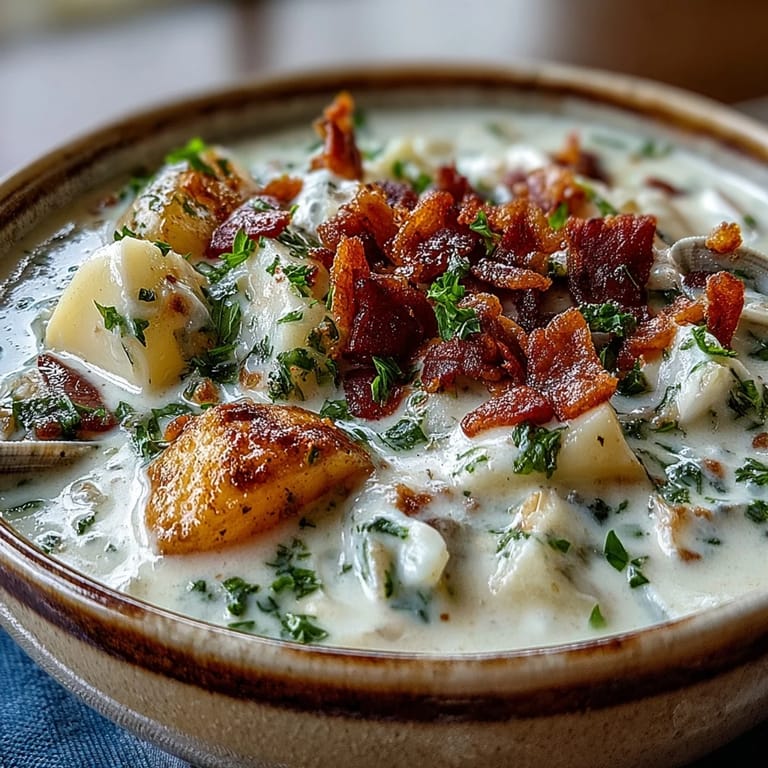
Save There's a moment when you're ladling chowder into bowls and the steam rises up and fogs your glasses, and for a second you're just standing in your kitchen breathing in salt and cream and the smell of home. That's when you know you've made something worth making.
Fresh Versus Canned Clams
Fresh clams give you this incredible briny cooking liquid that's irreplaceable, plus the satisfaction of knowing exactly what went into your pot. But canned clams save you time and work just beautifully—use the kind labeled as chopped, drain them but reserve the juice, and you'll have a chowder that tastes like you spent hours hunting for seafood even though you didn't. Either way, you're making something legitimate and delicious.
The Roux Moment
That moment when you add flour to butter and vegetables is small but important—you're creating the thickening agent that will make this soup creamy instead of soupy. The 2-minute cook time matters because you're driving off the raw flour taste, but you're not browning it like you would for a darker roux. Watch it and you'll develop an instinct for when it's right, and once you understand how roux works, you can apply that knowledge to dozens of other dishes.
Variations and Customizations
This recipe is flexible in ways that matter for real cooking—you can substitute half-and-half for the cream if you want something lighter, or use fish stock instead of bottled clam juice if that's what you have on hand. You can double the recipe for a crowd, or halve it for just two people on a cold evening. Some people add corn kernels for sweetness, others add diced red potatoes for color.
- If you want to go lighter, swap cream for half-and-half or even more milk, and it's still delicious and comforting.
- Fresh herbs like dill or chives can replace or join the parsley if that's what feels right in your kitchen.
- Crusty bread or oyster crackers are traditional for a reason—they soak up the soup and add texture.
 Save
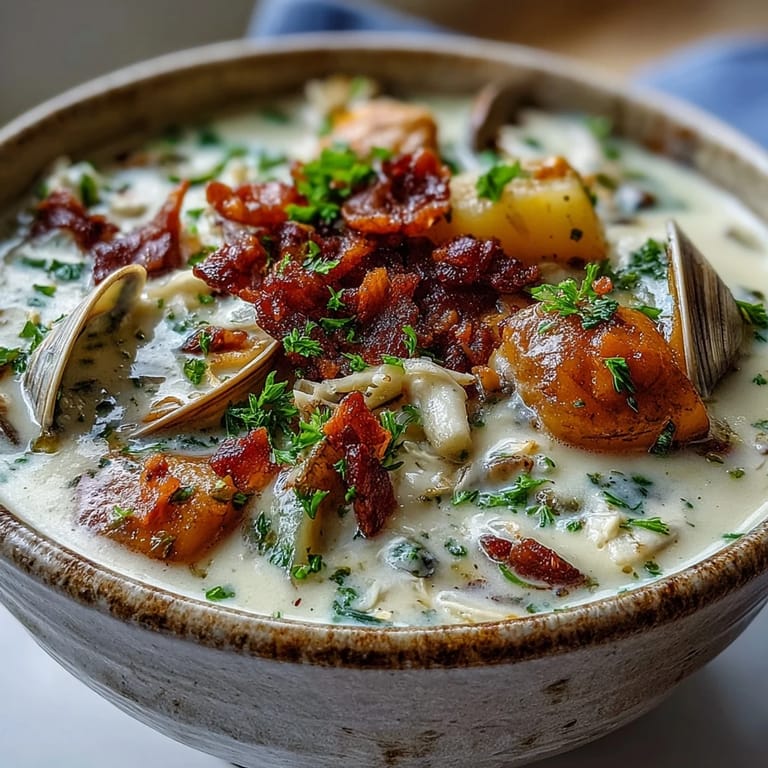
Save This is the kind of soup that teaches you something every time you make it, and each batch tastes a little more like your own kitchen than the last. Make it for people you care about, and watch what happens.
Common Recipe Questions
- → Can I use canned clams instead of fresh?
Yes, canned chopped clams work beautifully. Use 2 cups of canned clams including their juice for maximum flavor. The canned juice adds essential depth to the broth.
- → How do I prevent the dairy from curdling?
Avoid boiling after adding the cream and milk. Keep the heat at a gentle simmer and stir frequently. Room temperature dairy also helps prevent separation.
- → Can I make this ahead of time?
Absolutely. The flavors actually improve overnight. Store in the refrigerator and reheat gently over low heat, adding a splash of cream if needed to restore consistency.
- → What's the difference between New England and Manhattan chowder?
New England chowder features a creamy milk-based broth, while Manhattan version uses tomatoes and has a clear, broth-like consistency. This traditional recipe follows the creamy New England style.
- → Can I freeze leftover chowder?
Freezing is possible but may cause slight separation of the dairy. Reheat slowly while stirring, and the texture should mostly recover. For best results, consume within 3 months.