 Save
Save My first encounter with these Portuguese egg tarts happened in a cramped bakery in Lisbon's Alfama district, where the smell of cinnamon and caramelized custard wrapped around me like a warm scarf. The baker's hands moved with such practiced ease, layering phyllo so thin you could see through it, and I stood there mesmerized—not just by the technique, but by how something so delicate could taste so rich and satisfying. Years later, I finally tried making them at home, fumbling through my first batch with phyllo sheets sticking to everything, but that first golden tart that emerged from the oven tasted like a small victory. Now, every time I bake these, I'm transported back to that narrow Lisbon street, except this time I'm the one creating the magic.
I baked these for my neighbor Elena one afternoon when she was feeling homesick for Portugal, and watching her face light up as she bit into one—eyes closing, that little satisfied sigh—made me realize these tarts are about more than flavor. They're edible nostalgia, a way to say I understand without saying much at all. She had three.
Ingredients
- Phyllo pastry sheets: Twelve thin, crispy layers that form the foundation—buy them fresh if possible, and let them come to room temperature before unwrapping so they don't crack and shatter on you.
- Unsalted butter, melted: This is what turns phyllo from papery to golden and flaky; don't skip the melting step or you'll have patches of dry pastry.
- Whole milk: The backbone of your custard, bringing smoothness and a subtle sweetness that holds everything together.
- Cornstarch: Your thickening agent—it keeps the custard from being runny while letting it stay creamy and tender.
- Heavy cream: This is the secret that makes the filling feel luxurious; don't substitute with milk or you'll taste the difference immediately.
- Granulated sugar: Use the amount exactly; too little and the custard tastes flat, too much and it becomes overly sweet and dense.
- Egg yolks: Four yolks create that signature custardy richness and golden color that makes these tarts unmistakably Portuguese.
- Pure vanilla extract: A small amount that quietly supports the other flavors without overshadowing the cinnamon.
- Ground cinnamon: Use fresh cinnamon if you have it—old cinnamon loses its warmth and aromatic punch, which is half the appeal here.
- Powdered sugar and cinnamon for topping: A final dusting that adds visual elegance and one last flavor whisper.
Tired of Takeout? 🥡
Get 10 meals you can make faster than delivery arrives. Seriously.
One email. No spam. Unsubscribe anytime.
Instructions
- Heat your oven and gather your workspace:
- Preheat to 200°C (400°F) and make sure your 12-cup muffin tin is within arm's reach. Phyllo moves quickly once you start unwrapping it, so having everything organized keeps you calm and in control.
- Layer and brush the phyllo:
- Take each sheet and brush it lightly with melted butter—you want an even coat, not a puddle, or it'll burn. Stack three sheets together, then use a sharp knife or pizza cutter to cut squares large enough to drape over the muffin cups.
- Shape the pastry cups:
- Gently press each buttered stack into the muffin tin, letting it settle naturally into the cup shape. Don't force it; a few small creases and wrinkles add character and are part of the charm.
- Pre-bake the shells:
- Bake for 8–10 minutes until they turn a light golden color and feel crispy to the touch. They'll continue to cook when you add the custard, so don't wait for deep browning.
- Make the custard while phyllo rests:
- Whisk milk and cornstarch together until completely smooth, then add heavy cream, sugar, egg yolks, vanilla, cinnamon, and salt. The mixture should feel silky, with no lumps hiding anywhere.
- Cook the custard slowly over medium heat:
- Whisk constantly for 5–7 minutes, watching for the moment when it thickens enough to coat the back of a spoon. You'll feel the texture change under your whisk, becoming thicker and more luxurious—that's your signal to stop.
- Fill the warm cups:
- Divide the custard evenly among the phyllo cups, filling them three-quarters full. The warm custard and warm pastry are meant to meet; this is when the real magic happens.
- Final bake and golden finish:
- Return to the oven for 8–10 minutes until the custard sets just barely—it should still have a tiny wobble in the very center. Watch for golden spots on the top, which means the sugar and cinnamon are caramelizing.
- Cool and dust:
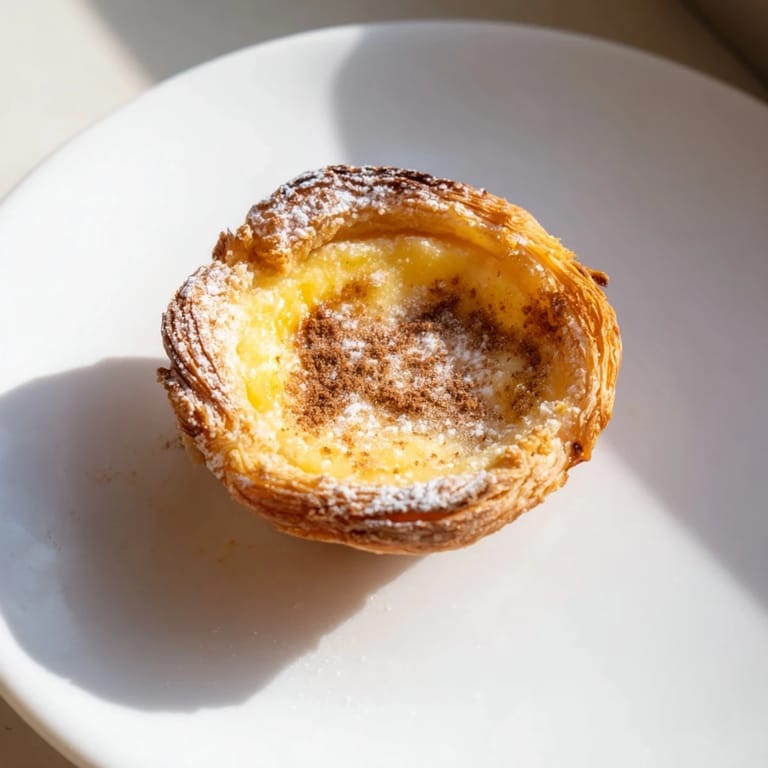
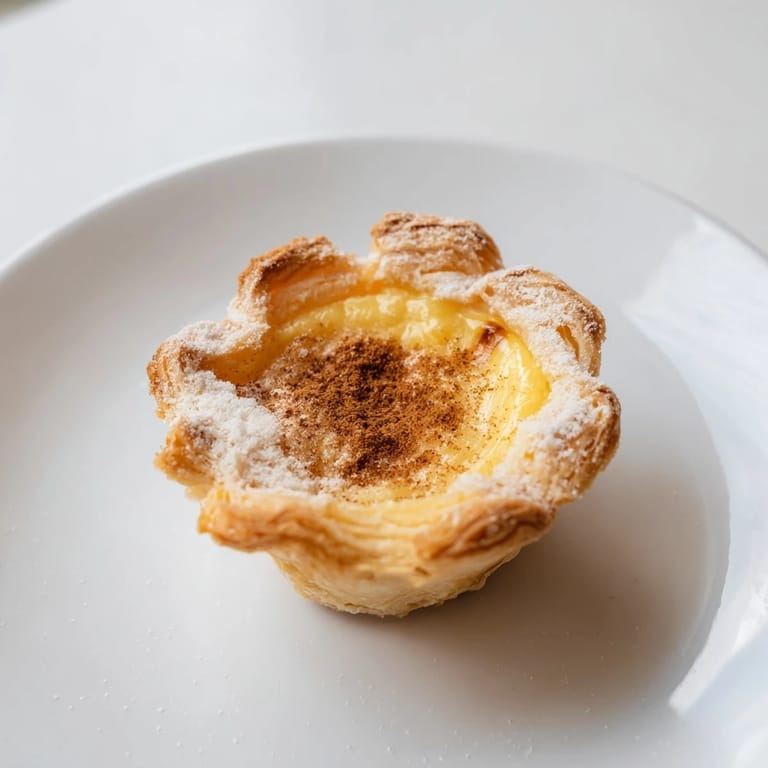
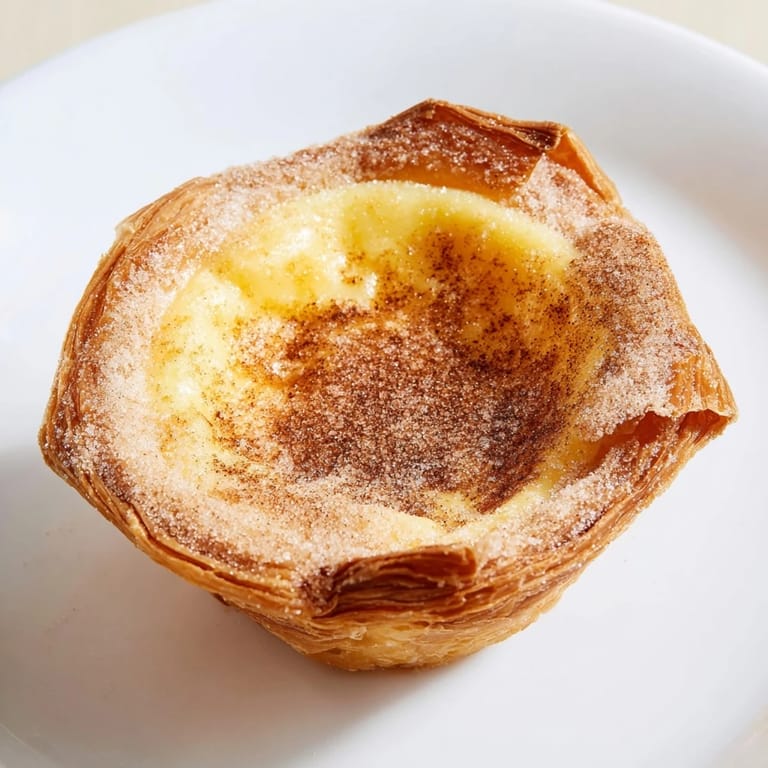
- Let them cool for a few minutes until they're comfortable to touch, then dust generously with cinnamon and powdered sugar. This final step is where they truly look like Portuguese pastry shop treasures.
 Save
Save My most memorable moment with these tarts was when my daughter, then five years old, declared that they tasted like "fancy clouds with cinnamon," and I realized that's exactly what they are—pure comfort disguised as sophistication. Sometimes the best recipes are the ones that bridge generations and remind us why we love cooking in the first place.
The Phyllo Technique That Changes Everything
The first time I tried to make phyllo cups by hand, I fought with the sheets, let them dry out, and ended up with a crumbly mess. Then someone told me to brush each sheet as I went and stack immediately—no rushing, no drama. The phyllo suddenly became cooperative, almost eager to cooperate. Working with phyllo isn't about strength; it's about rhythm and respecting the material. Once you understand that, every sheet becomes workable, and you'll find yourself looking forward to the buttering part of the process.
Why Warm Custard Matters More Than You Think
Using cold custard seems logical—less messy, easier to handle. But warm custard mingles with the warm pastry shell, creating a gentle seal that locks in the texture. I learned this the hard way when a batch baked with room-temperature custard came out separated and slightly weepy. The filling needs that warmth to integrate properly with the shell, creating something unified rather than two separate components stacked together. Temperature is a flavor and texture player, not just a safety guideline.
Serving Moments and Flavor Pairings
These tarts are best served within a few hours of baking, when the phyllo still has its snap and the custard hasn't fully hardened in the cold. A small glass of chilled white port makes the pairing feel like a celebration, or pair with strong espresso if you're keeping things simple. The slight tartness and chill of port amplifies the cinnamon, while espresso grounds the sweetness without competing for attention.
- Serve them while still slightly warm—room temperature is second best, cold is when they start losing their magic.
- If you must make them ahead, store in an airtight container and give them a quick minute in a warm oven before serving to restore crispness.
- Dust with cinnamon and sugar just before serving, not hours ahead, so the powdered sugar stays white and doesn't clump or absorb moisture.
 Save
Save These Portuguese egg tarts are proof that simple ingredients in the right hands, with a little patience and genuine care, can transform an ordinary afternoon into something memorable. Make them for someone you want to impress, or make them just for yourself—either way, you're honoring a tradition that's been delighting people for centuries.
Common Recipe Questions
- → What pastry is used for the tart shells?
Phyllo pastry sheets are layered, brushed with butter, and formed into crisp cups to hold the custard filling.
- → How is the custard thickened?
Cornstarch is whisked into milk and heated with cream, sugar, yolks, and spices until it thickens gently on the stovetop.
- → Can these tarts be served warm or cold?
They are best enjoyed slightly warm to maintain the contrast between flaky pastry and smooth custard.
- → What spices enhance the flavor?
A subtle cinnamon touch in the custard and as a topping adds warmth and invites sweetness.
- → How should leftovers be stored?
Store chilled and reheat briefly in the oven to restore crispness before serving again.