 Save
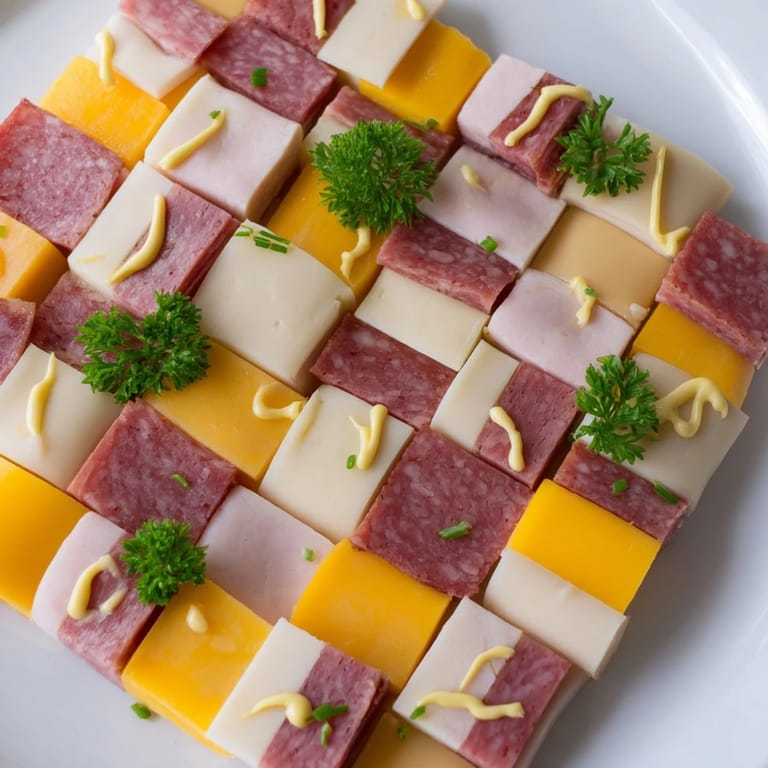
Save I discovered this dish at a dinner party where my friend Sarah had arranged cured meats and cheeses in the most unexpected way—not in the usual tired platter format, but as an actual edible work of art. The mustard lines she'd piped between the squares caught me off guard; it looked almost like someone had stitched it all together by hand. That night, I watched guests gravitate toward it not because they were hungry, but because they couldn't resist the playfulness of it. When Sarah mentioned it took her barely twenty minutes to create, I knew I had to master it myself.
I made this for my nephew's graduation celebration, and watching his friends photograph it before eating felt like a small victory in the kitchen. One guest asked if I'd trained as a pastry chef because of how precise the squares were; I laughed and admitted my only training was trial and error with a very sharp knife. That moment reminded me that sometimes the most impressive dishes are simply about intention and care, not technical prowess.
Ingredients
- Smoked turkey breast, 100 g sliced: The leanest player here, it adds a subtle smokiness that prevents the board from tasting too rich or one-note.
- Salami, 100 g sliced: This is where the funk and depth come from—choose a quality variety and don't skimp, as it's the personality of the arrangement.
- Ham, 100 g sliced: The mellow bridge between the other meats, it keeps everything balanced and approachable.
- Swiss cheese, 100 g sliced: Its mild, slightly nutty character and natural holes make it visually interesting and complement the mustard perfectly.
- Sharp cheddar, 100 g sliced: This brings color contrast and a bold flavor that stands up to the mustard without getting lost.
- Provolone, 100 g sliced: Smooth and creamy with just enough tang, it bridges flavors and adds a warm golden tone to your patchwork.
- Whole grain mustard, 2 tbsp: The visible seeds create texture and a rustic charm; it's less aggressive than straight yellow mustard.
- Dijon mustard, 2 tbsp: Silkier and more sophisticated, alternating these two mustards creates visual variety and keeps your palate engaged.
- Fresh parsley or chives: A whisper of green that ties everything together and signals freshness—optional, but recommended.
Tired of Takeout? 🥡
Get 10 meals you can make faster than delivery arrives. Seriously.
One email. No spam. Unsubscribe anytime.
Instructions
- Prep your canvas:
- Cut each meat and cheese slice into uniform 2-inch squares using a sharp knife and a steady hand. Uniformity matters here because it's what makes the visual pattern actually work; ragged edges break the illusion. Take your time—this is where the magic begins.
- Build your quilt:
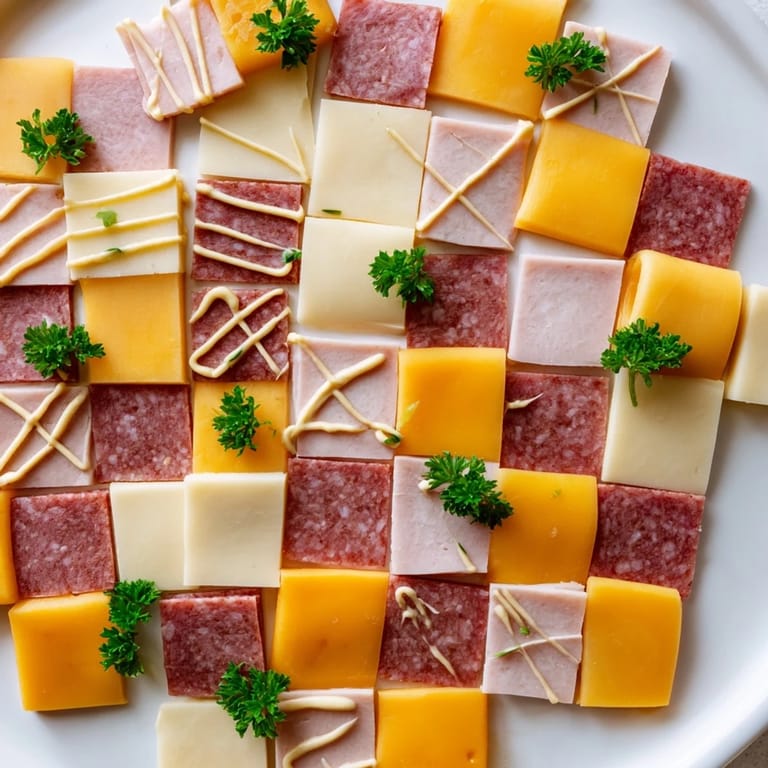
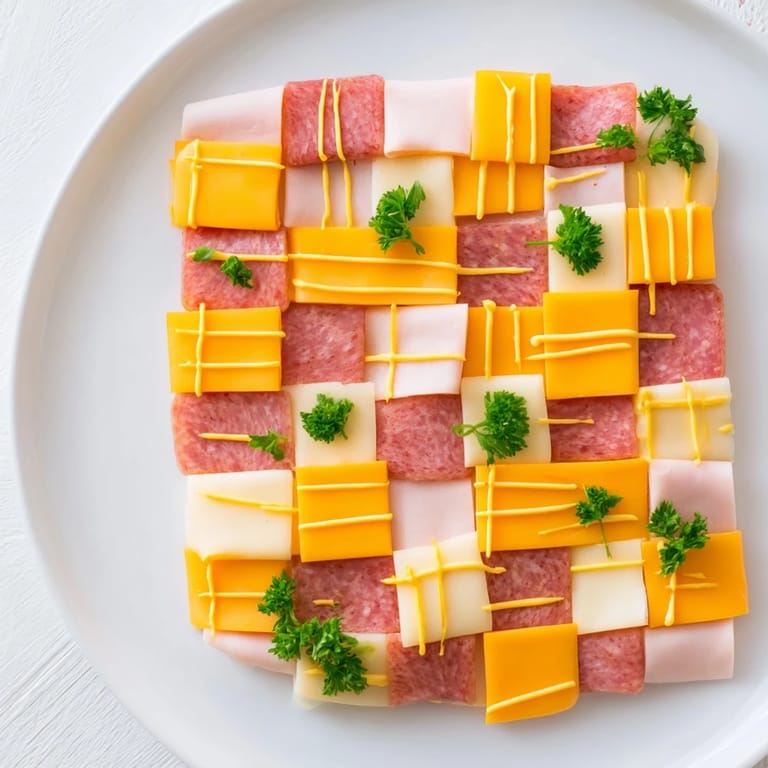
- Arrange the squares on a large serving platter in a checkerboard or patchwork pattern, alternating meats and cheeses like you're creating a textile. Step back and look at it; adjust colors until it feels balanced and the eye has somewhere natural to land.
- Stitch it together:
- Load a squeeze bottle or piping bag with mustard and draw deliberate lines between the squares, alternating whole grain and Dijon to keep the eye moving. Think of it as stitching seams—this is the moment it transforms from a platter into something intentional.
- The finishing touch:
- Scatter your fresh herbs across the arrangement if you're using them. Serve immediately with toothpicks or small forks so guests can taste the intention you've put into every bite.
 Save
Save I realized this dish works best when you stop thinking of it as just an appetizer and start seeing it as a conversation starter. A friend once told me that the best entertaining happens when you give people permission to play with their food, and this platter does exactly that.
The Art of Arrangement
The beauty of this dish lies in its flexibility—there's no single correct pattern. Some people love a strict checkerboard; others create diagonal spirals or random mosaics that somehow feel more intimate. I've learned that the pattern reflects your mood on any given day, which means this appetizer becomes different each time you make it. The constraint of uniformly cut squares actually frees you to be creative, because the structure holds everything together.
Flavor Layering Secrets
Each combination of meat, cheese, and mustard creates its own tiny flavor experience. The sharp cheddar with whole grain mustard hits differently than provolone with Dijon, and this variety keeps people reaching for bite after bite instead of settling for one. I started understanding this dish less as a platter and more as a flavor exploration when I realized my guests were having mini conversations about which combinations they preferred. The mustard lines aren't just visual—they're actually flavor agents that unify everything and prevent any single element from dominating.
Hosting Like You Mean It
This dish taught me that entertaining doesn't require hours of labor or complex techniques—it requires intention and presentation. The twenty minutes you invest becomes confidence on your face when guests arrive and immediately gravitate toward your board. It's proof that sometimes the most memorable meals are the simplest ones, executed with care.
- Cut everything the morning of if you're pressed for time; they'll stay fresh in the fridge, and assembly takes five minutes.
- Taste a combination yourself before serving so you know what story each bite tells.
- Provide enough toothpicks—people will want seconds of their favorite combinations.
 Save
Save This patchwork quilt reminds me that good food isn't always about complexity; sometimes it's about seeing everyday ingredients through a playful lens. Serve it at your next gathering and watch it disappear.
Common Recipe Questions
- → What meats are used in this dish?
Smoked turkey breast, salami, and ham are sliced into uniform squares to provide a variety of savory flavors.
- → Which cheeses complement the meats here?
Swiss, sharp cheddar, and provolone cheeses add creamy and sharp accents to the patchwork arrangement.
- → How is the mustard applied in the dish?
Whole grain and Dijon mustards are piped as lines between the meat and cheese squares, resembling stitching.
- → Can this dish be customized with other ingredients?
Yes, adding roasted vegetable squares or different cheeses can enhance color and flavor variety.
- → What serving tools are recommended?
A sharp knife for uniform cutting, a cutting board, a serving platter, and a squeeze bottle or piping bag for the mustard lines are essential.