 Save
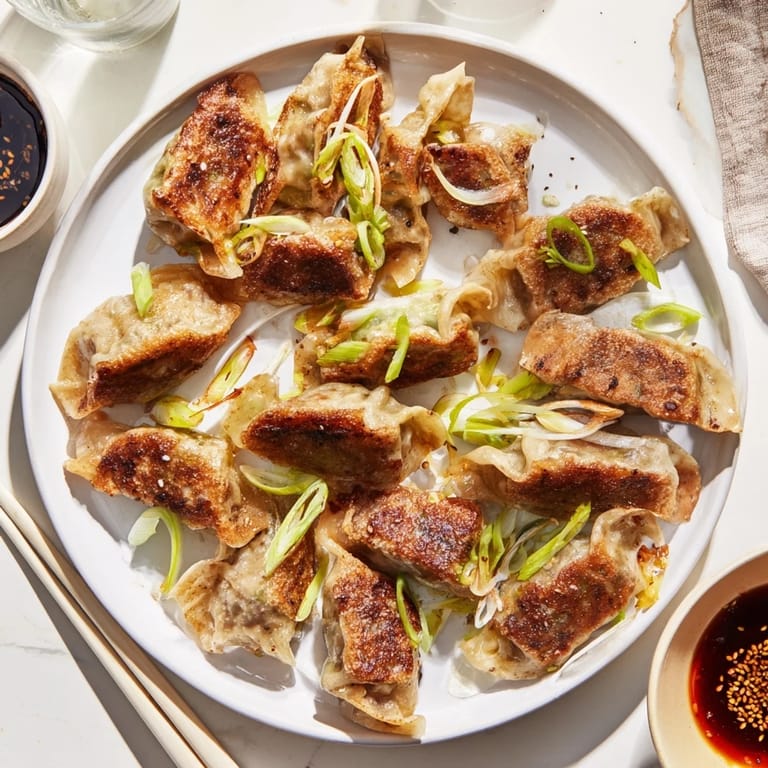
Save The smell of sizzling dumplings still takes me back to that tiny apartment kitchen where my roommate first showed me this trick. We'd been ordering takeout gyozas for years until she discovered that smashing store-bought dumplings in a hot pan created the crispiest, most addictive edges imaginable. Now I make them whenever friends come over, and the sound of them hitting the hot oil always makes everyone gravitate toward the stove.
Last winter, my sister came over during a snowstorm and we made three batches back to back. We ended up eating them straight from the pan, burning our fingers and laughing, while watching old movies on the couch. Somehow the burned fingertips made them taste even better.
Ingredients
- Ground pork: The fat content keeps these juicy while the high heat crisps the exterior
- Napa cabbage: Adds sweetness and texture that prevents the filling from becoming dense
- Wonton wrappers: Store-bought ones are perfectly thin and crisp up beautifully
- Sesame oil: This is what gives the filling its signature aromatic depth
- Neutral oil: You need something with a high smoke point for that initial sear
- Rice vinegar: Cuts through the rich pork and balances the dipping sauce perfectly
Tired of Takeout? 🥡
Get 10 meals you can make faster than delivery arrives. Seriously.
One email. No spam. Unsubscribe anytime.
Instructions
- Mix the filling:
- Combine everything in a bowl and really work it together with your hands until the pork starts to get sticky and tacky. This texture means the proteins are breaking down, which keeps the filling juicy instead of crumbly.
- Fill and fold:
- Place a teaspoon of filling in the center of each wrapper, wet the edges with water, and fold into half-moons. Press out any air pockets before sealing completely, then gently press down with your palm to flatten each dumpling.
- Get the pan hot:
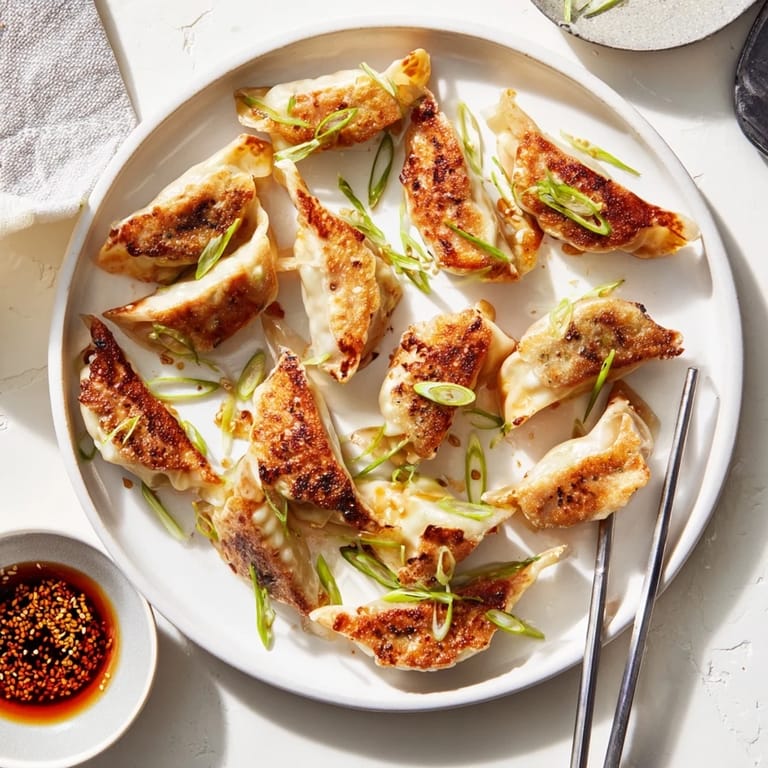
- Heat oil in a nonstick skillet over medium-high until it shimmers. Place the dumplings flat side down, making sure they are not touching, and let them cook undisturbed until the bottoms turn golden and the smell becomes toasty and rich.
- Steam them open:
- Throw in a splash of water and immediately cover with a lid. The steam will soften the wrappers while the bottoms stay crisp, and you will know they are done when the water has evaporated and the sizzling sound returns.
- Crisp again and serve:
- Remove the lid and cook for one final minute to re-crisp any softened bottoms. Whisk together the dipping sauce while the dumplings rest for just a minute before serving them hot.
 Save
Save These have become my go-to whenever I need to feed a crowd but do not want to spend hours in the kitchen. The first time I made them for a dinner party, people stood around the stove waiting for each batch to finish, and we almost did not make it to the table.
The Smashing Technique
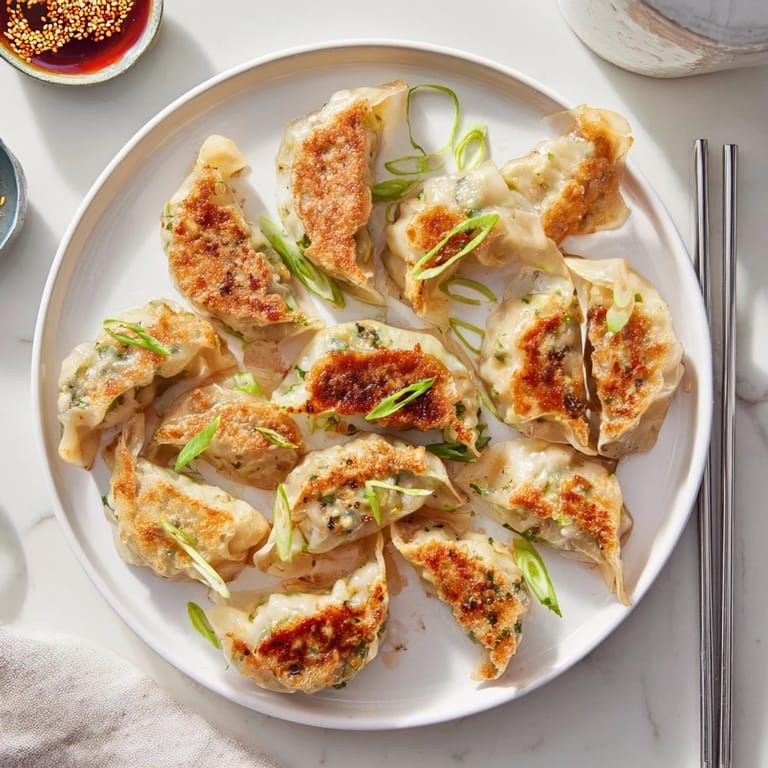
Pressing the dumplings flat after folding creates more surface area for crisping. The first time I tried this, I was worried they would fall apart, but the pleating actually holds everything together while the expanded bottom gets incredibly crunchy.
Make-Ahead Magic
You can assemble these on a parchment-lined baking sheet and freeze them uncooked. When you are ready to cook, they go straight from freezer to hot pan, just add an extra minute to the initial sear time.
Perfect Pairings
These work beautifully alongside simple steamed rice or a crisp cucumber salad dressed with rice vinegar. I also love serving them with cold beer or a dry Riesling to cut through the richness.
- Try adding chopped shiitake mushrooms to the filling for earthy depth
- A sprinkle of furikake over the finished plating adds umami and visual appeal
- Keep extra napkins nearby because the crispy bottoms create the best kind of mess
 Save
Save These smashed gyozas prove that sometimes the best cooking techniques are the simplest ones. I hope they become a staple in your kitchen like they are in mine.
Common Recipe Questions
- → What makes smashed gyozas different from regular dumplings?
Smashed gyozas are flattened before cooking, creating more surface area for crispy bottoms. The unique shape exposes extra edges to the hot pan, resulting in an irresistible crunch that regular pleated dumplings can't achieve. The smoking technique also ensures tender tops while bottoms stay perfectly crispy.
- → Can I make these ahead of time?
Yes, assemble uncooked gyozas up to 24 hours in advance. Place them on a parchment-lined baking sheet with space between each piece, cover tightly, and refrigerate. Cook straight from the refrigerator, adding an extra minute to the initial pan-frying time. Freeze uncooked gyozas for up to one month.
- → What dipping sauces work best?
The classic soy-vinegar-chili oil combination is perfect for balance. Try adding minced garlic, fresh ginger, or a dash of sesame oil for depth. Sweet chili sauce, ponzu, or spicy mustard also complement the crispy texture and savory filling beautifully.
- → Can I use wonton wrappers instead of gyoza wrappers?
Absolutely. Wonton wrappers work perfectly and are often easier to find. They're slightly thinner than traditional gyoza skins, which means extra crispiness. Handle them gently when sealing, and keep unused wrappers covered with a damp towel to prevent drying out.
- → How do I prevent gyozas from sticking to the pan?
Use a well-seasoned nonstick skillet and heat oil thoroughly before adding dumplings. Don't overcrowd the pan, and let them develop a golden crust before attempting to move them. The water-steaming step also helps release any stuck bits naturally.
- → What vegetarian substitutions work well?
Replace ground pork with crumbled firm tofu, minced mushrooms, or finely chopped vegetables like cabbage, carrots, and water chestnuts. Add extra soy sauce and sesame oil to maintain savory depth. Mix ingredients thoroughly so the filling holds together during cooking.