 Save
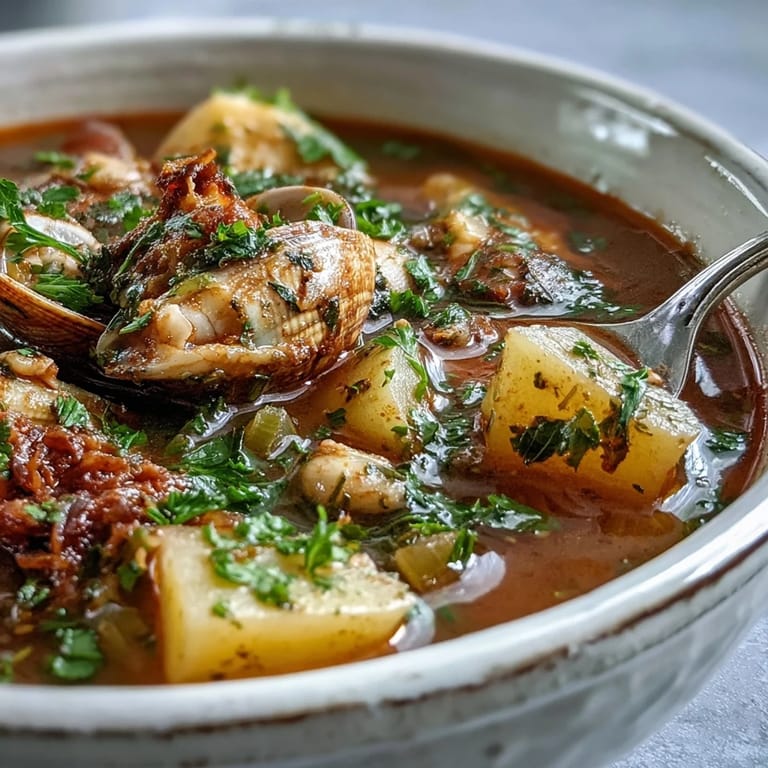
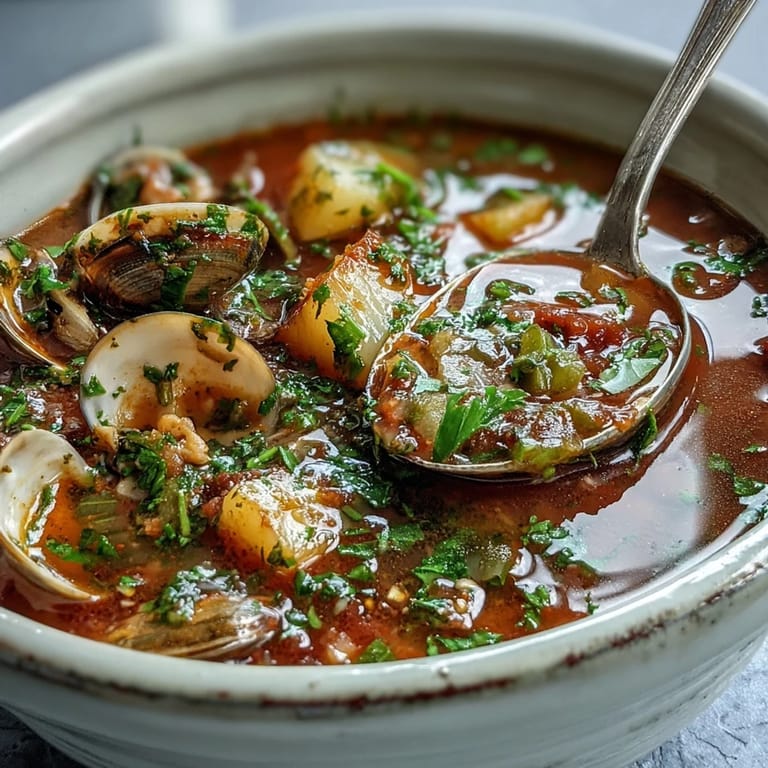
Save My aunt insisted that real Manhattan clam chowder tastes like the ocean itself—tangy, alive, and nothing like the creamy New England version everyone expects. When she finally taught me her method on a gray October afternoon, I understood what she meant the moment that first spoonful hit my tongue, bright with tomato and minerally clam broth. The kitchen filled with the smell of sautéed vegetables and sea salt, and suddenly this wasn't just soup—it was a conversation between land and water on a single spoon.
I made this for my brother the night he moved back to the city, and he sat at my kitchen counter with his jacket still on, tasting it straight from the pot before the bowls were even out. He closed his eyes and said it tasted like home, even though he'd grown up hours from any ocean. That's when I realized a good clam chowder isn't about where you're from—it's about making someone feel like they belong exactly where they are.
Ingredients
- Fresh clams (littlenecks) or canned chopped clams: Fresh clams give you that sweet, briny liquid gold that canned versions can't quite match, but canned works beautifully when the season isn't right or the fish counter looks questionable.
- Clam juice: This is your backbone—the reserved juice from steaming fresh clams mixed with bottled clam juice creates depth that plain water absolutely cannot replicate.
- Diced tomatoes with juice: The acidity brightens everything and gives Manhattan chowder its signature color and character; don't drain them.
- Olive oil: Good quality matters here since it's doing real flavor work, not just cooking.
- Onion, celery, and carrots: This holy trio needs to soften completely before anything else happens, which teaches you patience in the best way.
- Bell pepper: Green brings a subtle vegetal note, but red is sweeter if you want a gentler flavor profile.
- Yukon gold potatoes: They hold their shape during the long simmer and have a natural buttery flavor that complements the briny broth.
- Garlic: Just one minute of cooking after it hits the pan—any longer and it turns bitter.
- Thyme and oregano: Dried herbs work perfectly here and won't overwhelm the delicate clam flavor like fresh ones sometimes do.
- Bay leaves: They dissolve flavor into the broth over time and must be removed before serving, so don't skip that step.
- Red pepper flakes: Optional, but they add a whisper of heat that makes every other flavor pop.
- Fresh parsley: Save this for garnish—it brings brightness when scattered on top.
Tired of Takeout? 🥡
Get 10 meals you can make faster than delivery arrives. Seriously.
One email. No spam. Unsubscribe anytime.
Instructions
- Clean and steam your clams:
- If using fresh clams, rinse them under cold running water and discard any that won't close when tapped—those are dead and unsafe. Place them in a pot with 1 cup water, cover tightly, and steam over medium-high heat for 5 to 7 minutes until they open; this creates the most beautiful, naturally salty cooking liquid you'll add back to your chowder.
- Build your aromatic base:
- Heat olive oil in your largest, heaviest pot over medium heat and add onion, celery, carrots, and bell pepper, stirring occasionally for 6 to 8 minutes until they're soft and just beginning to caramelize at the edges. You'll notice the kitchen smells like a proper kitchen now—this is the moment everything changes.
- Wake up the garlic:
- Stir in minced garlic and cook for exactly one minute, just until fragrant, then immediately move to the next step before it has any chance to burn.
- Layer in your liquids and seasonings:
- Add diced potatoes, canned tomatoes with their juice, clam juice, your reserved clam cooking liquid, and all the dried herbs and seasonings, stirring everything together so nothing sticks to the bottom. This is where the soup truly comes together in terms of flavor—each ingredient finds its place.
- Simmer until potatoes surrender:
- Bring everything to a boil, then immediately turn the heat down to a gentle simmer and cook uncovered for 20 to 25 minutes until the potatoes are completely tender but not falling apart. The broth will deepen in color and the kitchen will smell like the coast.
- Reunite clams with broth:
- Gently stir in your chopped clams and let them warm through for 3 to 5 minutes—they're already cooked, so they just need to heat up and become part of the whole. Taste now and adjust salt and pepper as needed.
- Finish and serve:
- Fish out and discard the bay leaves, ladle the chowder into bowls, scatter fresh parsley on top, and serve immediately while steam still rises from the surface.
 Save
Save A friend once told me that she'd avoided clam chowder her entire life because she thought it would taste like the ocean smelled—which made sense, honestly. Then she tried a bowl of this, and something shifted; she realized the ocean doesn't taste like anything you can describe, but rather like something you remember in your chest.
When Fresh Clams Aren't an Option
Canned chopped clams work beautifully when fresh ones aren't available or when you're cooking on a budget, though you'll miss that moment of steaming open shells and creating your own liquid gold. Start by using the full 3 cups of clam juice as written—don't try to supplement with water thinking you'll save money, because the broth is where all the real flavor lives. The chowder will taste nearly identical, and honestly, some nights convenience is its own kind of victory.
Variations That Actually Taste Good
Once you've made this version a few times, you'll start noticing opportunities to make it your own without losing what makes it special. Adding diced cooked bacon when you sauté the vegetables brings a smokiness that plays nicely against the briny clams, while a handful of corn kernels added in the last few minutes of cooking adds subtle sweetness and texture. Some people swear by red bell pepper instead of green for a naturally sweeter soup, or they'll increase the potato quantity if they want something more filling—the formula is flexible enough to bend toward your preferences.
The Bread Question
This chowder wants something to accompany it, whether that's oyster crackers crumbled straight into the bowl or a thick slice of crusty sourdough for dipping and soaking up every last drop. The bread serves a purpose beyond tradition—it slows you down and makes the meal last longer, turning a simple bowl of soup into an entire evening.
- Crusty sourdough or focaccia soaks up broth better than soft bread and won't disintegrate within seconds.
- Toast your bread lightly before serving so it stays crispy instead of becoming a soggy disappointment.
- Some people keep the bread on the side for dipping, while others crumble crackers right into the bowl—there's no wrong way.
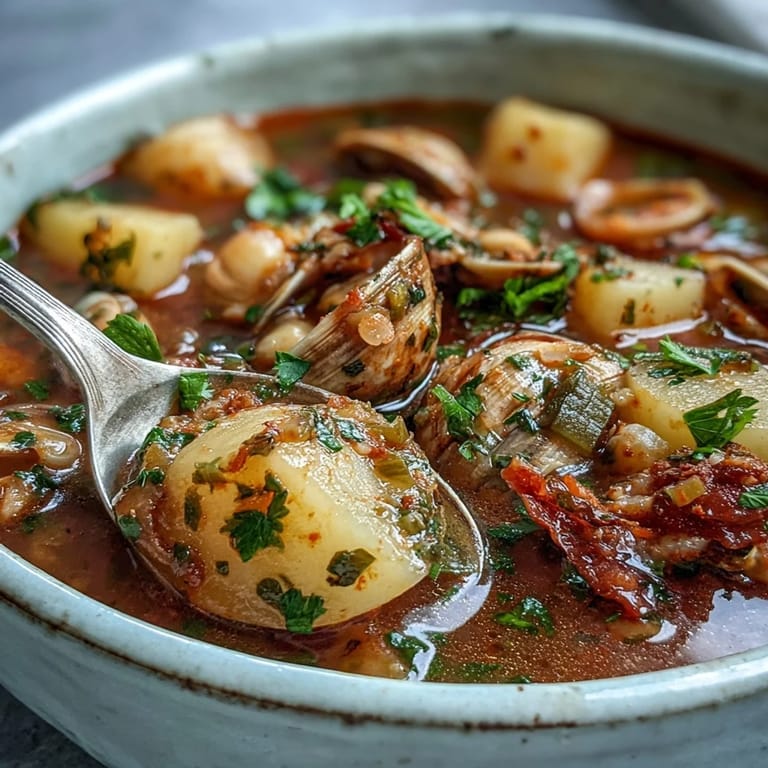 Save
Save This chowder is the kind of soup that doesn't demand much of you except patience and presence—the kind you make when you want the house to smell like comfort and care for an hour. It's proof that the simplest ingredients, treated with respect and given enough time, become something that tastes like it knows exactly who you are.
Common Recipe Questions
- → What makes Manhattan clam chowder different from New England style?
Manhattan clam chowder features a tomato-based broth rather than the creamy milk base of New England style. This creates a lighter, more vibrant dish with a reddish hue and zesty flavor profile. The tomato base provides natural acidity that pairs beautifully with sweet clams and hearty vegetables.
- → Can I use canned clams instead of fresh?
Absolutely. Canned chopped clams work well in this preparation—simply drain them and reserve the juice. You'll need approximately 3 cups of chopped clams. The canned variety actually simplifies the process since they're already cleaned and chopped, though fresh clams do provide a slightly sweeter, more delicate flavor.
- → How long does leftover chowder keep in the refrigerator?
Properly stored in an airtight container, this chowder keeps well for 3-4 days refrigerated. The flavors often develop and improve after a day. Reheat gently over medium-low heat, stirring occasionally. Avoid boiling as this can toughen the clams. If the broth seems too thick after refrigeration, add a splash of water or clam juice while reheating.
- → What sides pair best with this chowder?
Crusty sourdough bread is ideal for soaking up the flavorful tomato broth. Oyster crackers are the traditional accompaniment, providing a satisfying crunch. A simple green salad with vinaigrette balances the richness. For a complete meal, consider serving with roasted vegetables or a light grain pilaf.
- → Can I freeze Manhattan clam chowder?
Yes, this chowder freezes well for up to 3 months. Cool completely before transferring to freezer-safe containers, leaving some space for expansion. Thaw overnight in the refrigerator before reheating. Note that potatoes may become slightly softer after freezing, but the overall flavor remains excellent. Avoid reheating multiple times as this can affect texture.
- → How can I add more smoky depth to the flavor?
Two ounces of diced cooked bacon added with the vegetables introduces wonderful smoky notes. Alternatively, a touch of smoked paprika works well. Some cooks add a small amount of cured pork like salt pork or pancetta at the beginning. The smokiness complements the tomato base beautifully without overpowering the delicate clam flavor.