 Save
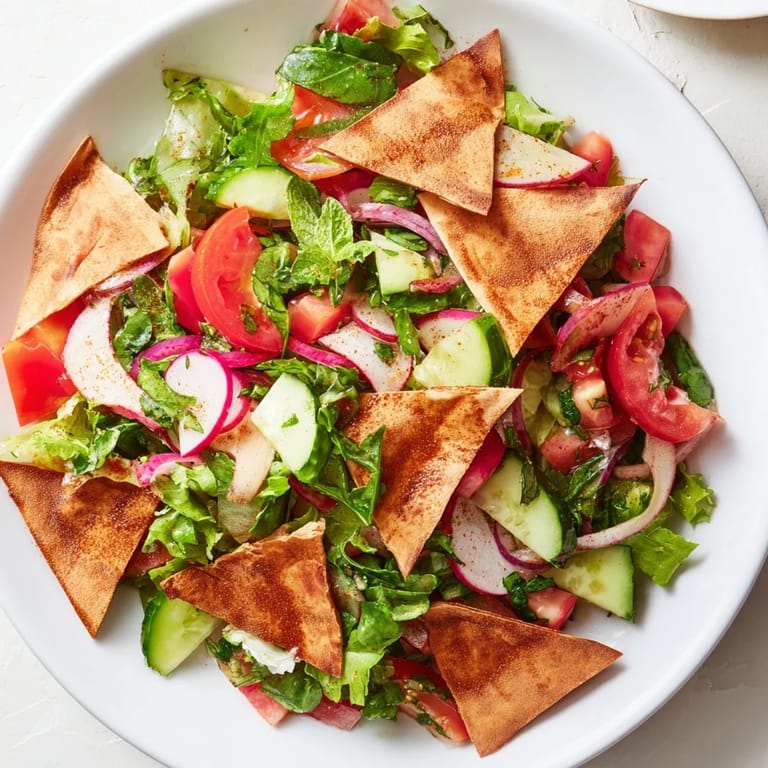
Save There's something about the smell of pita crisping in the oven that makes you feel like you're cooking in someone's Mediterranean kitchen. The first time I made fattoush, I'd just come back from the market with a pile of herbs still damp from the vendor's mister, and I realized I had no idea what I was building—just these beautiful ingredients and the vague promise that sumac would tie it all together. By the time those chips hit the salad and the dressing pooled at the bottom, I understood: this wasn't just lunch, it was a conversation between acid and salt and crunch.
I made this for my neighbor once when she mentioned craving something green and alive, and she ate three plates standing up in my kitchen, just picking at it straight from the bowl. She kept saying the same thing over and over: "Why have I never had this before?" That's when I knew fattoush wasn't just a salad—it was proof that the simplest combinations, when they're fresh and honest, beat anything fancy.
Ingredients
- Mixed greens (romaine, arugula, or purslane): Two cups chopped—choose whatever feels brightest at the market; purslane has an underrated peppery edge if you can find it.
- Tomatoes: Two medium, diced—taste one before you buy; summer tomatoes make this dish sing.
- Cucumber: One large, diced—cool and crisp, the backbone of everything.
- Radishes: Four, thinly sliced—they add a clean bite that keeps the salad from feeling heavy.
- Red onion: One small, thinly sliced—the sharp counterpoint; don't skip it.
- Fresh parsley: Half a cup chopped—herbaceous and grassy, the green that makes it Lebanese.
- Fresh mint: Quarter cup chopped—adds a cool whisper that changes everything.
- Pita bread: Two pieces—buy the thickest, fluffiest ones you can find.
- Olive oil (for chips): Two tablespoons—enough to coat without making them soggy.
- Sea salt: Half a teaspoon for the chips, plus more for seasoning—quality salt is worth it here.
- Extra-virgin olive oil (for dressing): Three tablespoons—use something you'd taste on its own.
- Fresh lemon juice: Two tablespoons—squeeze it yourself; bottled tastes different.
- Red wine vinegar: One tablespoon—brings depth without overpowering.
- Ground sumac: One to one and a half teaspoons—the star; it tastes lemony and slightly floral, and it's where all the magic lives.
- Garlic clove: One, minced—sharp and essential; don't use jarred.
- Black pepper: Quarter teaspoon freshly ground—whole peppercorns only.
Tired of Takeout? 🥡
Get 10 meals you can make faster than delivery arrives. Seriously.
One email. No spam. Unsubscribe anytime.
Instructions
- Get your chips going first:
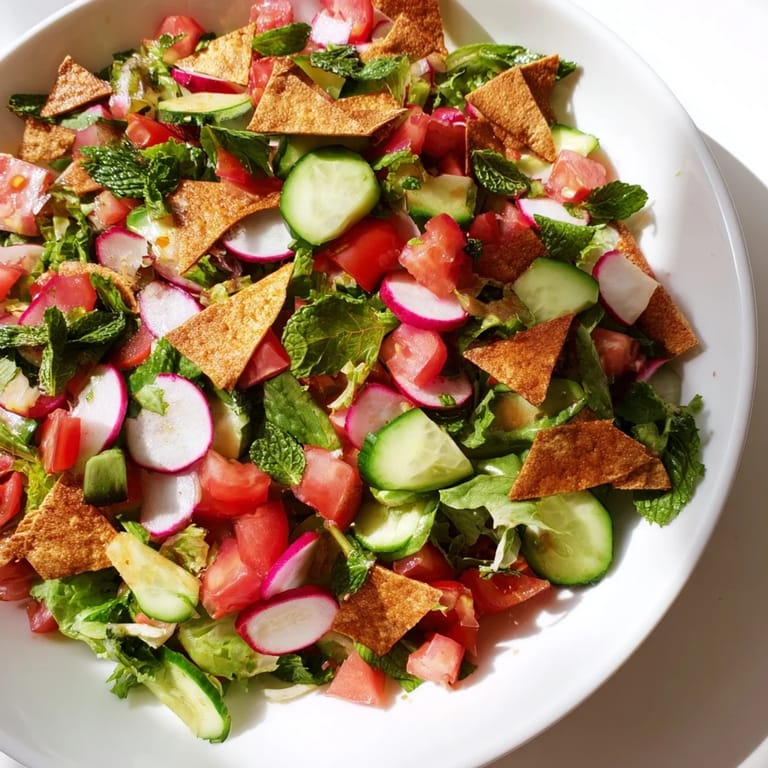
- Heat the oven to 375°F and cut pita into bite-sized squares—roughly the size of a postage stamp works. Toss them with olive oil and sea salt until every piece glistens, spread them on a baking sheet in a single layer, and bake for 8–10 minutes until they're golden and crisp. They'll smell incredible, which is your signal they're done.
- Assemble your salad base:
- While the chips toast, grab your largest salad bowl and add the mixed greens, tomatoes, cucumber, radishes, red onion, parsley, and mint. Everything should be fresh, cold, and ready to go—don't dress it yet.
- Make the dressing:
- In a small bowl, whisk together the olive oil, lemon juice, vinegar, sumac, minced garlic, salt, and pepper. Whisk until it smells bright and lemony and looks emulsified; it should taste tangy with a hint of floral nuttiness from the sumac.
- Bring it all together:
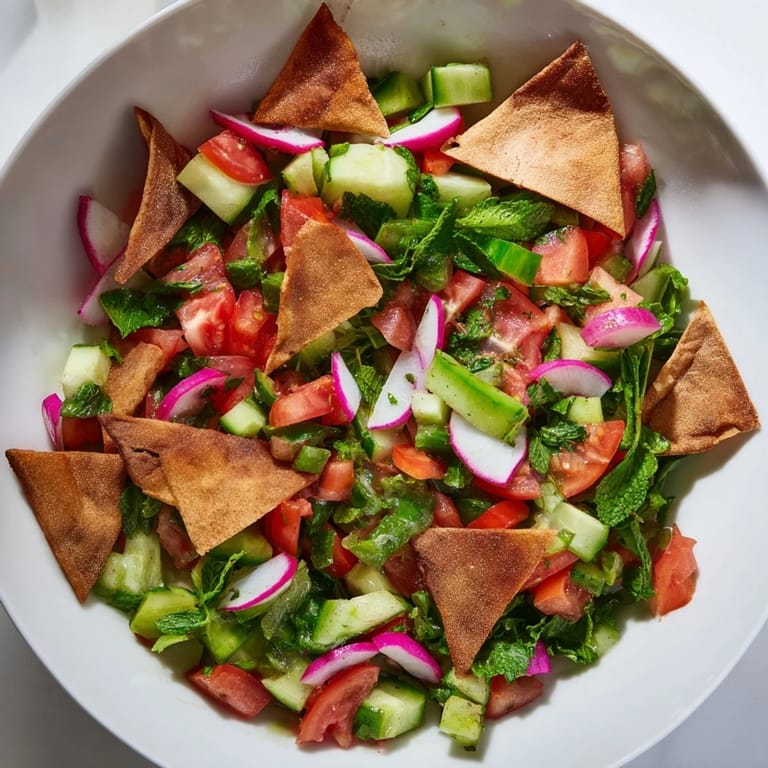
- When the chips have cooled just enough to handle, add them to the salad bowl. Pour the dressing over everything and toss gently—you want the chips to stay as crisp as possible, so don't overdress. Taste and adjust the salt or lemon if needed.
- Serve immediately:
- The moment those chips hit the dressing, they start to soften, so get it on the plates right away. Everything tastes better when it's still crackling a little.
 Save
Save My friend's teenage daughter asked for the recipe after eating this once, which meant something in her language of teenage indifference. Now I know she makes it for herself on Sunday nights when she wants something that feels both light and complete. That's when you know you've got a real recipe—when it becomes part of someone else's regular rotation.
The Sumac Secret
Sumac tastes like concentrated lemon without the acidity—it's this gorgeous magenta-brown powder that brings brightness and a subtle floral note that makes people ask what's in the dressing. I once made this with regular lemon vinaigrette out of desperation, and while it was fine, it was fine in the way most salads are fine. Adding sumac back in felt like turning up the volume on a song you already loved. It's worth buying a small container and keeping it in your spice cabinet; you'll find yourself reaching for it again and again.
Variations That Work
The beauty of fattoush is that it welcomes improvisation—it's not precious about it. I've added grilled chicken, crumbled feta, diced bell peppers, and green onions depending on what I had or what I was feeding. The core salad holds up to whatever you want to layer on top. One time I added chickpeas and suddenly had a vegetarian main course instead of a side dish. The herbs and the sumac dressing are what make it Lebanese; everything else is negotiable.
Timing and Serving
You can prep everything in advance—chop your vegetables, whisk your dressing, toast your chips—but assembly happens in the last five minutes. Fattoush doesn't hold well once it's been dressed; the greens wilt and the chips turn to paste, so make it fresh and serve it immediately. It's the kind of dish that reminds you why restaurants always assemble salads to order.
- If you're serving a crowd, keep the chips separate and let people add them themselves—they get to control the crunch.
- Make extra dressing if you're feeding four hungry people; there's always someone who wants more.
- This is perfect alongside grilled meats or as part of a mezze platter, or just as an unexpectedly satisfying lunch on its own.
 Save
Save Fattoush taught me that the best meals are the ones that come together quickly without fuss, using ingredients that taste like themselves. Every time I make it, I'm reminded that simplicity, when it's done with intention, is its own kind of luxury.
Common Recipe Questions
- → What makes the pita chips crispy?
Tossing pita pieces with olive oil and sea salt before baking them at 375°F (190°C) for 8-10 minutes creates a golden, crunchy texture.
- → Can I substitute the fresh herbs?
Yes, parsley and mint can be replaced with cilantro or basil to vary the flavor profile while maintaining freshness.
- → How does sumac influence the flavor?
Sumac adds a tangy, lemony note that brightens the dressing and enhances the overall taste of the salad.
- → Is it possible to make this salad gluten-free?
To keep it gluten-free, use gluten-free bread for the chips or omit them altogether without losing the essential salad flavors.
- → What are some variations to enhance this salad?
Add diced bell peppers or green onions for extra crunch and color, or serve alongside grilled meats for a heartier option.