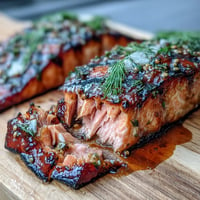
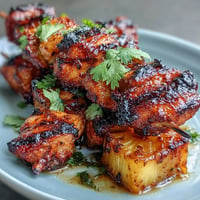
 Save
Save The first time I cooked tikka salmon was on a Tuesday night when my neighbor mentioned she'd been craving Indian food but couldn't justify ordering takeout again. I had salmon in the freezer and decided to raid my spice cabinet—turns out, a few pantry staples and yogurt transform into something restaurant-worthy in under 35 minutes. What started as a quick dinner fix became the meal I now make whenever I want to feel like I've actually put effort into cooking, even on nights when I'm running on fumes.
I remember my mom watching me cook this for the first time and being genuinely surprised at how the yogurt and spices created this golden, slightly charred crust without any cream or complicated technique. She tried a bite, raised her eyebrows, and asked me to write down the measurements—that's when I knew this recipe was a keeper.
Ingredients
- Salmon fillets: Fresh, firm salmon is your best bet, but honestly, even slightly older fillets work fine since the marinade covers any subtle off-notes and the oven heat seals everything in.
- Tikka masala paste: This is the workhorse ingredient that gives you that deep, warm spice profile without having to blend anything yourself—game changer.
- Yogurt: The thick kind matters because it clings to the fish instead of dripping off; plant-based versions work just as well if dairy isn't your thing.
- Lemon juice: Brightens everything and keeps the salmon from tasting heavy, plus the acidity helps tenderize the fish slightly.
- Cumin and coriander: These two are why the dish tastes authentically Indian instead of like someone just threw random spices at salmon.
- Smoked paprika and chili powder: The paprika adds a subtle smokiness that makes you wonder if you grilled it, and chili powder is your heat control dial.
- Olive oil: Helps the marinade coat evenly and keeps the salmon moist—don't skip it thinking the yogurt is enough.
Tired of Takeout? 🥡
Get 10 meals you can make faster than delivery arrives. Seriously.
One email. No spam. Unsubscribe anytime.
Instructions
- Heat your oven and prepare your tray:
- Get that oven screaming hot at 220°C (425°F) because salmon cooks fast and you want those edges crispy. Line your tray with parchment or foil so cleanup is basically a non-issue.
- Build your marinade:
- Dump everything spice-related into a bowl with the yogurt and lemon juice, then stir until it looks like golden, fragrant paste. Taste it if you want—this is your flavor baseline, and you can adjust the heat right now if you know you're sensitive to spice.
- Dry and coat your salmon:
- Pat those fillets completely dry because moisture is the enemy of browning, then slather the marinade on thick. Don't be shy here; cover every surface because the spices are what make this dish sing.
- Let it sit (or don't, but patience helps):
- Even 10 minutes lets the flavors start working their way in, but if you have time to refrigerate it for an hour, the marinade goes deeper and the flavors get more interesting. Either way works—this isn't one of those recipes where timing is make-or-break.
- Roast until golden and cooked through:
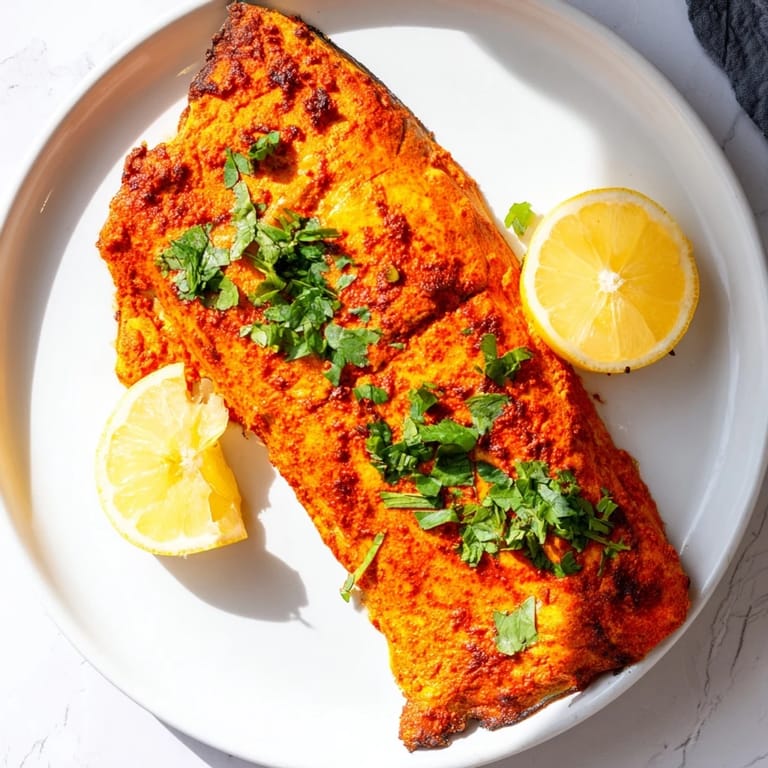
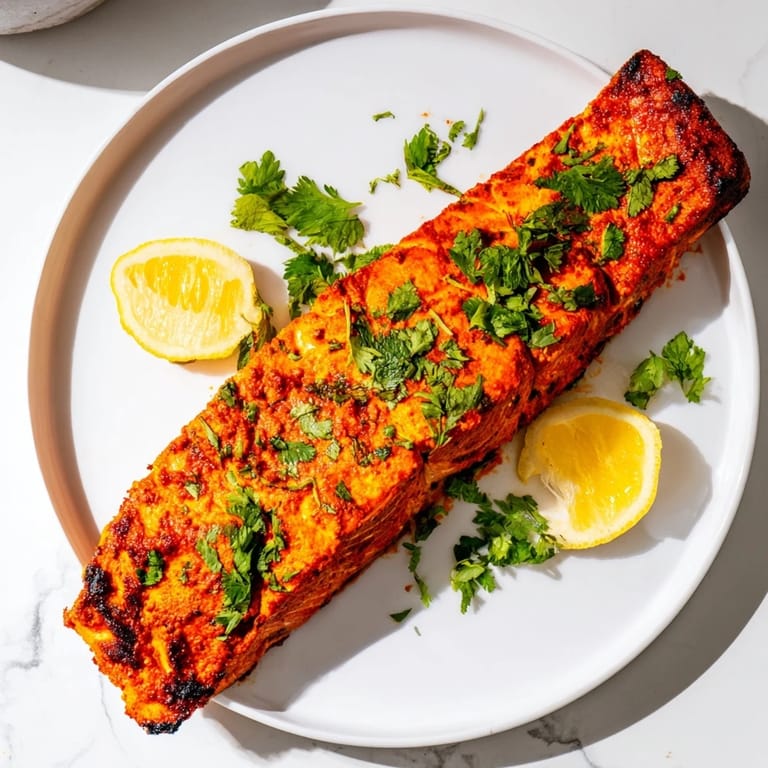
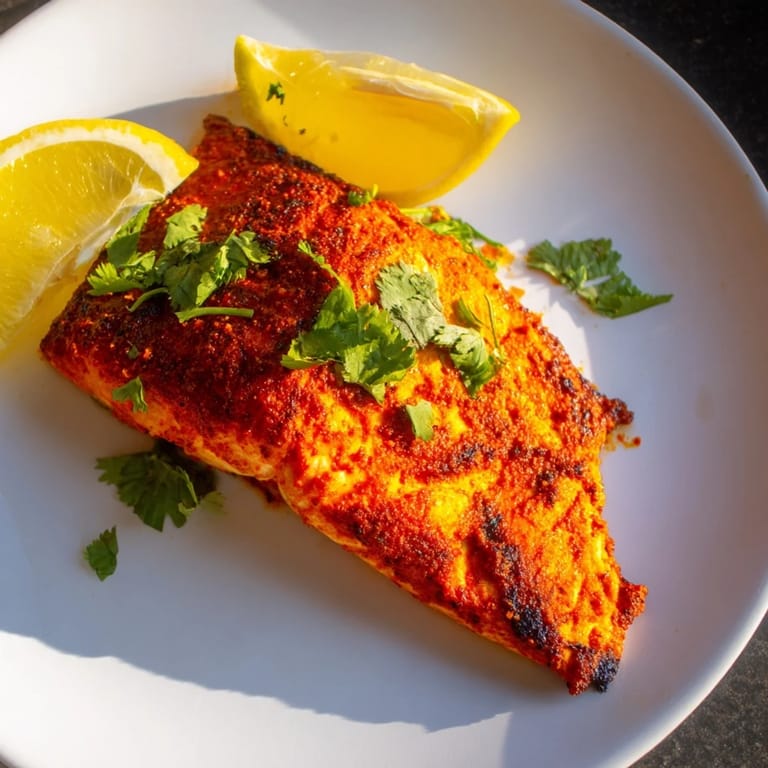
- Fifteen to eighteen minutes is usually right, but ovens vary wildly, so check around the 14-minute mark by poking the thickest part with a fork—if it flakes easily, you're done. The edges should look slightly charred and the surface should be set and golden.
- Finish with brightness:
- Fresh coriander and a squeeze of lemon wedge right before serving cuts through the richness and makes you feel like you actually plated something thoughtfully.
 Save
Save There's a moment right when the salmon comes out of the oven when the whole kitchen smells like a really good Indian restaurant, and suddenly a weeknight dinner feels like an occasion. That's the moment I remember why I keep coming back to this recipe.
What to Serve Alongside
I usually pair this with basmati rice because it soaks up all the spiced marinade juices that drip onto your plate, or warm naan if I'm feeling slightly less lazy. A simple cucumber salad with red onion and a splash of lime juice balances the richness beautifully and makes the whole meal feel complete without any real effort.
Why This Marinade Works
Yogurt in marinades is honestly one of the best cooking discoveries I've made—it's acidic enough to flavor the fish and slightly tenderize it, but it also clings to the surface and creates that gorgeous, slightly charred crust when it hits the hot oven. The spices bloom in the yogurt's fat, which means they taste more developed and less raw compared to if you just sprinkled them dry on top.
Making It Your Own
This recipe is genuinely flexible, and that's partly why it lives in my regular rotation. The marinade works on cod, haddock, or even tofu if you're feeding vegetarians alongside fish eaters, and if you don't have tikka masala paste on hand, a mix of curry powder and a touch of tomato paste does a reasonable job standing in.
- If you want extra char, slide the whole tray under the broiler for a minute or two right at the end—watch closely because it goes from perfect to burnt faster than you'd think.
- Leftover salmon (if such a thing happens) makes an absolutely stellar salad the next day, especially when you flake it into a simple greens-and-yogurt-dressing situation.
- The marinade actually tastes better if you make it the morning of rather than right before cooking, so if meal prep is your style, this is a weeknight win waiting to happen.
 Save
Save This is the kind of recipe that reminds me why I actually enjoy cooking on busy weeknights. It's elegant enough to impress someone without requiring you to stress.
Common Recipe Questions
- → What type of salmon is best for this dish?
Skin-on or skinless fillets both work well, offering moistness and flavor. Skin-on can add extra crispness when roasted.
- → Can I make this suitable for a dairy-free diet?
Yes, substitute thick plain yogurt with a plant-based alternative to keep the marinade creamy without dairy.
- → How long should the salmon marinate?
Marinate for at least 10 minutes to infuse the flavors; up to 1 hour enhances the depth without overwhelming the fish.
- → What side dishes pair well with this salmon?
Basmati rice, naan bread, or a crisp cucumber salad complement the spices and texture beautifully.
- → Can I adjust the heat level in this dish?
Yes, modifying the amount of chili powder allows you to control the spiciness to suit your preference.