 Save
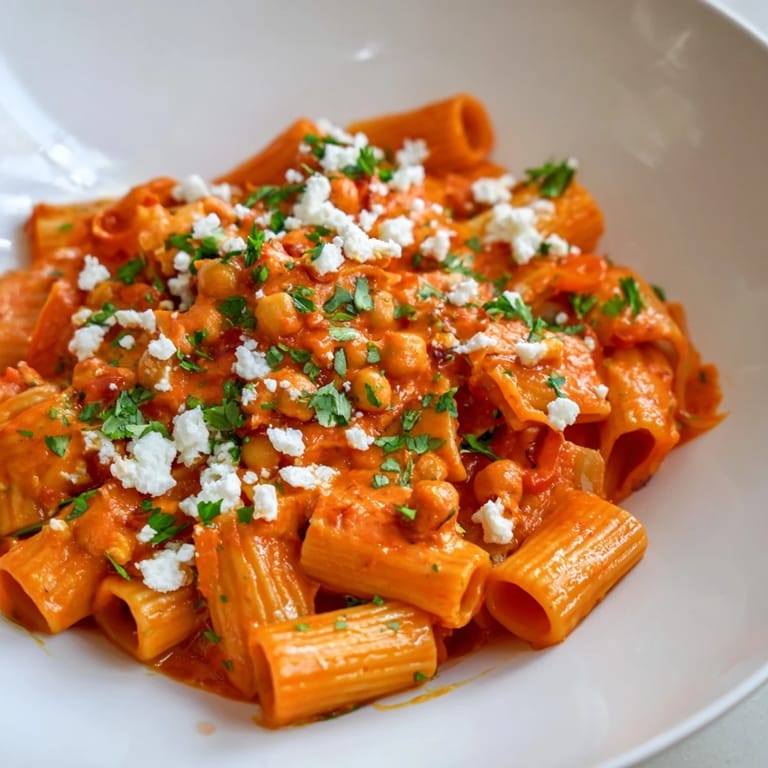
Save There's a particular evening I won't forget—standing in my kitchen with a tin of harissa paste I'd bought on impulse, wondering what to do with it. I pulled out a can of chickpeas, some tomatoes, and pasta, and something just clicked. Within forty minutes, I had a bowl of the most vibrant, warming pasta that tasted like it had been simmering for hours. That's when I realized harissa wasn't just a flavor to fear; it was an invitation to something bold and alive.
I made this for my neighbor last winter when she was going through a rough patch. She arrived skeptical about chickpeas in pasta, but the moment she tasted it, something shifted. She asked for the recipe three times during dinner. Now whenever I make it, I think of how food has this quiet power to say things we can't quite put into words.
Ingredients
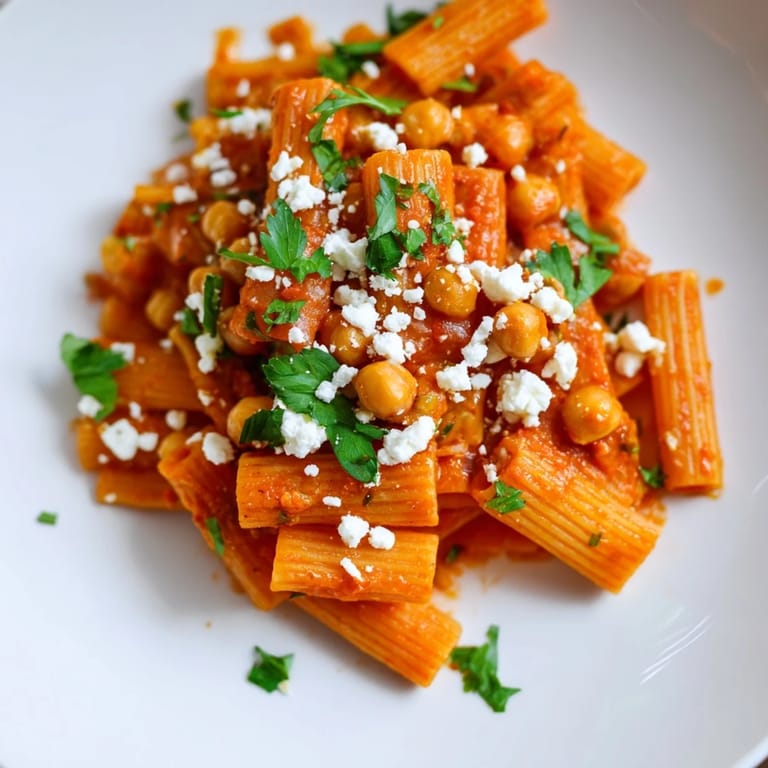
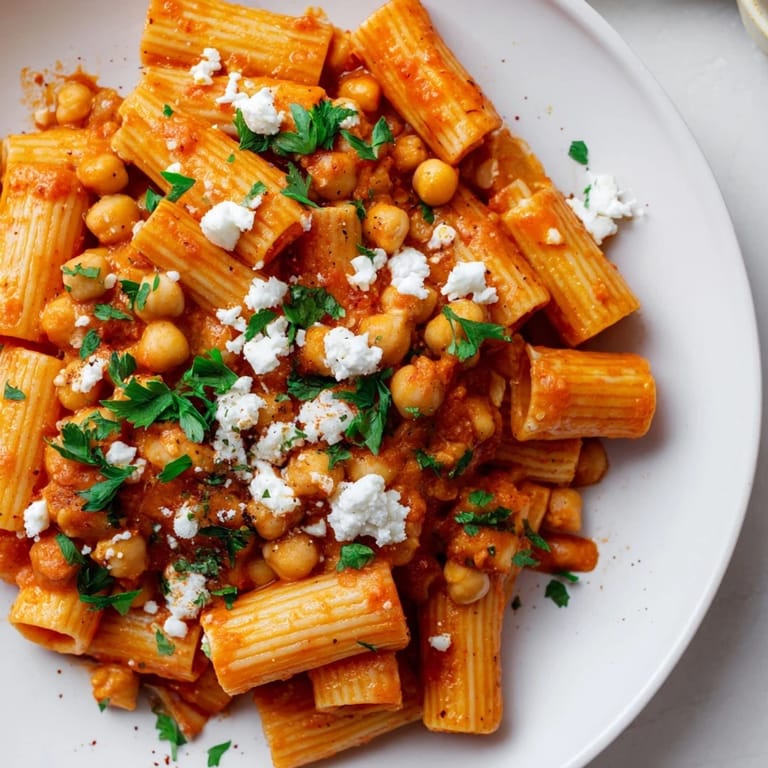
- Dried short pasta (350g): Penne, rigatoni, or fusilli work best because their shapes trap the sauce in all those little pockets, so every bite has flavor.
- Harissa paste (2 tbsp): This North African powerhouse brings warmth and depth; start with two tablespoons and taste as you go if heat intimidates you.
- Olive oil (2 tbsp): Good quality matters here since it's building the foundation of the sauce.
- Onion (1 medium) and garlic (3 cloves): They become the soft, sweet base that harissa builds on, so don't skip the sautéing step.
- Ground cumin and smoked paprika (1 tsp and 1/2 tsp): These are quiet helpers that deepen the spice without shouting over the harissa.
- Canned diced tomatoes (1 can, 400g): They add brightness and body; crushed tomatoes work too if that's what you have.
- Chickpeas (2 cans, drained and rinsed): Rinsing them removes excess starch and makes them absorb the sauce better.
- Vegetable broth or water (1/2 cup): This gives the sauce room to breathe and simmer properly.
- Lemon zest and juice (1 whole lemon): Added at the very end, it wakes everything up and prevents the dish from feeling one-dimensional.
- Fresh parsley or cilantro (2 tbsp): The final layer that makes it taste intentional and bright.
- Feta cheese (optional): A crumble on top adds a tangy contrast, but it's genuinely optional and doesn't define the dish.
Tired of Takeout? 🥡
Get 10 meals you can make faster than delivery arrives. Seriously.
One email. No spam. Unsubscribe anytime.
Instructions
- Start the pasta water:
- Fill a large pot with water, salt it generously—it should taste like the sea—and bring it to a rolling boil. This is your only seasoning chance for the pasta itself, so don't be shy.
- Cook the pasta:
- Follow the package instructions but aim for al dente; it should have a slight resistance when you bite it. Reserve half a cup of pasta water before draining—this starch is liquid gold for loosening the sauce later.
- Build the sauce base:
- While pasta cooks, warm olive oil in a large skillet over medium heat. Add your chopped onion and let it soften for about four minutes, stirring every so often, until it turns translucent and sweet.
- Bloom the spices:
- Stir in garlic, harissa paste, cumin, and smoked paprika, cooking just until the kitchen fills with an incredible smell—about one minute. Don't walk away; you want to wake these spices up without burning them.
- Simmer everything together:
- Add the tomatoes, drained chickpeas, and broth, stirring well and seasoning with salt and pepper to your taste. Bring to a gentle simmer, then cover and let it cook for ten to twelve minutes, stirring occasionally, until the sauce thickens and the flavors stop feeling separate.
- Bring it all together:
- Add the drained pasta to the skillet, tossing everything to coat. If it looks dry, add splashes of that reserved pasta water until it feels saucy but not soupy.
- Finish with brightness:
- Remove from heat and stir in the lemon zest, lemon juice, and fresh herbs. Taste and adjust seasoning—this is your moment to make it exactly right.
- Serve:
- Divide into bowls and scatter more herbs on top, plus feta if you're using it. Eat while it's still warm and the lemon scent is rising up to meet you.
 Save
Save My son, who usually picks pasta clean and avoids anything with visible herbs, ate three bowls the first time. He asked if the red stuff was really spice, and when I explained what harissa was, he decided it wasn't so scary after all. That's when I understood this recipe does more than fill bellies; it quietly expands what people think they like.
The Harissa Question
If you're new to harissa, think of it as a paste made from roasted red peppers, garlic, spices, and chile, with a complexity that goes far deeper than simple heat. It comes from North Africa and carries centuries of kitchen wisdom in every spoonful. The first time you use it, you might think it's too intense, but once it simmers with tomatoes and mellows with chickpeas, it becomes something warm and inviting rather than aggressive. Start conservative and taste your way forward.
Why Chickpeas Belong in Pasta
Chickpeas add a texture and protein that pasta alone can't offer, turning this from a side dish into something that actually satisfies. They're also incredibly humble; they soak up whatever flavors you surround them with, so in this sauce they become something richer than they'd be on their own. I've found that this combination is one of those rare dishes that works equally well for a weeknight dinner or for impressing people who think vegetarian cooking is boring.
Variations and Customizations
Once you understand the basic structure, this dish invites tinkering. I've added roasted zucchini and bell peppers without changing a thing about the technique. Some evenings I swap in white beans for a creamier texture, or add spinach in the last two minutes so it wilts right in. The sauce is forgiving enough to handle your mood or what's hiding in your pantry.
- For more heat, stir in an extra teaspoon of harissa or scatter fresh chili flakes on top before serving.
- Roasted vegetables like zucchini, eggplant, or bell peppers add substance and color without extra effort.
- A splash of coconut milk in place of some of the broth brings a subtle sweetness that balances the spice beautifully.
 Save
Save This dish has become the thing I make when I want to feel capable in the kitchen but don't have hours to spend. It's bold without being complicated, and it somehow tastes more impressive than the time it takes suggests.
Common Recipe Questions
- → How can I adjust the spice level?
Increase or decrease the amount of harissa paste to suit your preferred heat level. Adding chili flakes can boost spiciness further.
- → What type of pasta works best?
Short pasta shapes like penne, rigatoni, or fusilli hold the sauce well and complement the dish's texture.
- → Can I make this gluten-free?
Yes, substituting with gluten-free pasta allows those with dietary restrictions to enjoy this meal without compromise.
- → What herbs complement this dish?
Fresh parsley or cilantro add brightness and freshness, balancing the spicy sauce and chickpeas beautifully.
- → Is it possible to add protein alternatives?
You can swap chickpeas for white beans or add roasted vegetables to vary texture and nutritional content.