 Save
Save I discovered Green Goddess sauce completely by accident one spring afternoon when I was trying to use up a jungle of herbs from the farmers market before they wilted. Someone had mentioned zucchini noodles in passing, and suddenly I had this image of something bright, fresh, and effortless. The first time I mixed them together, I couldn't believe how satisfying something so green and light could actually be. It's become my go-to when I want to feel nourished without feeling like I've spent hours cooking.
I made this for my sister last summer when she was between jobs and needed something that felt celebratory but wouldn't stress her budget. She sat at my kitchen counter while I spiralized the zucchini, and we talked about all the things she was going to try next. When she took that first bite and closed her eyes, I knew I'd made the right call. She's asked me to make it at least five times since then.
Ingredients
- Zucchini: Spiralize them just before cooking so they don't get watery and release too much liquid into the dish.
- Savoy cabbage: The slight sweetness and tender texture keep this from feeling too vegetal, and it's more forgiving than delicate greens.
- Cherry tomatoes: Halving them by hand instead of using a knife keeps the juices intact and makes them feel less processed.
- Avocado: Add this at the very end so it doesn't get bruised or warm into mushiness.
- Greek yogurt: Use full-fat if you can find it; the sauce will taste creamier and less tangy than low-fat versions.
- Fresh herbs for the sauce: Basil, parsley, chives, and tarragon together create a complexity that no single herb could achieve alone.
- Lemon juice: This brightens everything and prevents the sauce from feeling heavy.
- Dijon mustard: Just a teaspoon adds depth without making anything taste spicy or sharp.
- Extra virgin olive oil: This is where the richness lives, so don't skip it or substitute.
Tired of Takeout? 🥡
Get 10 meals you can make faster than delivery arrives. Seriously.
One email. No spam. Unsubscribe anytime.
Instructions
- Prep your zoodles:
- Spiralize your zucchini and lay the noodles on paper towels for a few minutes to let them release their moisture. This step feels small, but it prevents the dish from turning into zucchini soup halfway through eating it.
- Sauté the vegetables:
- Heat olive oil in a large skillet over medium heat and add the cabbage first, giving it a few minutes to soften before you add the zoodles. You want to hear them gently sizzle, not aggressively steam—that's when you know the heat is right.
- Cook until just tender:
- The zoodles only need 2 to 3 minutes; they should still have a slight firmness when you push them with a wooden spoon. Overcooked zoodles taste like boiled disappointment, so err on the side of underdone.
- Blend the sauce:
- Combine the yogurt, herbs, lemon juice, garlic, mustard, and olive oil in a blender and pulse until it's smooth and vibrant green. Taste it and adjust the lemon or salt—this is your moment to make it exactly right.
- Toss it all together:
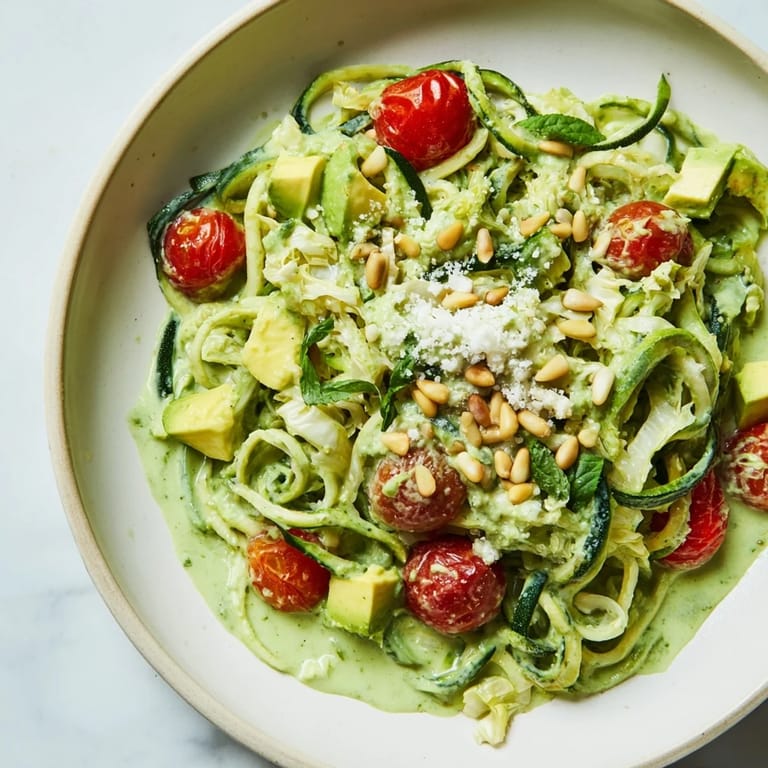
- Pour the sauce over the warm zoodles and toss gently so everything gets coated evenly. The warmth of the zoodles will slightly warm the sauce without cooking off the herbaceous brightness.
- Finish with fresh elements:
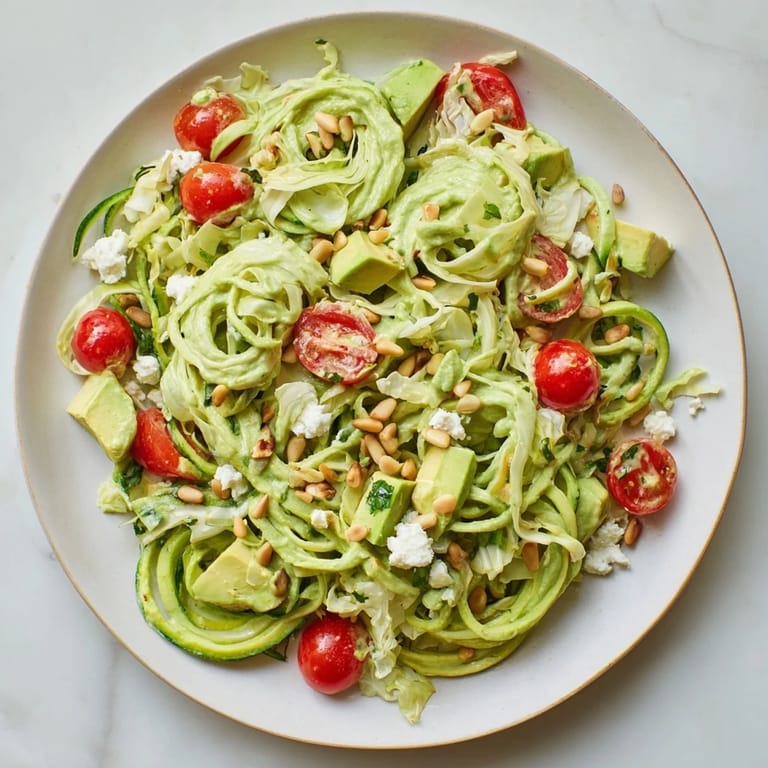
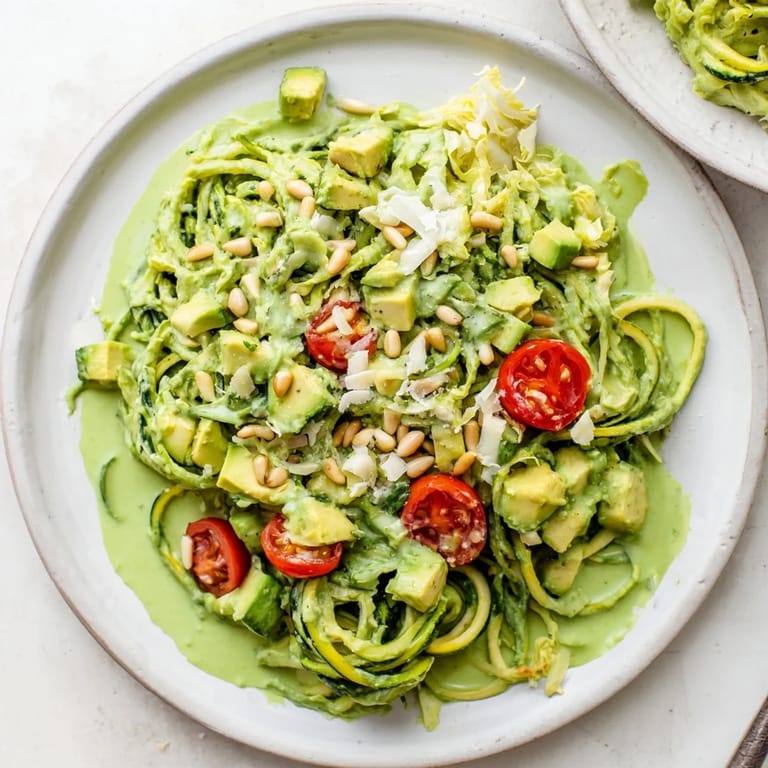
- Fold in the tomatoes, avocado, and scallions last so they stay distinct and don't get smashed into the sauce. Top with feta and pine nuts if you're using them, and eat immediately while the textures are still alive.
 Save
Save There was a moment last month when I realized this dish had become my quiet moment of the week. After a long day, I'd come home and spiral a few zucchini while my mind settled, then blend those fresh herbs and watch the mixture turn that impossible shade of green. It's become less about feeding myself and more about a small ritual that says everything is going to be okay.
Variations Worth Trying
The beauty of this recipe is how willing it is to adapt to whatever you have on hand or whatever you're craving that day. I've made it with spinach and kale mixed into the cabbage, and it becomes earthier and more filling. Sometimes I'll add grilled chicken or shrimp if I want something more substantial, and other times I'll throw in chickpeas when I'm cooking just for myself.
Serving Temperature and Occasions
You can serve this warm straight from the skillet, or let it cool and eat it as a cold salad the next day—I actually prefer it cold because the flavors have time to get to know each other. It's perfect for meal prep because it doesn't get soggy, and it works as a light lunch, dinner, or even a side dish at a potluck where everyone else brought something heavy.
Making It Your Own
The real secret to loving this dish is understanding that you're not following instructions—you're creating a template. The Green Goddess sauce is forgiving enough to handle whatever herbs you have or prefer, and the vegetables can shift based on the season or what's sitting in your produce drawer. I've learned that the best recipes are the ones that feel like they belong to you, not the ones that demand perfection.
- If you're vegan, swap the Greek yogurt for cashew cream or a quality dairy-free yogurt, and skip the feta entirely.
- Add a squeeze of fresh lime juice if you want brightness that lemon can't quite give you.
- Don't skip the toasted pine nuts if you can manage them—they add a richness that makes everything taste more intentional.
 Save
Save This dish has a way of turning into your favorite meal without you planning for it to happen. Make it once and you'll understand why I keep coming back to it.
Common Recipe Questions
- → What is the best way to prepare zucchini noodles for this dish?
Spiralize medium zucchini and set them on a paper towel to absorb excess moisture before sautéing briefly with cabbage to keep them tender but firm.
- → Can I substitute the Greek yogurt in the sauce?
Yes, a dairy-free yogurt alternative works well to maintain creaminess without dairy, suitable for vegan variations.
- → How can I enhance the flavor of the Green Goddess sauce?
Use fresh herbs like basil, parsley, chives, and tarragon along with garlic, lemon juice, Dijon mustard, and olive oil for a vibrant, balanced taste.
- → What toppings complement this dish best?
Toasted pine nuts add crunch while crumbled feta provides a tangy richness; extra fresh herbs enhance the herbal notes.
- → Is it better served warm or cold?
This dish is versatile—enjoy it warm for a cozy main or chilled as a refreshing salad, depending on preference.
- → Can I add protein to this dish?
Yes, adding grilled chicken, shrimp, or chickpeas boosts protein content while keeping the fresh, light character.