 Save
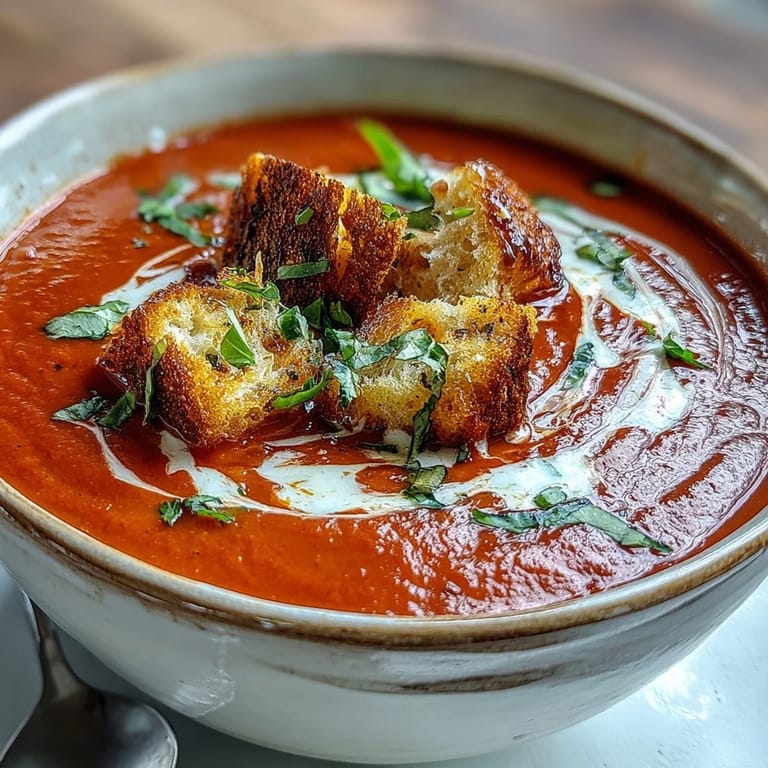
Save There's something almost magical about roasting tomatoes until they collapse into sweet, caramelized puddles—it's the kind of kitchen moment that makes you understand why tomato soup became a comfort classic. I discovered this version by accident one autumn afternoon when I had more tomatoes than sense, a nearly empty fridge, and the sudden urge to turn them into something warm and velvety. The smell that filled my kitchen was so intoxicating I nearly forgot to make the croutons. What started as an improvisation became the soup I now crave whenever the weather turns cool or my soul needs a little coaxing.
I made this for my neighbor during her first week in our building, and watching her face when she took that first spoonful—the little pause, the satisfied sigh—made me realize this soup had something beyond delicious. We ended up sitting on her kitchen steps on a chilly evening, two near-strangers sharing bowls and conversation, and somehow it felt like the most natural thing in the world. That's when I knew this recipe wasn't just about technique; it was about the warmth it created around a table.
Ingredients
- Ripe tomatoes, 1.5 lbs halved: Use tomatoes at their peak ripeness—the deeper the color, the richer your soup will taste, and roasting concentrates their natural sugars beautifully.
- Large onion, quartered: The onion becomes impossibly soft and sweet when roasted, adding body and natural sweetness without any sharp edges.
- Garlic cloves, 4 peeled: Roasting mellows garlic's intensity into something almost buttery and round.
- Olive oil, 2 tbsp: Quality olive oil matters here since it's a starring ingredient, not just a cooking medium.
- Salt and freshly ground black pepper: Season generously at every stage—this soup needs proper seasoning to shine.
- Smoked paprika, ½ tsp optional: If you use it, this adds a subtle depth that hints at something you can't quite identify, which is exactly the point.
- Vegetable broth, 2 cups: Good broth makes a difference; if you have homemade, this is your moment to use it.
- Tomato paste, 1 tbsp: A small amount amplifies the tomato flavor without adding too much bulk.
- Sugar, 1 tsp optional: Add only if your tomatoes are particularly acidic—taste first before using.
- Heavy cream, ½ cup: The cream transforms the soup from good to luxurious, and that final swirl is what makes people remember it.
- Fresh basil leaves, 2 tbsp plus more: Add basil after cooking to preserve its bright, peppery flavor.
- Day-old bread, 2 cups cubed: Stale bread holds its structure better when toasted, creating genuinely crisp croutons instead of soggy ones.
- Crouton seasonings—garlic powder, salt, oregano: These humble seasonings transform bread cubes into something worth fighting over.
Tired of Takeout? 🥡
Get 10 meals you can make faster than delivery arrives. Seriously.
One email. No spam. Unsubscribe anytime.
Instructions
- Heat your oven and arrange the vegetables:
- Preheat to 425°F and spread your tomato halves cut-side up on a baking sheet along with onion quarters and peeled garlic cloves. Drizzle everything generously with olive oil, then sprinkle with salt, pepper, and smoked paprika if you're using it.
- Roast until everything is caramelized:
- This takes 25 to 30 minutes, and you'll know it's ready when the tomatoes are collapsed, their edges are darkened, and the whole pan smells like concentrated tomato essence. Don't skip this step—the caramelization is where the magic happens.
- Toast the croutons simultaneously:
- While vegetables roast, toss bread cubes with olive oil, garlic powder, salt, and oregano on a separate baking sheet. Bake for 8 to 10 minutes until golden and completely crisp, then set aside to cool and finish crisping.
- Build your soup base:
- Transfer the roasted vegetables to a large pot, add vegetable broth and tomato paste, and let everything simmer gently for about 5 minutes to meld. Tear in the fresh basil just before blending.
- Blend until silky smooth:
- Use an immersion blender to puree everything directly in the pot until there are no visible bits, or carefully work in batches with a countertop blender if you prefer. The texture should be velvety and completely smooth.
- Finish with cream and seasoning:
- Return the soup to the pot if you've transferred it, stir in the heavy cream, and taste carefully before adding that optional teaspoon of sugar—you want to balance acidity, not hide it. Heat gently without boiling, as cream can separate if it gets too hot.
- Serve with all the trimmings:
- Ladle into bowls and finish each with a gentle swirl of extra cream, a generous handful of crisp croutons, and a few fresh basil leaves torn right over the top.
 Save
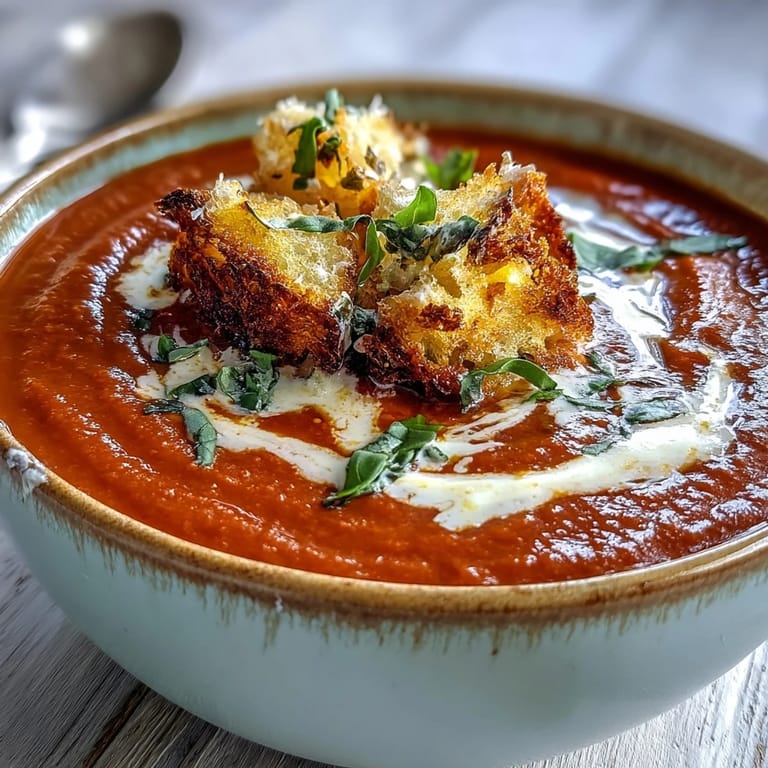
Save There was an afternoon when my partner came home from a difficult day at work, and without a word I placed a steaming bowl in front of them with perfect croutons and a ribbon of cream. They didn't ask what was for dinner or make conversation—they just ate slowly, deliberately, like the soup was solving something. That's when I understood that the best recipes are the ones that know how to meet you where you are.
The Secret Power of Roasting
Roasting vegetables transforms them completely—their sugars caramelize, their flavors concentrate, and they develop this deep, complex sweetness that you simply cannot achieve by simmering. I learned this the hard way by making watery, flat tomato soup for years before I discovered the oven method. The difference is so dramatic that I've never gone back to the stovetop-only approach. When tomatoes hit a hot baking sheet, every atom of flavor gets intensified into something genuinely special.
Making Croutons That Actually Stay Crispy
Most people don't realize that the difference between crispy croutons and sad bread cubes comes down to dryness and timing. Day-old bread is crucial because fresh bread holds too much moisture and becomes chewy no matter how long you bake it. I learned to pull croutons from the oven just as they're turning golden, then let them cool completely on the baking sheet where they finish crisping from residual heat. The moment they hit a warm bowl of soup they'll soften slightly, which is exactly right—you want contrast, not crunch that drowns out everything else.
Customizing This Soup for Every Craving
The beauty of this recipe is that it's genuinely flexible once you understand the core technique. I've made it with canned tomatoes on lazy winter evenings, added roasted red peppers for sweetness, stirred in white beans for substance, and even swirled in pesto at the last moment for something entirely different. The foundation is roasted vegetables plus broth plus cream, and everything else is just your mood talking. Think of it as a template rather than a rule book.
- For a vegan version, substitute heavy cream with coconut cream or cashew cream blended smooth with a bit of broth.
- Roasted red peppers or sun-dried tomatoes add complexity and depth without changing the technique.
- A grilled cheese sandwich alongside isn't just a pairing—it's the entire experience that makes this meal complete.
 Save
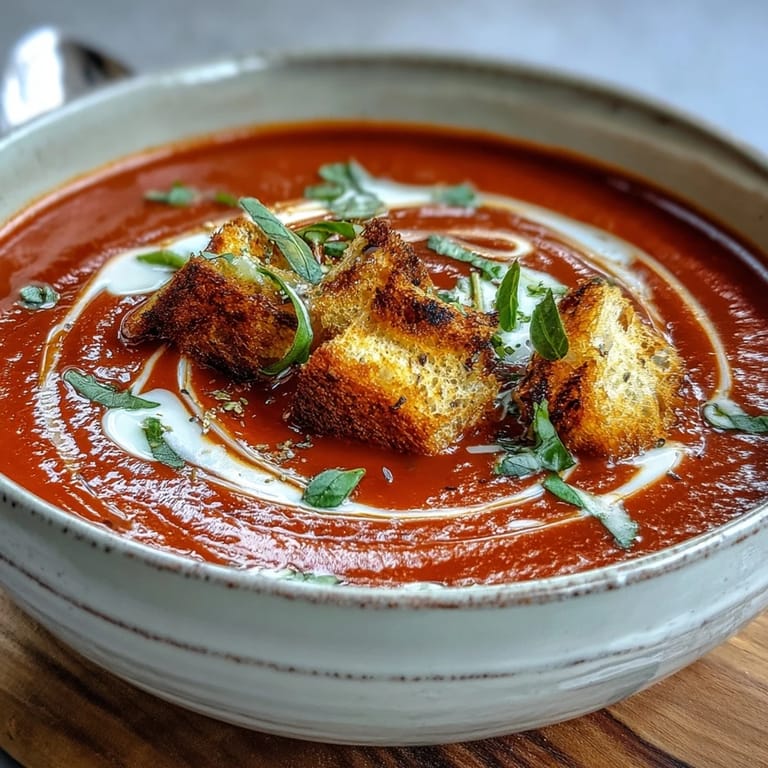
Save This creamy roasted tomato soup has become the dish I return to when I need to remember that good cooking doesn't require complexity, just patience and attention. It's the kind of recipe that sits quietly in your life, ready whenever you need it.
Common Recipe Questions
- → Can I make this soup ahead of time?
Yes, this soup actually improves overnight. Store it in the refrigerator for up to 3 days. Reheat gently over medium-low heat, stirring occasionally. Add the cream when reheating rather than storing it already mixed in for freshest flavor. Croutons are best made fresh but can be stored in an airtight container for 2-3 days.
- → What tomatoes work best for roasting?
Roma tomatoes are ideal due to their lower water content and meaty texture, but any ripe tomato will work beautifully. Vine-ripened or heirloom varieties offer exceptional sweetness. In winter months, cherry or grape tomatoes roast wonderfully and require less prep time. The key is ensuring they're fully ripe for maximum flavor development.
- → How do I achieve the smoothest texture?
An immersion blender works directly in the pot for convenient blending. For ultra-smooth results, pass the blended soup through a fine-mesh sieve to remove any remaining fibers or seeds. Let the soup cool slightly before blending to avoid splattering hot liquid. Take your time blending—the longer you puree, the silkier the texture becomes.
- → What can I serve alongside this soup?
A grilled cheese sandwich is the classic pairing—the crispy, cheesy complements the creamy soup perfectly. Fresh bread with salted butter, a simple green salad with vinaigrette, or roasted vegetables also work well. For a lighter option, serve with crostini or breadsticks for dipping.
- → Can I freeze this soup?
Freeze the soup before adding the cream for best results. Portion cooled soup into freezer-safe containers, leaving space for expansion. It will keep well for up to 3 months. Thaw overnight in the refrigerator, then reheat gently and stir in fresh cream. The texture may be slightly thinner after freezing but remains delicious.
- → How can I add more protein?
Stir in white beans like cannellini during the simmering stage for added protein and creaminess. Roasted chickpeas make a crunchy topping similar to croutons but with more nutrients. For a non-vegetarian option, serve alongside shredded rotisserie chicken or add poached shrimp as a garnish.