 Save
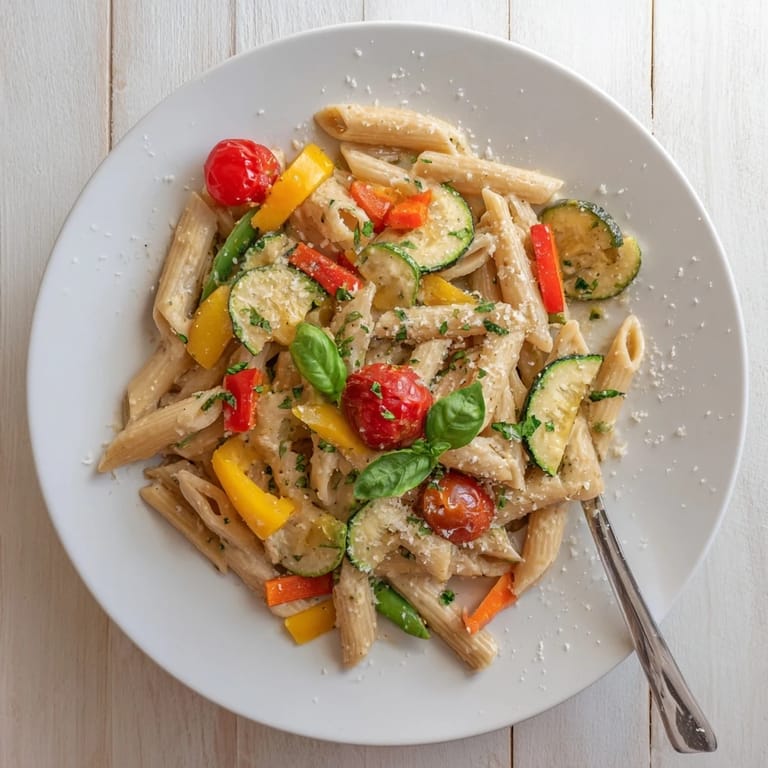
Save The spring evening I first created this one-pot pasta primavera is etched in my memory. Our farmer's market had just reopened, and I'd impulsively gathered so many colorful vegetables my arms ached carrying them home. Standing in the kitchen with my bounty scattered across the counter, I realized I could either spend hours cooking or throw everything into one pot with some pasta and cream. That spontaneous decision led to what has since become our household's celebration of spring abundance.
Last April, I made this for my sister who was visiting after a difficult breakup. We stood side by side at the stove, her absent-mindedly stirring the pot as steam rose between us. Something about the simplicity of the process and the vibrant colors seemed to lift her spirits. By the time we sat down with our bowls, she was sharing stories and laughing again, proving that sometimes comfort comes from a single pot of creamy pasta and vegetables.
Ingredients
- Pasta: I prefer penne or fusilli since their shapes catch little pools of the creamy sauce and tiny vegetable pieces.
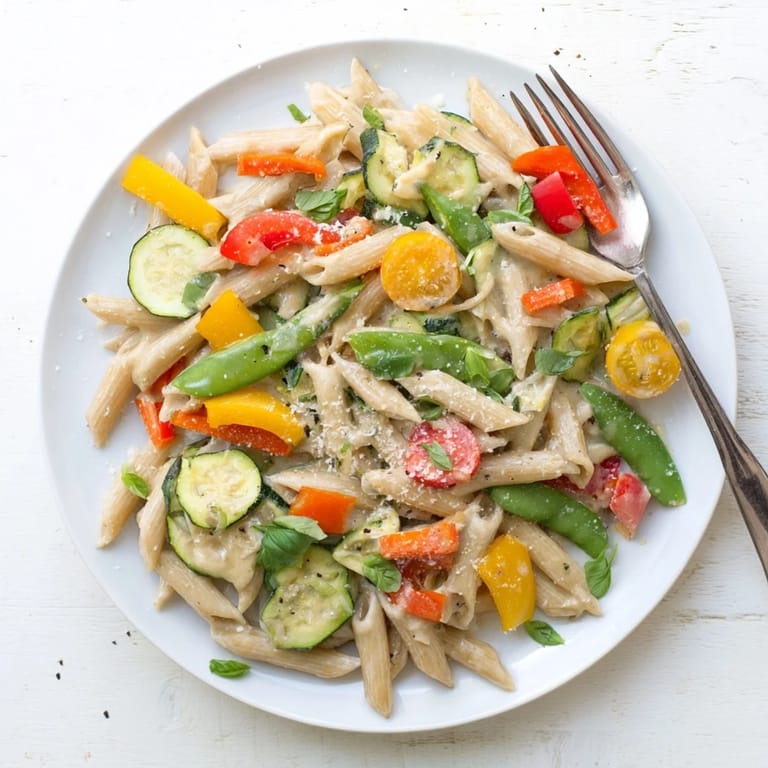
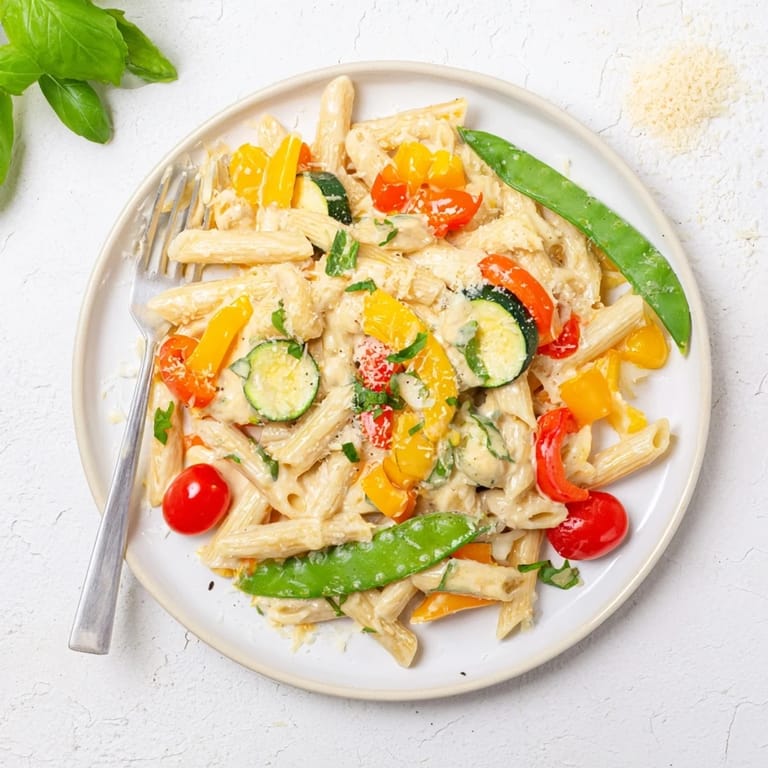
- Two-colored bell peppers: Using both red and yellow creates a confetti-like visual that makes the dish feel intentional rather than thrown together.
- Heavy cream: I once tried substituting half-and-half to cut calories and deeply regretted it, as the sauce needs that richness to properly coat everything.
- Cherry tomatoes: They burst slightly during cooking, creating pockets of sweet acidity that balance the cream perfectly.
- Snap peas: These retain a slight crunch even after cooking, providing textural contrast that makes each bite interesting.
Tired of Takeout? 🥡
Get 10 meals you can make faster than delivery arrives. Seriously.
One email. No spam. Unsubscribe anytime.
Instructions
- Sauté the rainbow:
- Heat that olive oil until it shimmers, then add your garlic and vegetables. Youll hear a satisfying sizzle as they hit the pot, releasing their aroma into your kitchen.
- The magic merge:
- When you add the pasta and broth, everything might look a bit chaotic at first. Trust the process as the liquid transforms while the pasta releases its starch during those 12 minutes.
- Create the creaminess:
- The moment you pour in that heavy cream and watch it swirl with the starchy broth is pure kitchen alchemy. Stir with intention as the sauce thickens and coats every piece.
- Season with feeling:
- This is when I taste and add salt and pepper, adjusting until it makes me close my eyes with satisfaction. The freshly added basil should perfume the steam rising from the pot.
- Serve with flourish:
- Transfer to bowls while still steaming hot, and dont be stingy with the extra Parmesan shavings on top. The heat will melt them slightly into the dish.
 Save
Save My neighbors started showing up mysteriously around dinner time on primavera nights after the scent of garlic and herbs apparently wafted through our shared hallway. What began as a simple weeknight meal evolved into an impromptu monthly gathering, with everyone crowded around our small table, passing the pot and tearing bread. Someone always brings wine, someone else brings dessert, and conversation flows as easily as the cream sauce.
Vegetable Variations
Ive found the recipe to be wonderfully forgiving with whatever seasonal produce you have on hand. Spring asparagus tips add elegance, while broccoli florets bring hearty texture in winter months. When summer hits, corn kernels cut fresh from the cob add pops of sweetness. The only rule I follow is maintaining a similar total volume of vegetables so the sauce-to-veggie ratio stays balanced.
Making It Ahead
While this dish shines brightest when freshly made, Ive discovered a few tricks for planning ahead. You can prep all vegetables up to two days before, storing them in separate containers in the refrigerator. The actual cooking goes quickly once everything is chopped. If you must reheat leftovers, add a splash of cream or milk before gently warming to restore the silky texture that might have thickened overnight.
Serving Suggestions
The self-contained nature of this dish means it needs little accompaniment, though a simple green salad with lemon vinaigrette provides welcome brightness. Ive served it countless times with just a good crusty bread for sauce-soaking and never heard complaints.
- For a complete Italian-inspired spread, start with a small antipasto platter featuring marinated artichokes and olives.
- If serving for a special occasion, consider individual portions in shallow bowls rather than family-style for a more elegant presentation.
- Keep wine pairings light and crisp, like Pinot Grigio or Sauvignon Blanc, to cut through the creaminess.
 Save
Save This primavera has become my go-to reminder that good cooking doesnt need to be complicated. When fresh ingredients come together with minimal fuss, they speak for themselves in the language of comfort and satisfaction.
Common Recipe Questions
- → Can I use different vegetables in this dish?
Absolutely. Feel free to swap or add vegetables based on preference and availability. Asparagus, broccoli florets, baby spinach, mushrooms, or green beans work wonderfully. Adjust cooking time slightly for harder vegetables.
- → How do I make this dairy-free?
Replace heavy cream with plant-based alternatives like coconut milk or oat cream, and use dairy-free Parmesan cheese or nutritional yeast for a similar flavor profile. The dish remains equally creamy and satisfying.
- → What's the best way to achieve al dente pasta?
Stir the pasta occasionally while simmering to ensure even cooking and prevent sticking. Start checking for doneness around 10 minutes. Pasta should be tender but still slightly firm when bitten. Remove from heat immediately once it reaches desired texture.
- → Can I make this ahead of time?
This dish is best enjoyed fresh, but you can prepare components ahead. Cook pasta separately, chop vegetables, and prepare sauce components. Combine everything just before serving to maintain the best texture and flavor.
- → What wine pairs well with this dish?
A crisp white wine like Pinot Grigio complements the creamy sauce and fresh vegetables beautifully. The acidity cuts through richness and enhances the dish's overall balance. Serve chilled for the best pairing experience.
- → How do I prevent the sauce from becoming too thick?
Monitor the sauce consistency while simmering. If it thickens too much, add a splash of vegetable broth or pasta water to reach desired consistency. The sauce should coat the pasta lightly without being runny.