 Save
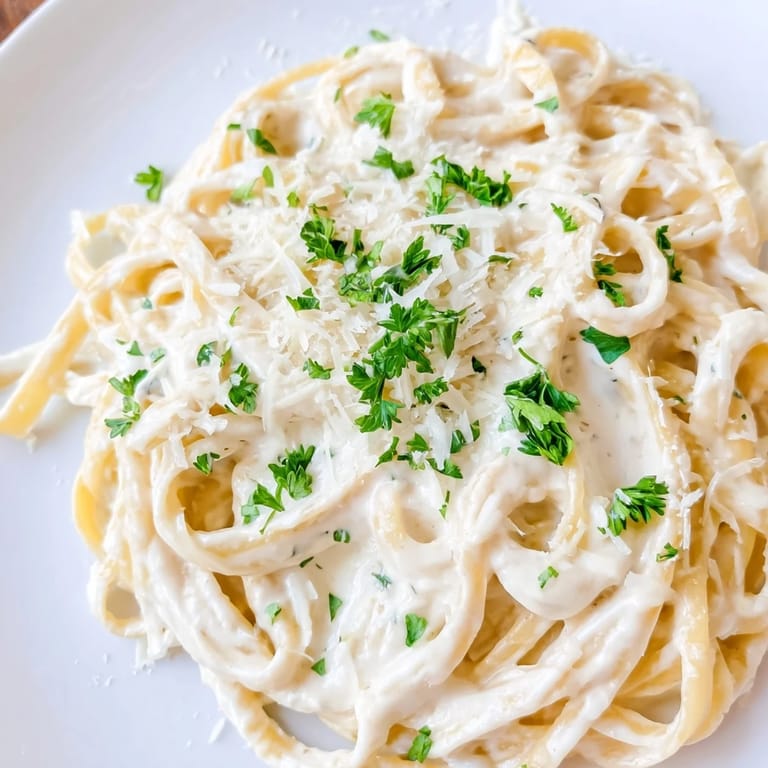
Save I discovered this sauce by accident one weeknight when I had cottage cheese taking up fridge space and a box of fettuccine waiting to be cooked. Rather than toss it, I thought: what if I blended that cottage cheese smooth and pretended it was cream? The first taste made me pause—it was genuinely silky, packed with protein, and tasted nothing like what I'd thrown in the blender. My partner came home to the smell of garlic and butter, and by the time I finished tossing the pasta, I realized I'd stumbled onto something I'd make again and again.
The first time I served this to friends who were expecting traditional Alfredo, I almost confessed before they tasted it. But watching them twirl their forks and ask for the recipe halfway through felt like keeping a small kitchen secret. Nobody asked what was in it until after they'd cleaned their plates.
Ingredients
- Low-fat cottage cheese (1 cup): This is the foundation—blended until completely smooth, it becomes the creamy base that holds the sauce together without added cream.
- Whole milk (1/2 cup): Just enough liquid to help the blender work its magic and loosen the final sauce to the right consistency.
- Grated Parmesan cheese (1/4 cup): This is what convinces your mouth it's real Alfredo; it brings both tang and that deep, salty richness.
- Unsalted butter (2 tablespoons): The foundation for your garlic, and it adds a whisper of richness that cottage cheese alone can't deliver.
- Minced garlic (2 cloves): The aromatic that transforms this from plain white sauce into something worth remembering.
- Freshly ground black pepper (1/4 teaspoon): Grind it yourself right before cooking—the difference between dull and alive is that simple.
- Salt (1/4 teaspoon): Start here and taste as you go; every cottage cheese brand seasons differently.
- Freshly grated nutmeg (pinch, optional): A secret that makes people tilt their head and ask what spice you used.
Tired of Takeout? 🥡
Get 10 meals you can make faster than delivery arrives. Seriously.
One email. No spam. Unsubscribe anytime.
Instructions
- Blend the cottage cheese smooth:
- Pour the cottage cheese and milk into your blender and run it on high for a full minute or two. You want absolutely no grains or texture—what comes out should look like thin cream, almost shiny.
- Warm the garlic in butter:
- Melt butter in a medium saucepan over medium heat, then add your minced garlic. You'll know it's ready when your kitchen smells incredible but the garlic hasn't started to brown—that's about 30 to 60 seconds.
- Combine and heat gently:
- Pour that blended mixture into the pan with the garlic and butter, then stir in the Parmesan, pepper, salt, and nutmeg if you're using it. Keep stirring constantly and watch for the sauce to thicken slightly and warm through—this takes maybe two or three minutes, and you must not let it boil or it breaks.
- Taste and adjust:
- This is the moment where you become the chef. Add more salt, more pepper, a squeeze of lemon if you want brightness—trust what your mouth tells you.
- Toss with hot pasta immediately:
- The sauce needs to coat hot pasta right away, so have your cooked fettuccine or penne ready and waiting. The heat of the pasta helps the sauce cling and distribute evenly.
- Finish with garnish:
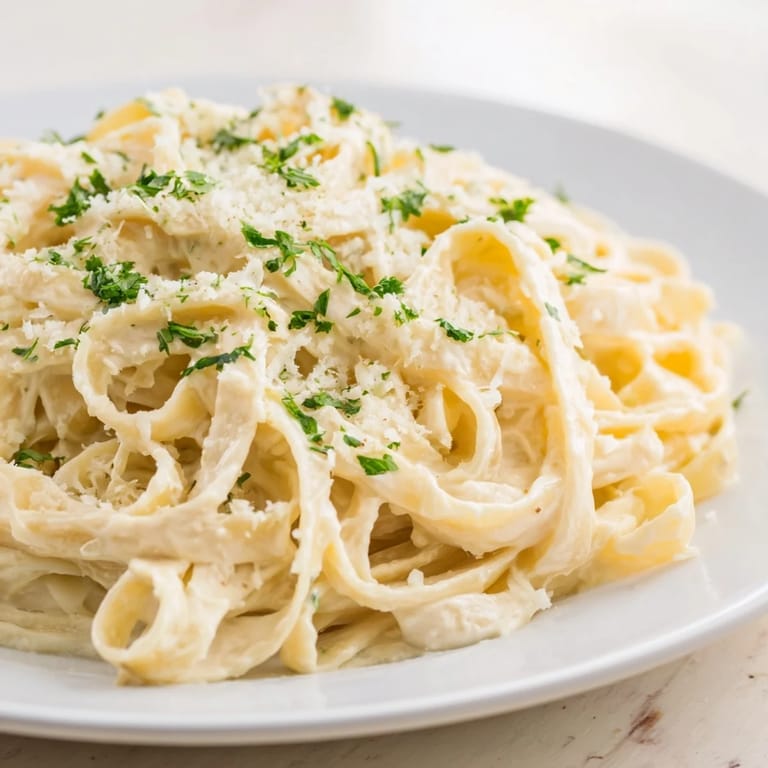
- A handful of fresh parsley and a small shower of extra Parmesan make it look like you spent an hour on this, even though you didn't.
 Save
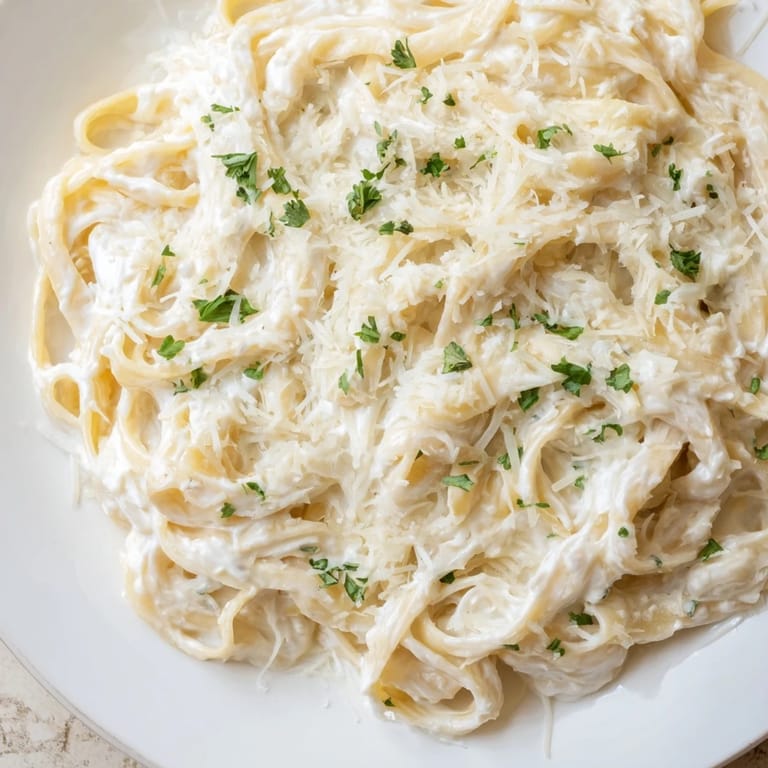
Save I made this sauce again last winter when my dad visited, and he took a second helping without saying anything—just nodded and kept eating. That small moment reminded me that the best recipes aren't the ones that impress; they're the ones that quietly feel like home.
Why This Sauce Works
The magic here is that cottage cheese has a protein structure that blends into something almost indistinguishable from cream, but it stays lighter on your stomach. Most Alfredo sauces are built on heavy cream and egg yolks; this one builds on protein and relies on Parmesan to do the flavor work. What you get is a sauce that tastes like an indulgence but won't make you regret eating it two hours later.
Making It Your Own
I've learned that this sauce is a canvas if you want it to be. Some nights I stir in sautéed mushrooms while the sauce is still warm, letting them soak up all that garlicky richness. Other times I add a handful of fresh spinach, which wilts into the sauce and adds color and a subtle earthiness that balances the richness perfectly. You can even add grilled or pan-seared chicken if you want this to be a complete meal in one bowl.
Pasta Shapes and Swaps
I started with fettuccine because it's what I had, but the sauce clings equally well to penne, rigatoni, or any shape with ridges and hollows that catch it. If you're watching carbs, this sauce is excellent on roasted zucchini noodles or even over roasted chicken and vegetables—the cottage cheese makes it feel like a complete meal without pasta at all.
- Fettuccine lets the sauce do all the talking with its wide, flat surface.
- Penne catches the sauce in its tubes, making every bite interesting.
- Zucchini noodles give you all the satisfaction with a lighter feel overall.
 Save
Save This sauce proves that shortcuts don't have to feel like shortcuts if they taste honest. Make it once, and you'll understand why I keep coming back.
Common Recipe Questions
- → How is creaminess achieved without heavy cream?
Blending low-fat cottage cheese with milk creates a smooth, creamy base that mimics the richness of heavy cream while adding protein.
- → Can this sauce be reheated without separating?
Yes, gently warm the sauce over low heat, stirring constantly to maintain its creamy texture without curdling or separating.
- → What pasta types pair best with this sauce?
Wide noodles like fettuccine, penne, or even zucchini noodles hold the sauce well, ensuring each bite is flavorful and coated.
- → Is it possible to make the sauce gluten-free?
Absolutely; use certified gluten-free Parmesan and pair with gluten-free pasta options to keep it free from gluten.
- → What additional ingredients enhance this sauce?
Sautéed mushrooms, spinach, or grilled chicken can be stirred in to add heartiness and complementary flavors.