 Save
Save I discovered these bowls on a random Tuesday when a coworker wouldn't stop raving about a certain fast-casual chain, and I thought, why not just build this at home where I can control every element? The first time I made them, my kitchen filled with the aroma of carnitas braising low and slow, and by the time those pork chunks turned golden and tender, I was already planning to make them again. There's something deeply satisfying about assembling your own bowl—you get to taste every component and adjust it exactly how you like it. Now these have become my go-to weekend project, the kind of meal that feels indulgent but isn't actually difficult to pull off.
I remember serving these bowls to my roommate during a casual dinner, and watching her eyes light up when she took that first bite was the moment I knew I had something special. She said it tasted exactly like her favorite place downtown, and the fact that I made it in our little kitchen made it somehow taste even better. That's when I realized this recipe wasn't just about replicating something—it was about creating a version that belonged to us, that I could tweak and improve every time.
Ingredients
- Pork shoulder (2 lbs), trimmed and cut into large chunks: This cut becomes incredibly tender and shreds beautifully after braising; don't skip trimming excess fat or your final dish will be greasy.
- Olive oil (1 tbsp for carnitas, 1 tbsp for rice): A little goes a long way here—you're not frying, just enriching.
- Salt, black pepper, ground cumin, dried oregano, smoked paprika: These five seasonings are the backbone of authentic carnitas flavor; smoked paprika especially adds that smoky depth that makes people wonder what your secret is.
- Garlic (4 cloves) and onion (1 small): Minced garlic and quartered onion soften into the braising liquid, infusing everything with savory notes.
- Orange juice and lime juice: The citrus is essential—it brightens the rich pork and prevents the dish from feeling heavy.
- Chicken broth (1 cup): This becomes your braising liquid and later a glaze; using quality broth makes a noticeable difference.
- Long grain white rice (1 1/2 cups): Regular white rice absorbs the cilantro lime flavoring perfectly without turning mushy.
- Fresh cilantro (1/2 cup for rice, 1/4 cup for salsa, 2 tbsp for guacamole): Fresh herbs are non-negotiable; dried cilantro tastes like hay by comparison.
- Black beans (1 can, drained and rinsed): Rinsing removes the starchy liquid that clouds your bowl's appearance and flavors.
- Monterey Jack and cheddar cheese (1 cup each): The combo of both cheeses creates depth—jack melts smoothly while cheddar adds sharpness.
- Whole milk and cornstarch: The cornstarch prevents the queso from breaking when it sits; whole milk gives you a creamier result than lower fat versions.
- Ripe avocados (2): Use avocados that yield slightly to gentle pressure—too hard and they'll taste bitter, too soft and they'll be mushy.
- Tomatoes (2 medium for salsa, 1 small for guacamole): Fresh tomatoes matter enormously here since they're eating raw; choose ones with good color and aroma.
- Jalapeño (1-2 depending on heat preference): Seeding removes most of the heat while keeping the flavor—taste as you go.
- Sour cream (1 cup): This is your cooling element; don't skip it even if you're not a sour cream person normally.
Tired of Takeout? 🥡
Get 10 meals you can make faster than delivery arrives. Seriously.
One email. No spam. Unsubscribe anytime.
Instructions
- Season and sear the pork:
- Coat your pork chunks generously with salt, pepper, cumin, oregano, and smoked paprika—be generous because you're building flavor layers that will develop over hours. Heat olive oil until it shimmers, then sear the pork on all sides until you get a deep golden crust, working in batches if needed so you don't crowd the pan.
- Build the braising liquid:
- Add minced garlic and quartered onion to the pot, stirring until fragrant, then pour in the citrus juices and chicken broth, scraping up any browned bits from the bottom. These browned bits are flavor gold.
- Braise low and slow:
- Cover and reduce heat to low, then let the pork cook for about 2 hours until it shreds effortlessly with just a fork. You should hear occasional gentle bubbles, not a rolling boil—that's what keeps the meat tender instead of stringy.
- Shred and finish:
- Remove the cooked pork and shred it with two forks, then return it to the pot and simmer uncovered for 10 minutes, which lets the liquid reduce into a glaze that clings to each shred. This is the difference between good carnitas and ones that make people close their eyes and smile.
- Prepare the rice:
- Rinse your rice under cold water, rubbing the grains together until the water runs mostly clear—this removes excess starch so your rice stays fluffy instead of clumpy. Bring water, rice, olive oil, and salt to a boil, cover, reduce to low, and cook for exactly 18 minutes, then let it rest for 5 minutes before fluffing and stirring in fresh cilantro and lime juice.
- Warm the beans:
- Combine drained and rinsed black beans with cumin, garlic powder, salt, and pepper in a small saucepan and heat gently until warmed through—you're not trying to overcook them, just bring out the seasonings.
- Make the queso:
- Melt butter over medium heat, whisk in cornstarch, cook for 1 minute, then slowly add milk while whisking constantly to prevent lumps. Once slightly thickened, add both cheeses and minced jalapeño (if using), stirring until completely melted and smooth, then keep it warm—cold queso will ruin the whole experience.
- Mix fresh salsa:
- Combine diced tomatoes, red onion, jalapeño, cilantro, lime juice, and salt in a bowl and mix gently just to combine—you want distinct pieces, not a mushy paste. Taste and adjust salt and lime as needed.
- Make guacamole:
- Cut avocados in half, remove the pit, and scoop into a bowl, then mash with a fork until you reach your preferred consistency—I like mine slightly chunky. Fold in red onion, tomato, lime juice, cilantro, salt, and pepper just before serving so it doesn't brown.
- Layer and serve:
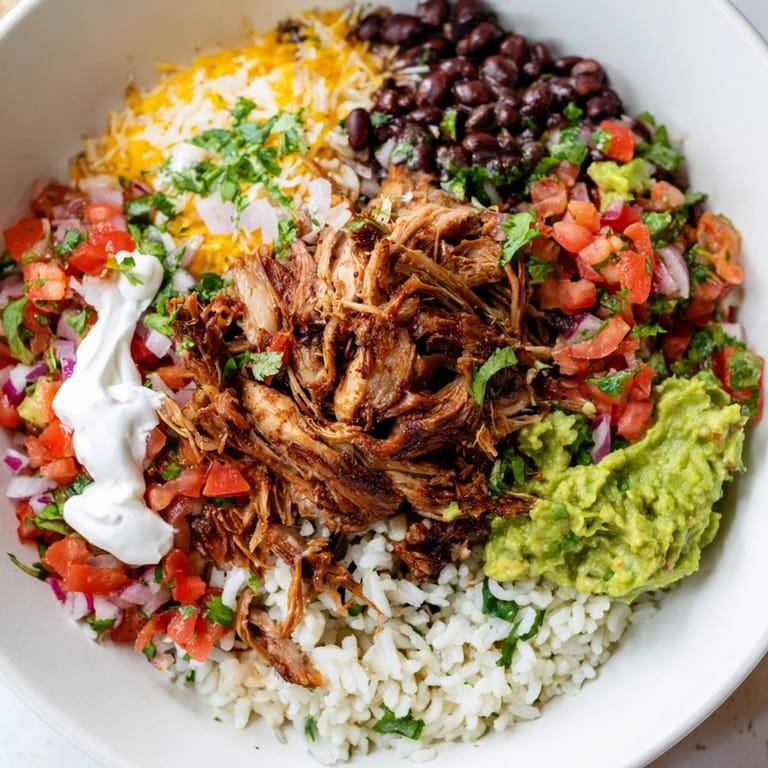
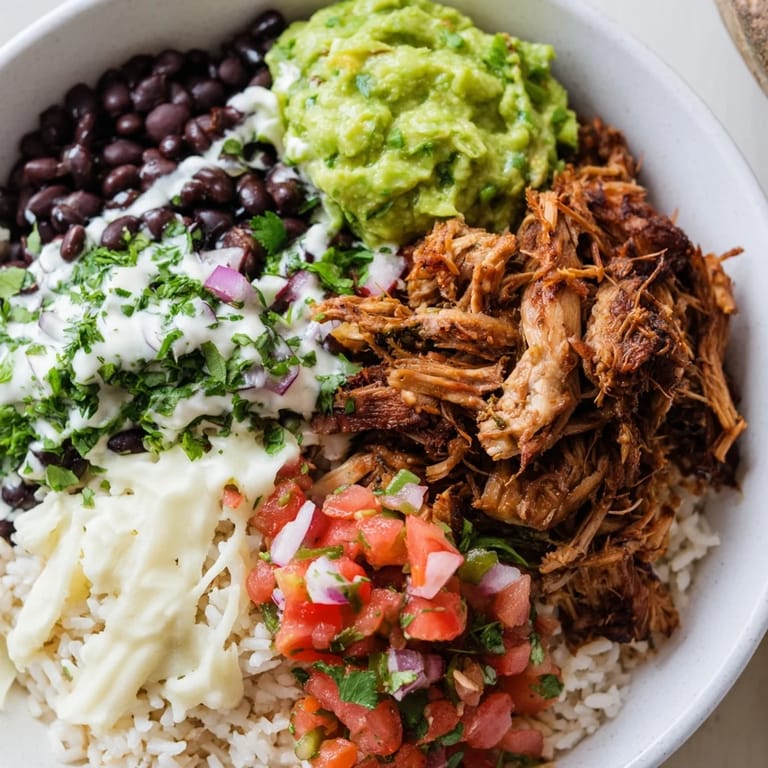
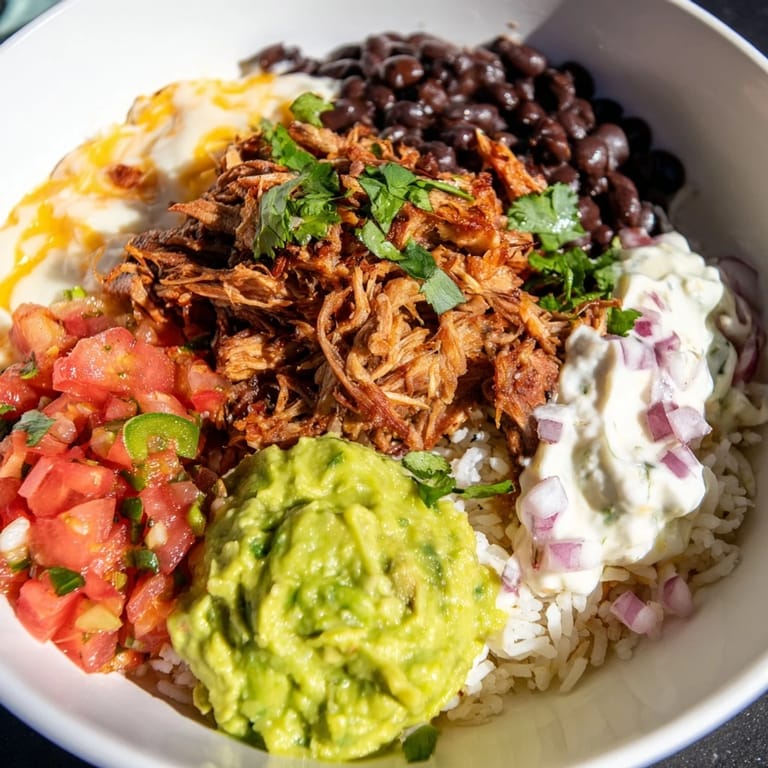
- Start each bowl with a bed of cilantro lime rice, then add a scoop of warm beans, a generous handful of carnitas, a drizzle of warm queso, a spoonful of fresh salsa, a dollop of sour cream, and a generous scoop of guacamole. Serve immediately while everything is still at the right temperature.
 Save
Save The first time someone said this tasted better than the actual restaurant, I felt something shift in how I thought about cooking. It wasn't just that the dish was good—it was that I'd made something that exceeded someone's expectations, that I'd proven the restaurant version wasn't magic, just technique and quality ingredients. That's the real power of a recipe like this: it's not just delicious, it's empowering.
Making Carnitas Your Signature Move
Once you master carnitas, you've unlocked a technique that works for so much more than just bowls. That same braising method works beautifully for tacos, quesadillas, nachos, or even shredded into a simple rice bowl on a weeknight when you need comfort food fast. I keep a batch in my freezer at all times now because having carnitas on hand means a restaurant-quality meal is always fifteen minutes away. The smell alone—that combination of citrus, smoke, and slow-cooked pork—is worth learning this technique for.
Building Your Own Bowl Bar
One of my favorite discoveries was setting up all the components on the counter and letting people assemble their own bowls. It transforms the meal from something I've made into something they're creating, which somehow makes it taste better. Everyone gets exactly what they want, there's no waste, and everyone feels involved. The conversation naturally happens around the counter as people build, taste, adjust, and share bites. It's turned what could be a regular dinner into an experience.
Timing and Make-Ahead Strategy
The beautiful thing about this recipe is that almost everything can be made ahead without losing quality. I usually cook the carnitas in the morning, refrigerate them, and reheat gently before serving. The rice can be made several hours ahead and is just as good at room temperature. The salsa and guacamole are best made an hour before eating to keep them fresh, though guacamole specifically should wait until as close to serving as possible to prevent browning. Even the queso can be made ahead and gently reheated on low heat, whisking in a splash of milk if it's thickened too much.
- Cook carnitas early in the day and reheat on low with a splash of their braising liquid before serving.
- Make rice up to 4 hours ahead; it's delicious warm or at room temperature.
- Prep all your raw ingredients (chop tomatoes, onions, jalapeños) up to 2 hours ahead and store in separate containers.
 Save
Save This recipe has become my answer to so many dinner questions because it feels both impressive and achievable. Once you make it once, you'll understand why—it's restaurant-quality food that's completely within your reach.
Common Recipe Questions
- → How is the carnitas prepared for this bowl?
The pork shoulder is seasoned with spices, browned, then simmered with garlic, onion, orange and lime juice, and broth until tender and shreddable.
- → What makes the cilantro lime rice flavorful?
The rice is cooked with olive oil and salt, then mixed with fresh cilantro and lime juice for a zesty, aromatic finish.
- → Can the beans be substituted?
Yes, black beans can be swapped with pinto beans depending on personal preference.
- → How is the queso made creamy and smooth?
A simple sauce is made by melting cheeses into milk thickened with cornstarch and butter, with jalapeño added for subtle heat.
- → How should the components be assembled for serving?
Layer cilantro lime rice, beans, shredded carnitas, queso, fresh salsa, sour cream, and guacamole in each bowl and serve immediately.
- → Any tips for extra flavor?
Crisping the shredded carnitas under a broiler for a few minutes adds a delightful texture contrast.