 Save
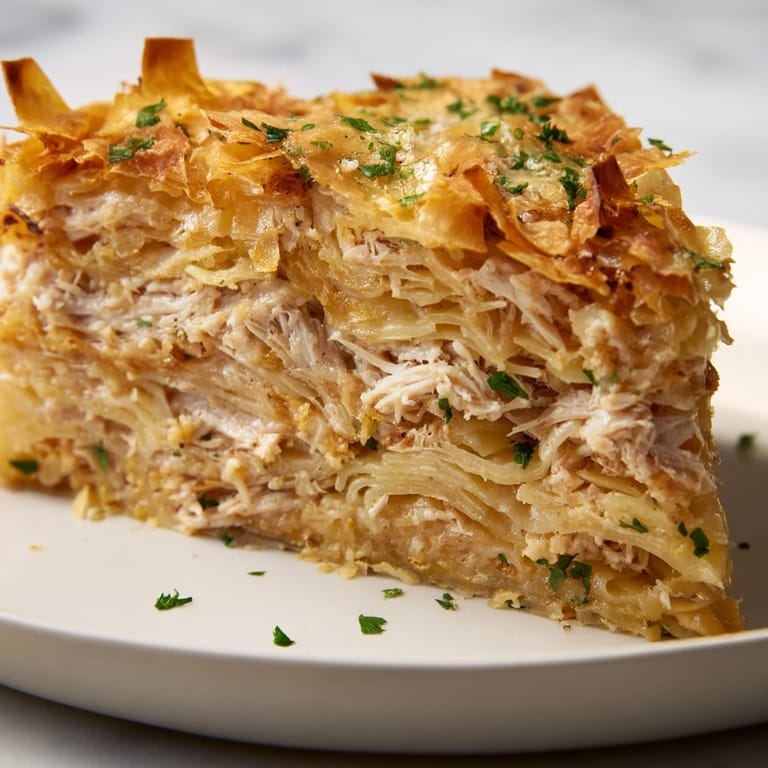
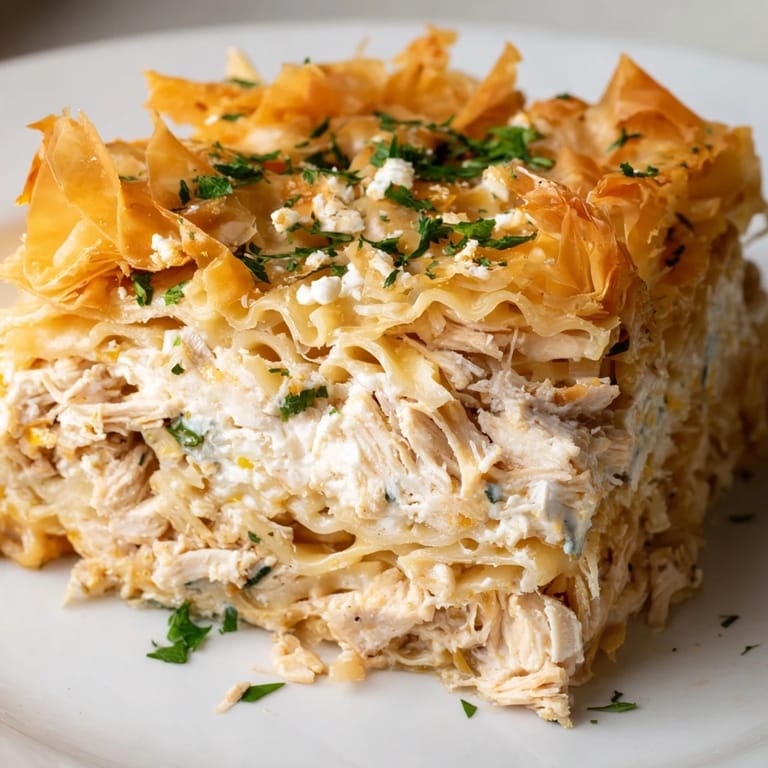
Save I stumbled onto this recipe during a late-night kitchen experiment, trying to rescue some leftover rotisserie chicken and cooked pasta by turning them into something worthy of a dinner party. The moment I pulled those crispy, golden phyllo sheets from the oven and watched them shatter slightly as I cut into the creamy filling, I realized I'd accidentally created something that bridges comfort food and show-stopping elegance. My guests had no idea how simple it actually was, and honestly, neither did I until the third time I made it.
There's something magical about watching someone's face light up when they bite through that crackling phyllo layer and discover pasta and chicken swimming in a silky custard beneath. My sister brought her new boyfriend over for dinner, and he asked for the recipe before even finishing his first slice—that's when I knew this dish had something special.
Ingredients
- Shredded cooked chicken breast: Use rotisserie chicken if you're in a rush; the slight char actually adds flavor. I've learned that hand-shredding gives you better texture than a food processor.
- Cooked ditalini pasta: Those tiny tubes hold sauce beautifully and distribute flavor evenly throughout each bite. Don't cook it quite al dente—it'll soften more as the custard bakes.
- Ricotta cheese: This is your base for creaminess. Make sure it's full-fat or the filling feels thin and grainy.
- Shredded mozzarella cheese: Melts into strings that make each forkful luxurious. Use whole milk mozzarella, not low-moisture.
- Grated Parmesan cheese: The sharp, salty notes cut through the richness and prevent the whole dish from feeling heavy.
- Fresh parsley: I learned the hard way that dried parsley tastes like grass here; fresh makes all the difference in flavor and presentation.
- Garlic powder and oregano: These whisper Italian flavors without overwhelming the delicate chicken and phyllo.
- Phyllo dough: Buy it frozen and thaw it overnight in the fridge. Room-temperature phyllo tears too easily.
- Unsalted butter: Melted and brushed between each sheet is what creates those shattering-crisp layers.
- Eggs, milk, and heavy cream: This custard is what transforms the whole thing—it soaks through the phyllo and sets into a tender, custardy binding.
Tired of Takeout? 🥡
Get 10 meals you can make faster than delivery arrives. Seriously.
One email. No spam. Unsubscribe anytime.
Instructions
- Heat your oven and prep the dish:
- Set your oven to 375°F and generously butter your 9x13-inch baking dish so the bottom phyllo sheets don't stick. A little extra butter here saves frustration later.
- Mix your filling:
- Combine the chicken, pasta, ricotta, mozzarella, Parmesan, parsley, garlic powder, oregano, salt, and pepper in a large bowl until everything is evenly distributed. Taste it and adjust seasonings—this is your only chance before baking.
- Layer the bottom phyllo:
- Unroll your phyllo and immediately cover the stack with a damp towel so it doesn't dry out and become papery. Work quickly, lay one sheet on your clean counter, brush it lightly with melted butter, then gently scrunch it into loose, accordion-like folds.
- Build the base:
- Transfer that scrunched phyllo to your prepared dish and arrange it loosely. Repeat this buttering and scrunching process with seven more sheets, nestling them side by side until you've created a crinkly bottom layer that covers the baking dish.
- Add the filling:
- Spoon your chicken and pasta mixture evenly over those phyllo layers, spreading it out to the edges but leaving about a half-inch border. Don't pack it down—you want air pockets for the custard to seep through.
- Create the top crust:
- Take the remaining eight phyllo sheets and repeat the buttering and scrunching process, layering them on top of the filling until it's completely covered. Brush the entire top generously with any remaining melted butter so it'll turn golden and crispy.
- Make and pour the custard:
- Whisk together eggs, whole milk, heavy cream, salt, and pepper in a bowl until smooth. Slowly pour it evenly over the entire assembled cake, letting it soak down through the phyllo layers—you'll see it seeping and setting as you pour.
- Bake until golden:
- Slide it into your preheated oven for 35 to 40 minutes, watching until the top turns deep golden brown and crispy. The phyllo should sound crackly when you tap it, and the custard should be just set when you jiggle the pan gently.
- Rest before serving:
- Let it cool for at least 10 minutes so the custard sets enough to hold its shape when you slice it. This makes plating so much easier and keeps your layers intact.
 Save
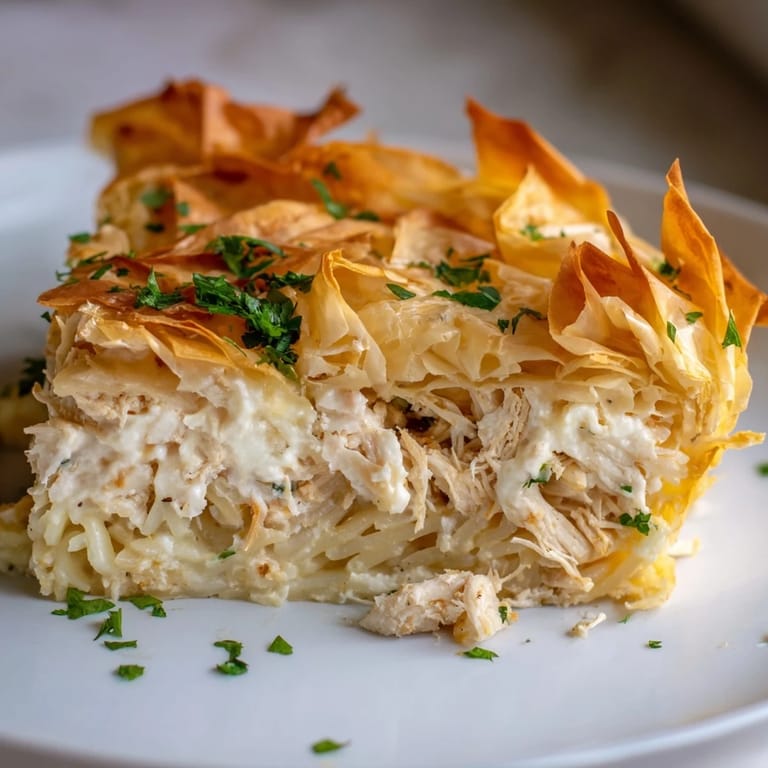
Save I'll never forget when my usually quiet neighbor brought over a bottle of wine after smelling this baking and asked if she could join us for dinner. That's the moment I realized this wasn't just a recipe—it was an edible conversation starter that brought people to the table.
Variations and Add-Ins
The beauty of this dish is how easily it adapts to what's in your kitchen or what you're craving. I've stirred in sautéed mushrooms and spinach when I wanted something more vegetable-forward, and the earthiness complemented the creamy filling without drowning it out. Once I added a pinch of crushed red pepper flakes to the custard mixture and loved the subtle heat threading through each bite. You could swap the chicken for shredded turkey, use a mixture of cheeses if ricotta isn't your style, or even fold in fresh basil for a spring variation.
Wine Pairing and Serving
Serve this warm from the oven with a crisp, mineral-driven white wine like Sauvignon Blanc or Pinot Grigio—something that cuts through the richness of the custard and cheese without competing with the delicate chicken. A simple green salad dressed with lemon vinaigrette on the side keeps the meal balanced and lets this cake be the star.
Make-Ahead and Storage Tips
You can assemble this entire cake up to eight hours before baking, cover it with foil, and refrigerate it; just add five to ten extra minutes to the baking time if it's cold when it goes into the oven. Leftovers keep beautifully in an airtight container for three days, though I've never had any make it past the next day. Reheating is gentle—just cover with foil and warm in a 300°F oven for fifteen minutes so the phyllo doesn't over-brown.
- Cold phyllo cracks easily, so let your dough thaw completely at room temperature or overnight in the fridge.
- Brush butter between layers generously but not wastefully; just enough to coat each sheet so it crisps during baking.
- If the top starts browning too quickly, drape a piece of foil loosely over it for the last ten minutes of baking.
 Save
Save This dish proved to me that some of the best foods come from happy accidents and leftover ingredients refusing to go to waste. It's become my go-to when I want to impress without stress, and I hope it becomes yours too.
Common Recipe Questions
- → What type of pasta works best in this dish?
Small shapes like ditalini are ideal as they blend well within the layers without overwhelming the texture.
- → Can I prepare the phyllo dough ahead of time?
Phyllo should be kept covered with a damp towel while assembling to prevent drying out; it's best used fresh during prep.
- → What cheese combination is used here?
A blend of ricotta, shredded mozzarella, and grated Parmesan provides creamy richness and a savory finish.
- → How do I ensure the layers bake evenly?
Gently scrunching the phyllo and layering evenly with the filling helps achieve uniform baking and crispness.
- → Are there any suggested variations to the filling?
Sautéed mushrooms or spinach can be added for extra flavor, while rotisserie chicken is a convenient alternative to homemade.