 Save
Save I'll never forget the year my grandmother asked me to reimagine our Thanksgiving table. She wanted something that told a story—something that would make our guests pause and remember why we gathered. That's when I created Chains of the Mayflower, a dish that arranges golden turkey and roasted root vegetables in overlapping links across a platter. Each slice, each vegetable becomes part of a visible chain, a edible reminder of the journeys we take and the bonds we forge around the table. The first time I made it, watching my family's faces light up as they understood the meaning behind the arrangement, I knew this dish would become our tradition.
I made this for my sister's first Thanksgiving hosting her new blended family. She was nervous about pulling off something meaningful, and when I suggested we arrange the turkey and vegetables in chains, I watched her shoulders relax. By the end of dinner, her stepdaughter asked her to make it every year. That's when I realized this dish isn't really about technique or ingredients—it's about creating a moment where everyone feels like they belong.
Ingredients
- Boneless turkey breast, skin on (1.5 kg): The skin is your secret weapon here—it crisps up to golden perfection and keeps the meat underneath incredibly moist. Don't skip it, even if you're tempted by those skinless options at the market
- Olive oil (4 tbsp total): Use a good quality oil you actually enjoy tasting. This is one of those recipes where the oil matters because it seasons everything, from the turkey's herbs to the vegetables' smokiness
- Dried thyme and sage (1 tsp each): These two herbs are the soul of this dish. If you have access to fresh herbs, use three times the amount and strip the leaves from their stems
- Carrots and parsnips: The carrots turn sweet and jammy when roasted, while parsnips develop an almost nutty depth. Cut them roughly the same size so they cook evenly
- Sweet potatoes and celery root: Sweet potatoes add natural sweetness and color, while celery root brings an earthy, almost creamy undertone that most people can't quite name but absolutely love
- Smoked paprika (1 tsp): This ingredient deserves its own line because it's what makes your roasted vegetables taste like they've been kissed by autumn smoke
- Chicken or turkey stock (500 ml): Make your own if you can—it makes a difference. If you're using store-bought, taste it first and don't oversalt your gravy until the very end
- Cornstarch (2 tbsp): This is how you get gravy that coats a spoon without any flour taste lingering. Whisk it smooth before adding liquid or you'll have lumps you can't escape
- Fresh parsley and toasted pecans: These are your final flourish. The parsley brings freshness that cuts through the richness, while pecans add a textural surprise that makes people reach for seconds
Tired of Takeout? 🥡
Get 10 meals you can make faster than delivery arrives. Seriously.
One email. No spam. Unsubscribe anytime.
Instructions
- Start your oven and prep your turkey:
- Preheat your oven to 200°C (400°F) so it's ready when you are. While it heats, pat your turkey breast dry with paper towels—this is the step that determines whether your skin crisps or steams. Rub it generously with olive oil, then sprinkle the thyme, sage, salt, and pepper all over, getting some under the skin if you can. Place it skin-side up in your roasting pan. The oil should glisten under the kitchen light.
- Roast the turkey until golden:
- Slide the pan into the oven and set a timer for 1 hour 15 minutes. You're looking for the skin to turn a deep mahogany color and the internal temperature to reach 74°C (165°F) when you check with a meat thermometer. If the top is browning too quickly, loosely tent it with foil. When it's done, transfer it to a cutting board, cover it loosely with foil, and let it rest for 15 minutes. This resting time is sacred—it allows the juices to redistribute so every slice stays tender.
- Prepare and roast the vegetables:
- While the turkey is roasting, toss your carrots, parsnips, sweet potatoes, and celery root in a large bowl with olive oil, smoked paprika, cumin, salt, and pepper. The vegetables should be glistening and evenly coated. Spread them in a single layer on a baking sheet. About 30 minutes into the turkey's cooking time, slide this pan into the oven alongside it. You want them to roast for 40–45 minutes total, stirring them halfway through so they brown evenly on all sides. They're done when the edges are caramelized and a fork easily pierces the centers.
- Build your gravy while everything roasts:
- About 10 minutes before the turkey comes out, melt butter in a small saucepan over medium heat. Whisk in the cornstarch until you have a smooth paste with no lumps. Slowly pour in your stock while whisking constantly—this is where patience prevents lumps. Once it's smooth, add the soy sauce and let everything simmer for 5–7 minutes until it thickens enough to coat the back of a spoon. Taste it and adjust the salt and pepper. A good gravy should taste rich and savory, not oversalted.
- Assemble your chain:
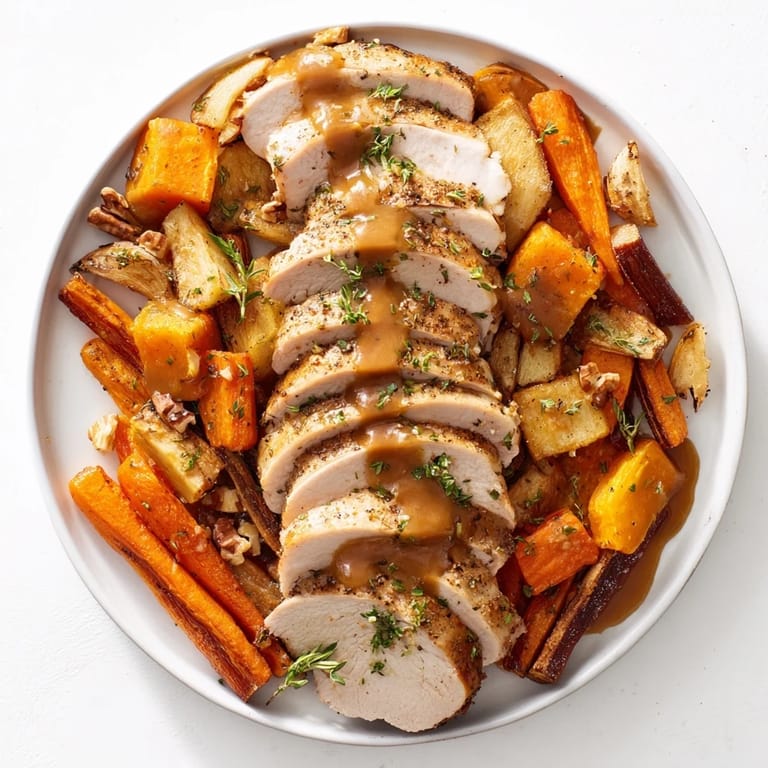
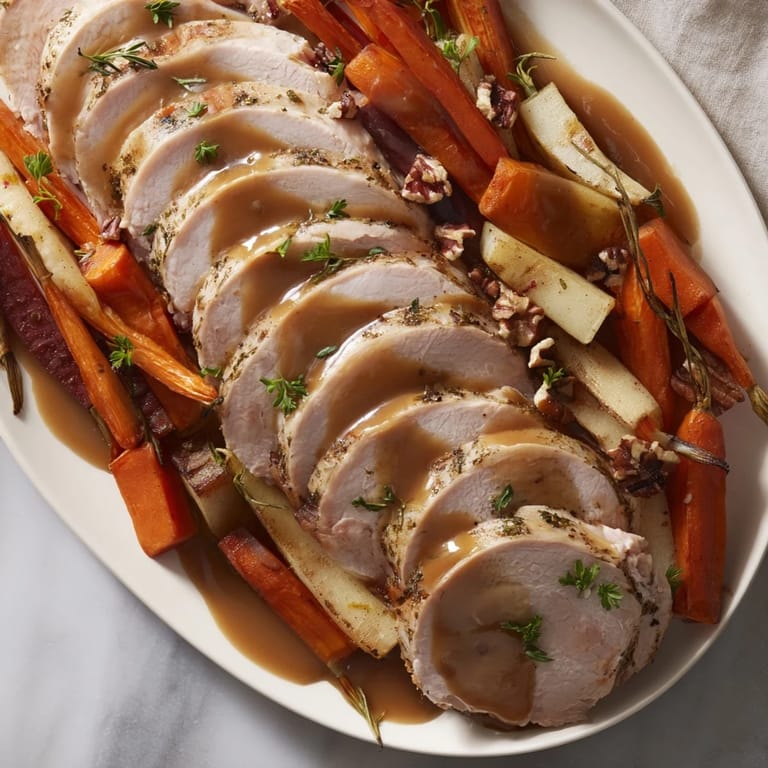
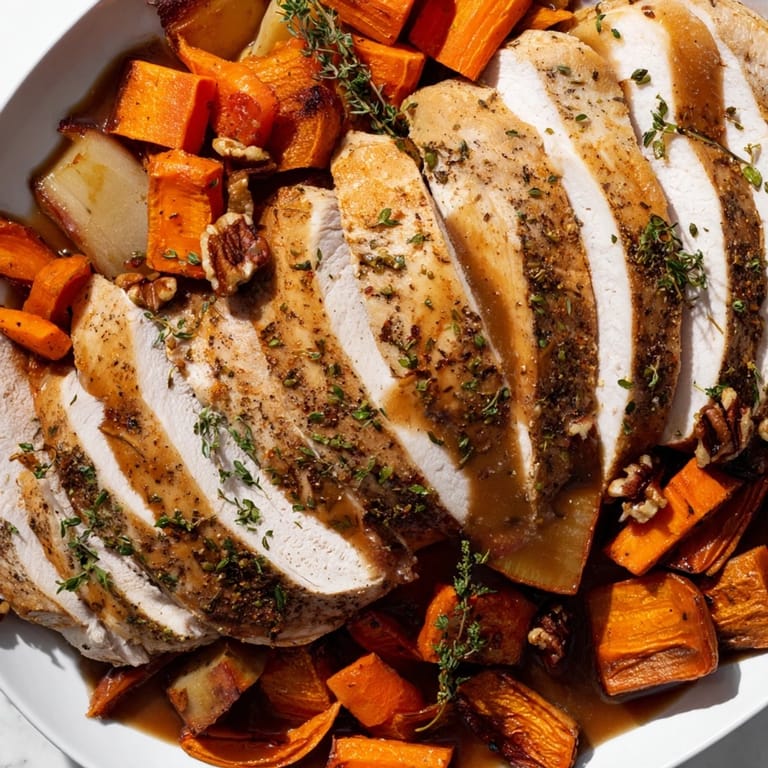
- This is where the magic happens. Arrange your roasted vegetables and sliced turkey on a large platter in overlapping rows or rings, like links in a chain. Think about color distribution—scatter the golden carrots, cream-colored parsnips, and orange sweet potatoes so your platter looks like a harvest celebration. Drizzle the gravy over everything, letting it pool slightly between the links. Finish with a shower of fresh parsley and the toasted pecans if you're using them. Step back and look at what you've created before bringing it to the table.
 Save
Save What I love most about this dish is that it works. Not just as food, but as a moment. I've watched reserved guests lean across the table to ask others about the chain arrangement, their curiosity breaking through the polite silence. I've seen children understand, without being told, that the overlapping links mean something about staying connected. That's when a recipe becomes more than ingredients and technique—it becomes a memory waiting to happen.
Choosing Your Root Vegetables
The beauty of this dish is that it's flexible with vegetables. Celery root can be hard to find in some markets—if that's you, swap it for regular potatoes or even turnips. Brussels sprouts, as suggested in the original notes, add a gorgeous purple-green color and a slightly bitter edge that balances the sweetness of the sweet potatoes beautifully. Beets will stain your platter red, but if you're okay with that, they're stunning and add an earthy mineral quality. The key is choosing vegetables that roast in similar timeframes, so everything finishes at once. Root vegetables are forgiving that way—they're less finicky than other vegetables and reward a high-heat roast with caramelization and tenderness.
Making This Dish Your Own
My grandmother suggested adding cranberry sauce on the side, and now I can't imagine serving this without it. The tartness cuts through the richness of the gravy and the sweetness of the roasted vegetables in a way that feels almost necessary. If you want to go vegetarian, the notes mention roasted portobello mushrooms as a turkey substitute, and honestly, I've made it that way for friends and they've asked for the recipe just as enthusiastically. You could also add roasted garlic cloves throughout the chain, or finish with crispy sage leaves instead of parsley if sage is speaking to you. This dish belongs to you once you make it, so feel free to listen to what your kitchen is telling you.
Building Flavor Through Technique
There's something about roasting that transforms ordinary vegetables into something almost luxurious. The high heat caramelizes the natural sugars, creating depth and complexity that steaming or boiling could never achieve. The smoked paprika adds a whisper of something you can't quite identify but definitely makes people lean in for another bite. And the soy sauce in the gravy—just a tablespoon—adds an umami richness that makes the whole thing feel intentional and sophisticated. These aren't accidents; they're small choices that compound into something greater than the sum of their parts.
- Toast your pecans in a dry skillet for 3–4 minutes if they aren't already toasted—it wakes up their flavor and makes them impossible to ignore
- If your gravy breaks or becomes lumpy, strain it through a fine-mesh sieve and start fresh—don't let one mistake derail the entire dish
- Arrange your platter just before serving, while everything is still warm and the gravy flows freely across the vegetables
 Save
Save This dish taught me that food is only half of cooking. The other half is the story, the intention, the way you arrange things on a platter as if you're writing a love letter to the people you're feeding. I hope Chains of the Mayflower becomes your tradition too.
Common Recipe Questions
- → What is the best method for roasting the turkey?
Rub the turkey breast with olive oil and herbs, then roast at 200°C (400°F) for about 1 hour 15 minutes until the internal temperature reaches 74°C (165°F). Let it rest covered before slicing.
- → How can I ensure the root vegetables are tender and flavorful?
Toss carrots, parsnips, sweet potatoes, and celery root with olive oil, smoked paprika, cumin, salt, and pepper. Roast for 40 to 45 minutes, stirring halfway, until golden and tender.
- → What ingredients are used to make the gravy rich and smooth?
Butter and cornstarch create a smooth base; gradually whisk in chicken or turkey stock with soy sauce for depth, then simmer until thickened.
- → How is the dish arranged to reflect its symbolic meaning?
The turkey slices and roasted vegetables are laid out in overlapping, linked chains or rings, representing the journey of the Mayflower and community bonds.
- → What sides complement this dish for added seasonal flair?
Consider adding roasted Brussels sprouts or beets for color and earthiness, and serve with cranberry sauce for a tangy contrast.