 Save
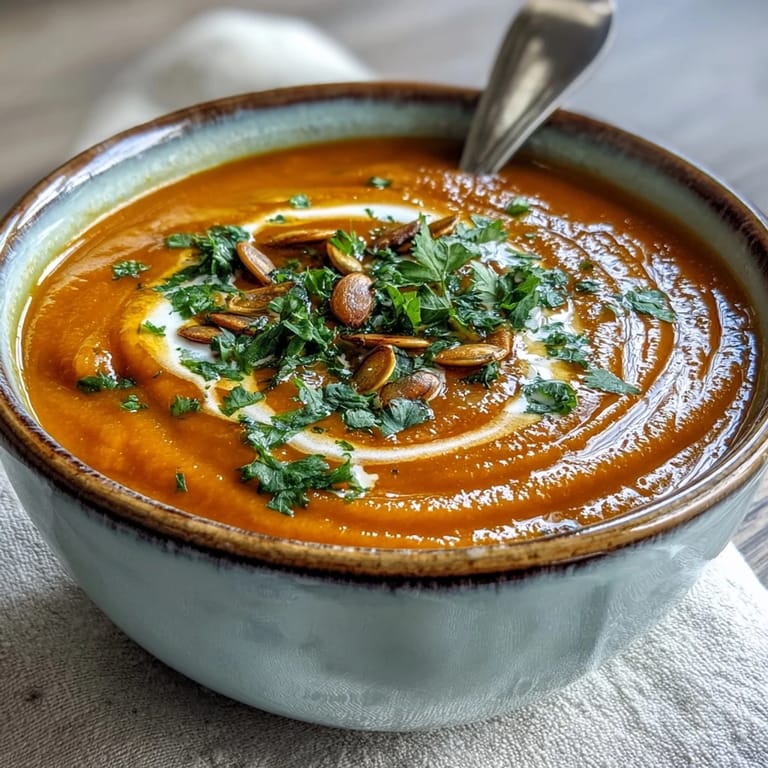
Save There's something almost meditative about watching carrots transform in a pot of simmering broth. My kitchen smelled like warm ginger and sweet caramelized onions the afternoon a friend mentioned she'd been craving something bright but grounding, and this soup was born from that single conversation. The color alone—that burnished orange deepening as you blend—feels like autumn captured in a bowl, even if you're making it in the middle of summer.
I made this soup the evening before an unexpectedly cold snap hit, and it became the reason my family lingered around the table longer than usual. Everyone came back for seconds, and my teenager—who typically rushes through meals—actually paused between spoonfuls to comment on the flavor. Those small moments reminded me that simple food, made with intention, often means more than elaborate dishes.
Ingredients
- Olive oil: The foundation for coaxing sweetness from your onions and building depth before the broth joins in.
- Medium onion, diced: This isn't just texture; it's the backbone that makes everything taste more rounded and complete.
- Garlic cloves, minced: Two cloves keeps things subtle—too much and you'll overpower the delicate carrot flavor.
- Carrots, peeled and sliced: The star ingredient, so choose ones with good color and firmness for the best results.
- Fresh ginger, peeled and finely grated: Freshly grated makes all the difference; jarred ginger tastes flat by comparison.
- Vegetable broth: A full liter ensures enough liquid for proper blending and a silky consistency.
- Coconut milk: Optional but worth considering—it adds luxury without dairy, though the soup is equally lovely without it.
- Sea salt: Taste as you go; different broths have different sodium levels.
- Freshly ground black pepper: Grind it yourself if you can; pre-ground loses its bite over time.
- Lemon juice: This brightens everything at the end, waking up flavors that might otherwise feel muted.
Tired of Takeout? 🥡
Get 10 meals you can make faster than delivery arrives. Seriously.
One email. No spam. Unsubscribe anytime.
Instructions
- Start with the aromatics:
- Heat your olive oil over medium heat and add the diced onion, letting it soften for 3 to 4 minutes until it turns translucent and loses that raw bite. You'll know it's ready when it smells sweet and a wooden spoon glides through easily.
- Deepen the flavor:
- Stir in the minced garlic and grated ginger, cooking for just one minute until your kitchen fills with that unmistakable fragrant warmth. This step is quick but crucial—too long and the garlic turns bitter.
- Add the carrots:
- Toss in your carrot slices and cook for another 2 minutes, stirring occasionally to coat them in the oil and aromatics. You're not trying to cook them yet, just help them get friendly with the flavors around them.
- Build the broth:
- Pour in your vegetable broth and bring everything to a boil, then lower the heat and cover with a lid. Let it simmer for 20 to 25 minutes until the carrots are so tender they fall apart when you touch them with a spoon.
- Blend until silky:
- Remove from heat and use an immersion blender to puree everything until smooth and velvety, working in batches if using a countertop blender. Take your time here—the longer you blend, the silkier the texture.
- Finish with richness and brightness:
- Stir in coconut milk if you're using it, add your lemon juice, and season with salt and pepper to taste. Warm gently for another 2 to 3 minutes and adjust seasoning one final time.
- Serve with intention:
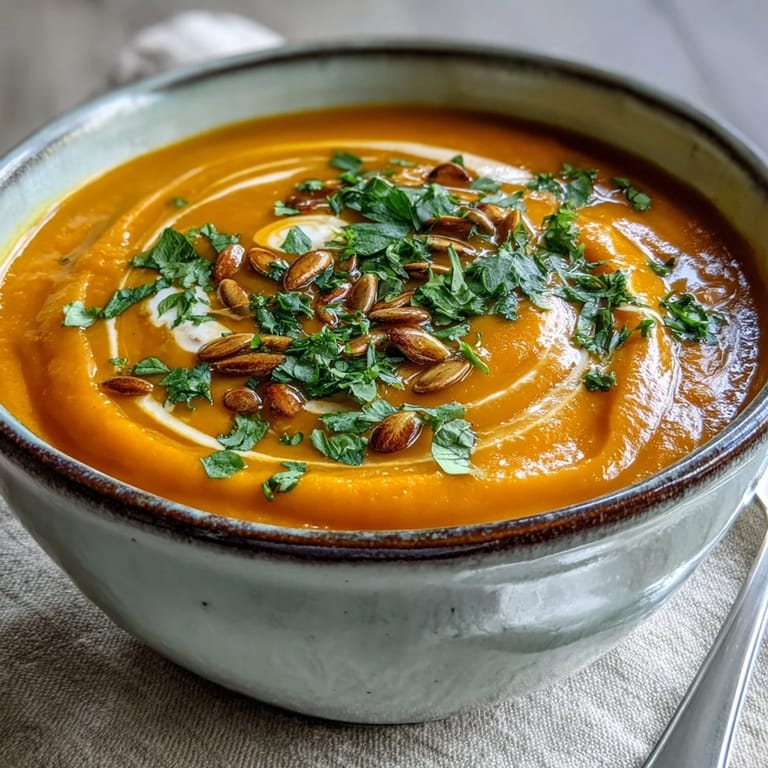
- Ladle into bowls and consider a drizzle of coconut milk, fresh herbs, or toasted seeds as garnish. The presentation doesn't have to be fancy—just inviting.
 Save
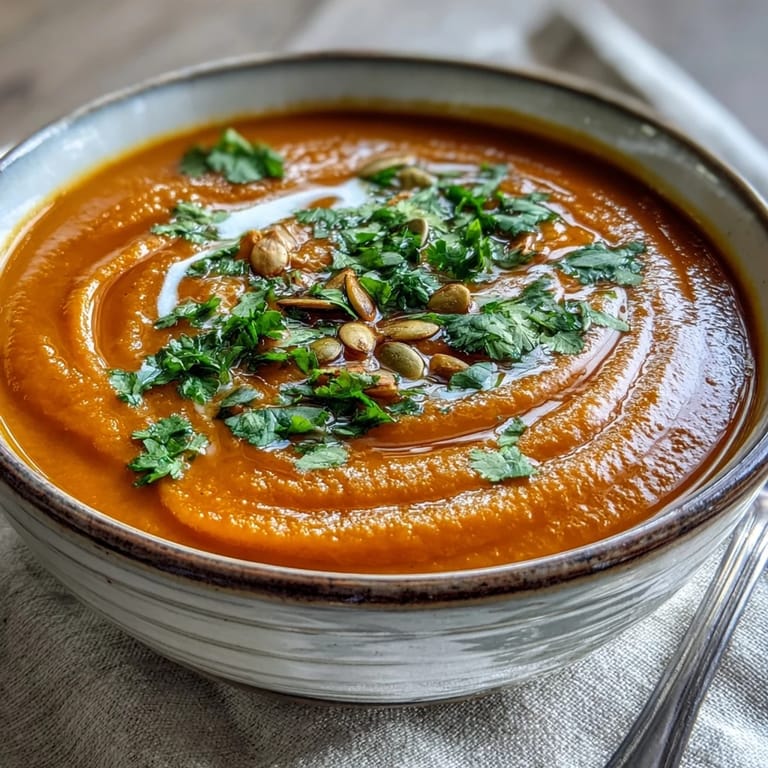
Save There's a moment when you blend this soup where the color shifts from chunky-orange to that glossy, restaurant-quality burnished hue, and it never fails to feel like small magic. That visual transformation is what makes this recipe feel less like cooking and more like creating something genuinely special.
The Ginger Question
Fresh ginger is non-negotiable here, and I learned this the hard way after attempting a shortcut with ground ginger. The fresh version brings a subtle heat and brightness that ground ginger simply can't replicate—it feels alive, whereas dried versions taste like an afterthought. If you have access to young ginger in spring, it's even more delicate and won't require aggressive peeling.
Blending Techniques That Matter
An immersion blender is your friend here because it gives you control and keeps cleanup minimal, but a regular blender works just as well if you work in batches. The key is patience—let the blades do the work rather than forcing it, and stop occasionally to check your progress. Overblending can sometimes make the soup feel too thin, while underblending leaves small pieces that interrupt the silky mouthfeel you're after.
Make It Your Own
This soup is remarkably forgiving once you understand its bones. The base of carrots, ginger, and broth holds everything together, but what you build around it is entirely yours to explore. Consider experimenting with complementary spices, different broths, or even a touch of turmeric for earthiness and color.
- Add a pinch of ground cumin or coriander with the ginger for warmth and depth.
- Swap coconut milk for heavy cream, cashew cream, or skip it entirely for a lighter version.
- Garnish with fresh cilantro, parsley, toasted pumpkin seeds, or a crispy sage leaf for texture and visual interest.
 Save
Save This soup has become my answer to almost everything: a quiet lunch when I need to slow down, a starter that impresses without fanfare, or a bowl passed across the table when someone needs something warm and kind. It's honest food that tastes like you cared, even when you barely had time.
Common Recipe Questions
- → How long does carrot ginger soup keep?
Stored in an airtight container, this soup keeps for 4-5 days in the refrigerator. The flavors develop and intensify over time, making it an excellent option for meal prep. Reheat gently on the stove, adding a splash of broth if needed to adjust consistency.
- → Can I freeze this soup?
Yes, this soup freezes exceptionally well for up to 3 months. Cool completely before transferring to freezer-safe containers, leaving space for expansion. Thaw overnight in the refrigerator and reheat slowly, stirring occasionally. If using coconut milk, give it a good whisk when reheating.
- → What can I use instead of coconut milk?
Heavy cream creates an equally rich texture for a dairy version. For a lighter soup, simply omit coconut milk entirely—the pureed carrots provide plenty of body on their own. Cashew cream or almond milk also work well as plant-based alternatives that maintain the creamy consistency.
- → Is the ginger flavor too strong?
Two tablespoons provides gentle warmth without overpowering the natural sweetness of the carrots. If sensitive to spice, start with one tablespoon and taste before adding more. The ginger mellows during cooking, leaving just a subtle heat that balances beautifully with the citrus finish.
- → What garnishes work well?
A swirl of coconut milk creates an elegant presentation. Fresh cilantro or parsley adds color and brightness. Toasted pumpkin seeds or sunflower seeds provide satisfying crunch. For extra warmth, sprinkle a pinch of cumin or coriander on top before serving.
- → Can I use frozen carrots?
Fresh carrots yield the best flavor and texture, but frozen work in a pinch. Thaw completely before cooking and expect slightly longer simmering time. The soup may be less vibrant in color but will still be delicious and comforting.