 Save
Save There's something about standing in my kitchen on a Tuesday afternoon, watching the shrimp turn from translucent gray to that perfect coral pink, that made me realize I didn't need complicated recipes to feel satisfied. This poke bowl came together almost by accident when I had fresh shrimp, some leftover rice, and a craving for something bright and tropical. What started as a quick lunch turned into my go-to weeknight meal, the kind you can make with your eyes closed once you've done it twice. The beauty of it is how it comes together in twenty minutes flat, yet it tastes like you've spent hours planning something special.
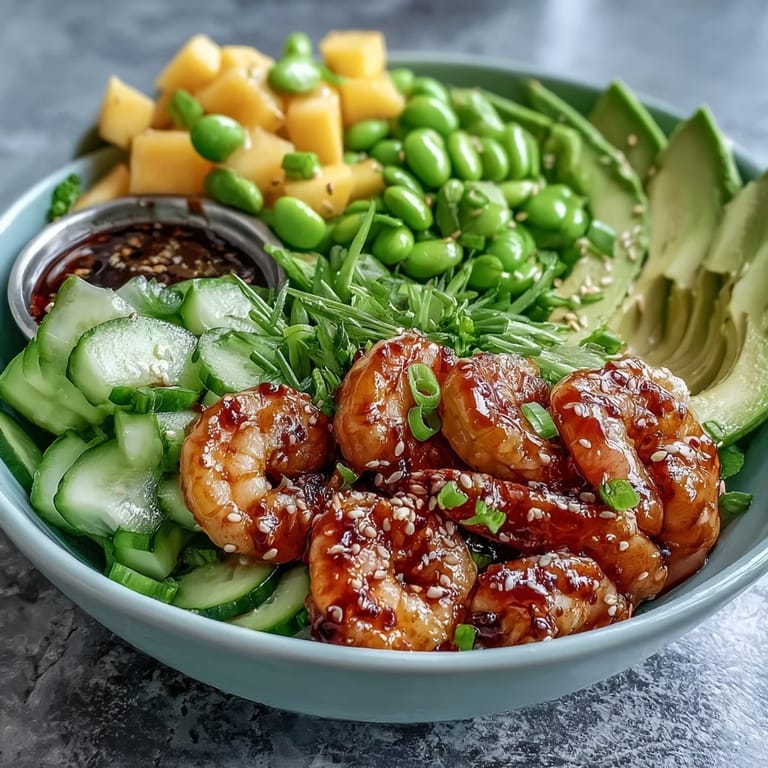
I made this for my sister when she was visiting last spring, and she ate the entire bowl in about five minutes without saying anything, which from her meant everything. The mango was perfectly ripe that day, and I remember her laughing because she kept finding little pockets of the sesame-ginger sauce that had pooled in the avocado slices. That's when I knew this wasn't just a recipe I liked, but something that could genuinely impress people and make them feel cared for in the simplest way.
Ingredients
- Raw shrimp, peeled and deveined (200 g): Look for shrimp with a slight smell of the ocean, not ammonia, and keep them cold until the moment you cook them.
- Cooked brown rice or cauliflower rice (120 g): Brown rice gives heartiness, but cauliflower rice cuts the carbs if that matters to you, and honestly both taste excellent here.
- Ripe mango, diced: The mango should yield slightly to pressure and smell fragrant at the stem end, because an unripe mango will disappoint you.
- Shelled edamame (100 g): These give you that pop of green and a protein boost that makes the bowl feel complete.
- Cucumber, thinly sliced: This adds a cooling, crisp element that balances the richness of the avocado and warmth of the ginger sauce.
- Carrot, julienned: Raw carrot brings sweetness and crunch, and those thin ribbons catch the sauce beautifully.
- Avocado, sliced: Add this just before serving or it'll turn an unappetizing color, and slice it with a ripe avocado or you'll be wrestling with it.
- Scallions, thinly sliced: These give you a sharp, fresh bite that cuts through the sweetness of everything else.
- Low-sodium soy sauce or tamari (2 tbsp): Tamari is naturally gluten-free, and low-sodium means you can actually taste everything instead of just salt.
- Rice vinegar (1 tbsp): This brings acidity without overpowering, and it's gentler than regular vinegar.
- Toasted sesame oil (1 tsp): A little goes a long way because this oil is intense and fragrant, and it makes all the difference in the sauce.
- Honey or agave syrup (1 tsp): Just enough to round out the sauce and balance the heat if you use sriracha.
- Sriracha (1 tsp, optional): Add this if you like heat, or leave it out if you prefer things mild.
- Fresh ginger, grated (1 tsp): Use a microplane if you have one because it releases the oils better than a grater, and the flavor is noticeably brighter.
- Garlic clove, minced (1 small): One clove is enough to flavor the whole bowl without making it overpowering.
- Toasted sesame seeds (1 tsp): These add visual appeal and a subtle nutty crunch.
- Fresh cilantro (1 tbsp, optional): If cilantro tastes like soap to you, this is entirely skippable.
- Lime wedges: Serve these on the side so people can squeeze them over just before eating.
Tired of Takeout? 🥡
Get 10 meals you can make faster than delivery arrives. Seriously.
One email. No spam. Unsubscribe anytime.
Instructions
- Get your shrimp ready to dance in the pan:
- Pat your shrimp completely dry with paper towels because any moisture on the surface will steam them instead of giving you that slight caramelization. Heat your non-stick skillet over medium-high heat until it's properly hot, then lightly spray it with cooking oil and let that heat for another ten seconds.
- Cook the shrimp until they blush:
- Add your shrimp to the pan in a single layer and don't touch them for two to three minutes, letting them develop that golden exterior and turn from gray to coral pink. Flip them gently and give them another two to three minutes, then pull them from the heat the moment they're opaque all the way through because overcooked shrimp gets rubbery and sad.
- Whisk together your magic sauce:
- In a small bowl, combine your soy sauce, rice vinegar, sesame oil, honey, sriracha if using, ginger, and garlic, stirring until the honey dissolves completely. Taste it and adjust to your preference, remembering that it needs to be flavorful enough to season the entire bowl.
- Build your bowls with intention:
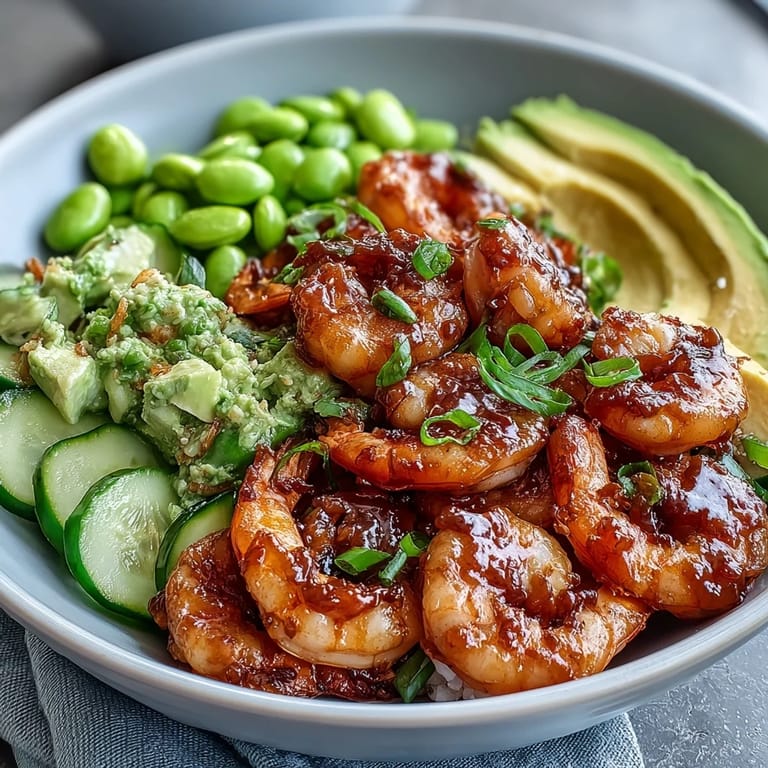
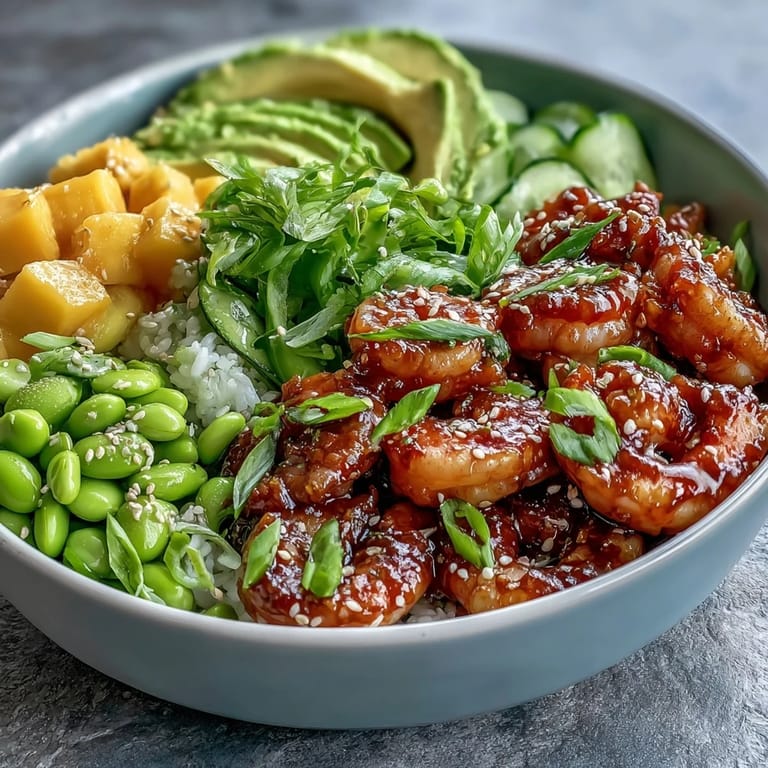
- Divide your rice between two bowls, creating a small bed that will cradle everything else. Arrange the shrimp, mango, edamame, cucumber, carrot, and avocado artfully around the bowl, thinking of it less like a salad and more like a edible still life.
- Drizzle and garnish:
- Pour the poke sauce evenly over each bowl, then scatter the scallions, sesame seeds, and cilantro on top. Finish with a squeeze of fresh lime juice right before eating, letting that brightness tie everything together.
 Save
Save There was a moment last summer when my partner came home stressed from work, and I quietly made this bowl without being asked. Watching them taste it and visibly relax was one of those small kitchen victories that reminds you why cooking for people matters. It wasn't fancy or complicated, but it felt like love in a bowl, and that's what keeps me making it.
The Magic of Fresh Ingredients
I've learned that this bowl is only as good as its components, which sounds obvious but changes how you shop. When you take the extra thirty seconds to pick a mango that smells sweet at the stem or choose shrimp that looks vibrant and firm, it elevates the entire experience from decent to memorable. The sauce helps, sure, but great ingredients need very little help, and I think that's the real secret here.
Why This Works as a Meal
Most salads leave me hungry an hour later, but this bowl has staying power because the combination of lean protein, healthy fats, and whole grains actually sustains you. The shrimp and edamame provide substantial protein, the avocado gives you satisfying fats that make you feel full longer, and the rice or cauliflower rice grounds everything. I've found that when these elements are balanced, you feel genuinely nourished instead of like you're eating salad as punishment.
Variations and Flexibility
What I love most about this recipe is how adaptable it is to whatever you have on hand or whatever you're craving that day. Sometimes I add thinly sliced radishes for extra crunch, or swap in shredded red cabbage if I want something more substantial. You can absolutely use pre-cooked shrimp if you're in a real time crunch, or substitute mixed greens for the rice entirely if you're keeping carbs low.
- Protein swaps: Cooked chicken, firm tofu, or canned tuna all work beautifully if you don't have fresh shrimp.
- Grain alternatives: Quinoa, farro, or even soba noodles create a different but equally delicious experience.
- Seasonal variations: In winter, roasted beets and microgreens; in spring, fresh peas and asparagus; keep the sauce consistent and everything tastes harmonious.
 Save
Save This bowl has become one of those recipes I make almost without thinking, which is the highest compliment I can give anything. It reminds me that the best meals are often the simplest ones, built on good ingredients and a little bit of care.
Common Recipe Questions
- → Can I use pre-cooked shrimp instead of raw?
Absolutely. Thawed pre-cooked shrimp works perfectly—simply skip the pan-searing step and toss them directly with the poke sauce before assembling your bowl.
- → What rice alternatives work best for lower carbs?
Cauliflower rice, quinoa, or mixed greens all make excellent lighter bases. Cauliflower rice reduces calories significantly while maintaining texture.
- → How long does the homemade poke sauce keep?
Store the sauce in an airtight container in the refrigerator for up to one week. The flavors actually develop and intensify after a day or two.
- → Is this bowl meal-prep friendly?
Yes. Prepare components separately—the rice, vegetables, and sauce—then store in individual containers. Assemble fresh when ready to eat for optimal texture.
- → Can I make this gluten-free?
Simply substitute tamari or coconut aminos for the soy sauce. All other ingredients naturally fit a gluten-free diet.
- → What other toppings can I add?
Sliced radishes, shredded red cabbage, pickled ginger, or nori strips all add wonderful crunch and authentic Hawaiian-style flair.